
Review · THE UK
Tenby: Coasteering Adventure
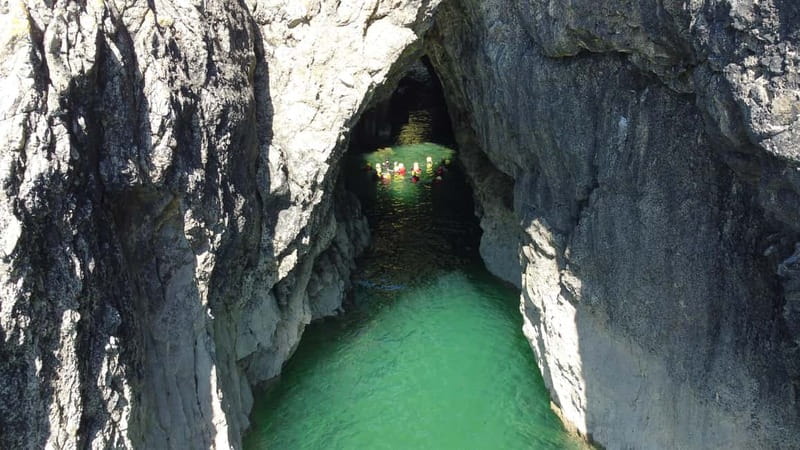
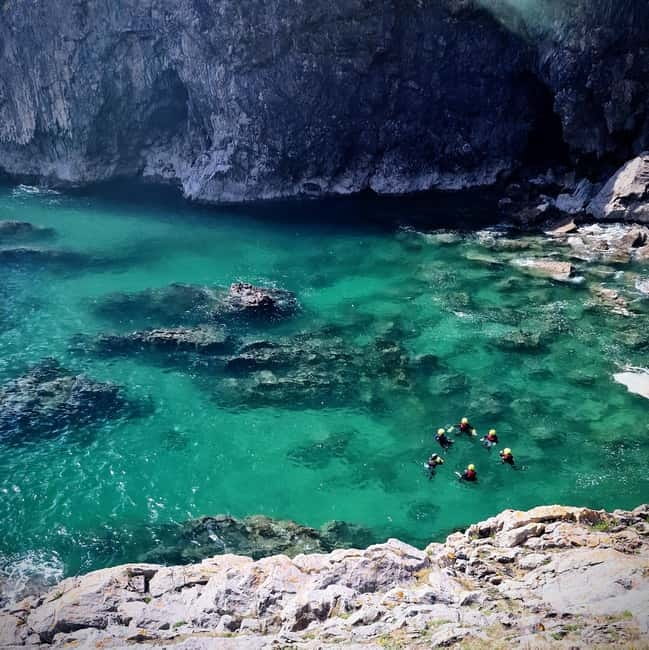
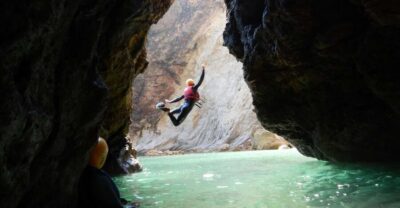
Coasteering around Tenby means swapping the usual seaside stroll for sea caves, rock ledges, cold water, and the occasional leap into a deep pool. At Lydstep Headland, you swim, scramble, explore swirly water, and get close to corners of the Pembrokeshire coast that are hard to reach on foot.
I like the optional jumps, since you can take part without being pushed into the biggest thrill. I also like the guides’ mix of safety training and naturalist knowledge. Marc, Tom, Merv, Rachel, and Charles have all led recent sessions, and the strongest praise has focused on their patience and support. The main drawback is physical: one participant found it exhausting, and rock scrambling challenged a nine-year-old.
Key points at a glance
- Lydstep Headland setting: Most sessions begin about 10 minutes from Tenby, beside a free car park.
- More than jumping: Expect swimming, rock scrambling, caves, pools, swell, seaweed, and small marine life.
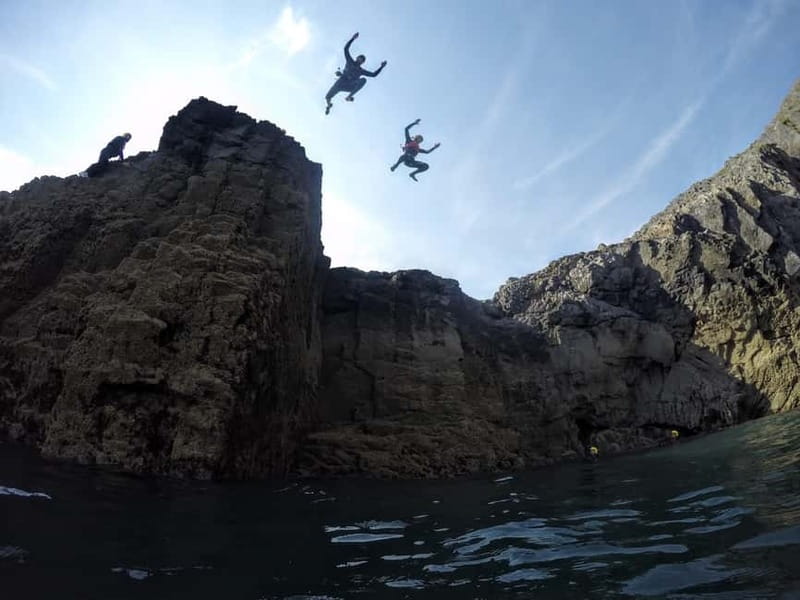
- Jumps are optional: You can enjoy the route without leaping from the rocks.
- Solid safety setup: Your guide carries recommended coasteering safety equipment, while you wear a helmet and buoyancy aid.
- Bring proper footwear: Old trainers are best because they grip well and stay on your feet.
- Good for confident swimmers aged eight and up: You need to swim 25 metres and manage light scrambling.
Why Tenby coasteering is more than a series of jumps
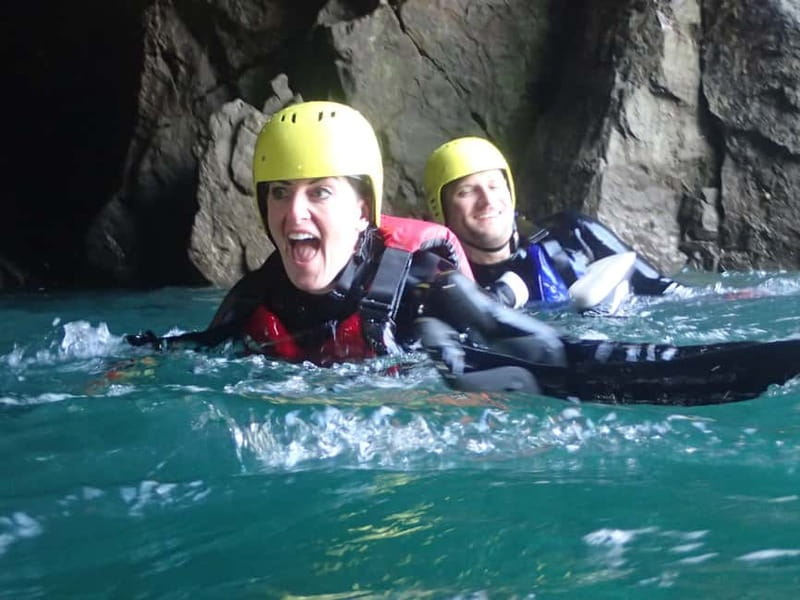
The appeal here is not simply the height of a jump. Coasteering puts you right at the meeting point of land and sea, where the route changes with the water. You may swim through a narrow gap, pull yourself around a rock shelf, float in a sheltered pool, or let a small swell move you around a safe play spot.
That variety keeps the session interesting. If you only want an adrenaline hit, the jumps provide it. If you prefer exploration, the caves and tucked-away pools carry the experience. You may also learn about sponges, crabs, seaweed, and birdlife, and there is a chance of seeing seals.
I like that the activity is adaptable. The guide can make it fairly adventurous or keep it mellow, depending on the conditions and the group. You still need to be comfortable in the sea, but you do not need exceptional swimming ability. Being able to swim 25 metres with confidence is generally enough.
The key phrase is if you want. Jumps are encouraged gently, not forced. That matters for families and mixed groups, where one person may want to leap from a rock and another may prefer to swim around it.
More Coasteering Tours in the UK
- Coasteering Experience in Newquay
★ 5.0 · 465 reviews - Newquay Coasteering x Cornish Wave | Original Since 2012
★ 5.0 · 342 reviews - Half-Day Coasteering in Newquay Cornwall
★ 5.0 · 239 reviews
Starting at Lydstep Headland, ten minutes from Tenby
For most of the year, the meeting point is Lydstep Headland, roughly 10 minutes from Tenby. The free car park is usually quiet and sits about two minutes from the start of the coasteering route. That short walk is useful when you are carrying towels, clothing, and bulky wetsuit gear.
Do not rely on the map supplied through the booking page. Use the provided Google Maps pin or the what3words location, since the listed map can be wrong.
From Tenby, drive past Lydstep Holiday Park into Lydstep village. Turn left about 75 metres after the Lydstep Tavern, then follow the bumpy lane for around 500 metres. Turn right at the blue parking sign after the cottage.
Coming from Manorbier or Pembroke, the turn is on the right about 170 metres after entering the village. The final lane is not a polished approach road, so give yourself time and follow the directions carefully.
Weather can change the venue. Strong winds or large swells may make another location safer, and the operator will contact you before the session if the meeting point changes. Rain alone does not stop the activity.
Getting fitted for the 2.5-hour session
The full experience lasts about 2.5 hours, with roughly two to two and a half hours spent in the water. You receive a specialist coasteering wetsuit, buoyancy aid, and helmet. These are not optional extras. They help with warmth, flotation, and protection while you move around the rocks.
Bring a pair of old trainers. They are the best choice because they have a firm sole, decent grip, and laces or a secure fit. Wetsuit boots can work if they have a good sole. Reef shoes are acceptable only if they fit firmly and are not flimsy.
Do not bring loose beach shoes that might slip off. Losing a shoe in the sea is more than an annoyance. It leaves you scrambling over rock with less protection on one foot.
Pack shorts to wear over your wetsuit. They provide a little padding and help protect the suit from rough rock. You will also want a towel, and a changing robe is useful because changing facilities are not always available.
There is storage in the sit-on-top kayak used during the activity, which gives you a practical place for snacks or clothing. The kayak is not the main attraction, but it adds a bit of flexibility to the session and helps with carrying small personal items.
What the route feels like in the water
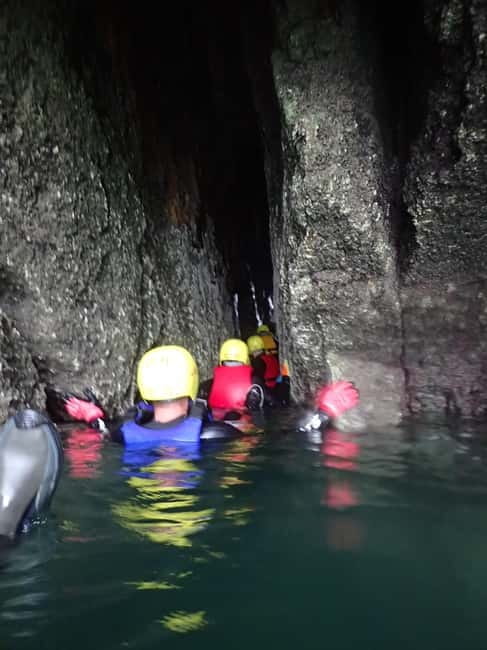
Once you reach the coast, the session becomes a chain of small challenges rather than a fixed amusement-park ride. You might begin by swimming close to the rocks, then climb onto a ledge for a short scramble. From there, the guide can point out a cave, pool, or narrow swim-through.
The caves are one of the best reasons to choose coasteering instead of a standard kayak trip. You are low to the water and close to the rock, so you see the coast from an unusual angle. Some spots may feel calm and enclosed, while others bring you into moving water where the swell creates the swirly bits mentioned in the activity description.
Rock scrambling requires attention. You do not need to be a climber, but you do need enough strength, balance, and mobility to move over uneven surfaces. The experience can be tiring even when the water section feels manageable.
That is especially important for families. A nine-year-old participant found the scrambling physically hard, though guide support made the session possible. Merv and Rachel were praised for their patience with her. This gives you a useful picture of the guide’s role: they are not simply leading from the front, they are adjusting the pace and offering help when the rocks prove awkward.
Same nerve, a different drop:
- Extreme Paranormal Underground Ghost Tour in Edinburgh
★ 4.5 · 1,587 reviews - Edinburgh: Extreme Paranormal Underground Ghost Tour
★ 4.2 · 850 reviews - Bungee jump from 40 meters in the stunning valley of Killiecrankie, Scotland
★ 5.0 · 500 reviews - Discover Canyoning at Bruar Falls
★ 5.0 · 409 reviews
Choosing your jump, or choosing not to jump
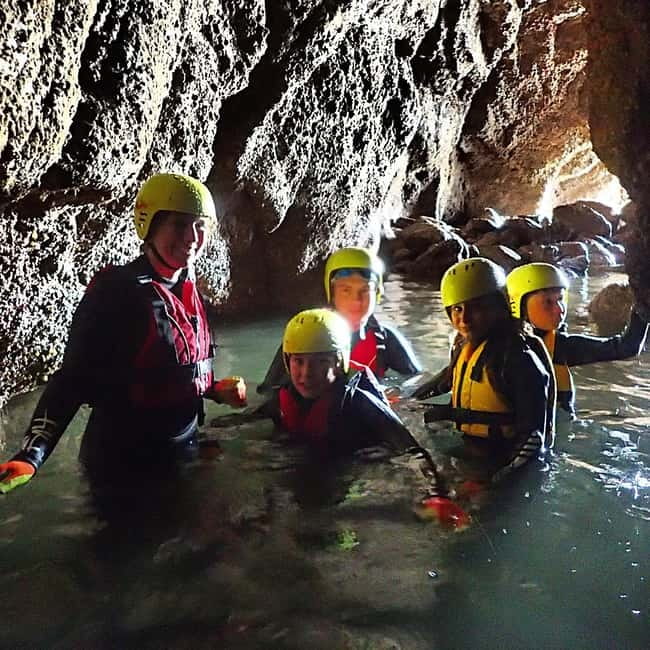
Jumping is the image most people associate with coasteering, and there are safe rocky platforms where you can leap into clear water. The guide explains what to do and helps you judge the move. You are encouraged, but the choice remains yours.
That makes this activity easier to recommend to a group with different comfort levels. One person can take a jump while another walks or swims around the same section. You do not lose the main experience by skipping the leaps.
Still, do not mistake optional jumping for a gentle pool session. Even without jumping, you will swim in the sea, scramble over rocks, and work against moving water. The November participant who enjoyed the session with Marc and Tom also found it hard on the body the next day. That is a useful warning: plan a quieter evening afterward if you are not used to this kind of exertion.
The cold water and wetsuit add to the effort. The equipment keeps you protected, but moving in a wetsuit is not as easy as swimming in normal clothing. Take the guide’s pace seriously and save energy for the return section.
Guides, safety, and the natural side of the coast
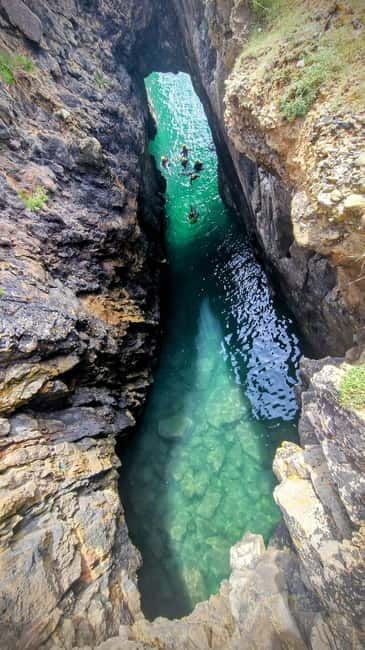
The guides are trained to high levels and have led thousands of coasteering sessions. They carry the safety equipment recommended by the National Coasteering Charter, and lead guides also carry satellite locator beacons. The operator reports a safety record covering more than 30,000 people.
Those details matter because coasteering takes place in a changeable setting. Water movement, rock surfaces, and weather all affect the route. A strong guide does not just point out the next jump. They choose a suitable line, watch the group, and alter the plan when the sea calls for it.
The guides also bring a naturalist’s eye to the outing. You may learn about seaweed, crabs, sponges, and birds while moving along the coast. There may be seals too, though wildlife sightings cannot be promised.
The human side of the guiding has earned particular praise. Charles was described as experienced and supportive, while Marc and Tom helped make a demanding first attempt enjoyable. For children, Merv and Rachel’s patience is worth noting. These are useful names to know, but guide assignments can change, so book for the activity and safety system rather than expecting a specific person.
Is $81 a fair price?
At $81 per person, this is not a cheap beach activity. The price makes more sense when you count what is supplied: an expert guide, specialist wetsuit, buoyancy aid, helmet, route planning, and safety equipment. You are paying for access to a guided coastal experience that would be difficult and risky to organize on your own.
The value is strongest if you want active time in the water rather than a short sightseeing stop. You receive up to 2.5 hours, and much of that is spent swimming, scrambling, exploring, and playing with the swell.
It is less appealing if you want a relaxed boat trip or a simple coastal walk. You must drive to the meeting point, bring suitable shoes and a towel, and accept that the activity can leave you tired. The price does not include transport to Lydstep Headland or footwear.
Free cancellation up to 24 hours before the session and the reserve-now, pay-later option make the booking less rigid. If weather forces a postponement or cancellation and you cannot attend the replacement, a full refund is provided.
Who should book this Pembrokeshire adventure?
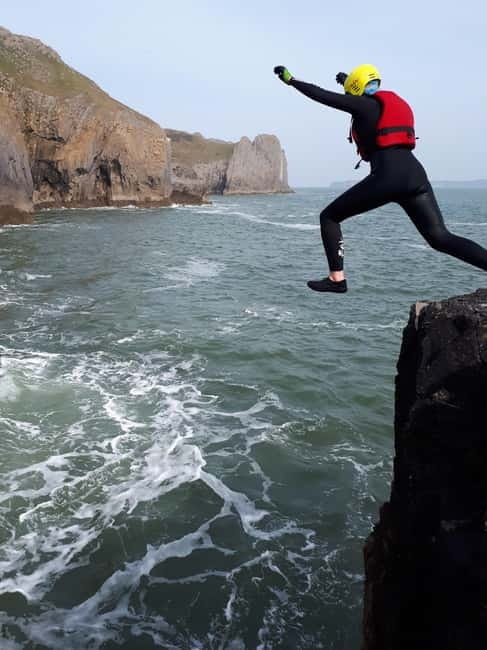
This suits adults, families, groups, and anyone who likes being active outdoors. Children must be at least eight years old, able to swim, and comfortable with some light scrambling. A child may manage the swimming but still find the rocks tiring, so think about stamina as well as water confidence.
You will get the most from it if you:
- Swim confidently for at least 25 metres
- Have reasonable fitness and mobility
- Like being in the sea
- Can manage uneven rock with care
- Are happy to follow instructions
- Want adventure without being forced into a jump
It is not suitable for non-swimmers or children under eight. It may also be a poor match if you dislike cold water, cannot tolerate a close-fitting wetsuit, or want a low-effort morning.
The activity is conducted in English. Rain does not automatically cancel it, but strong winds and large swell can lead to a route change or postponement.
My practical verdict before you book
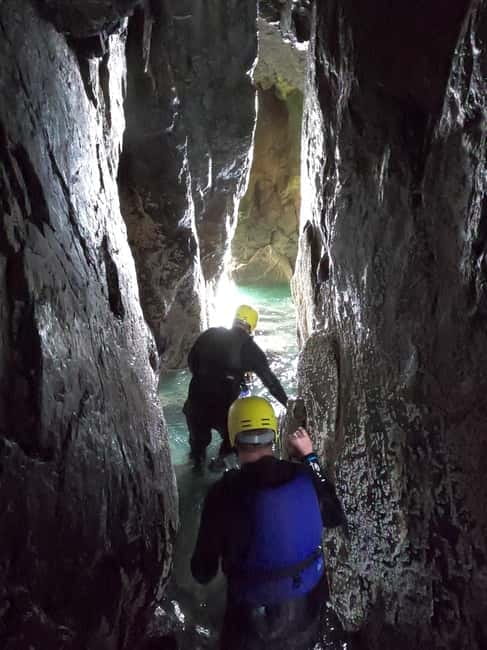
I would choose this for a Tenby visit when I wanted a close-up coastal experience rather than another viewpoint or beach walk. The combination of caves, pools, sea life, scrambling, and optional jumps gives the session more variety than a simple thrill ride.
Book it if you are a confident swimmer who wants a real workout and is willing to get wet, muddy, and tired. Skip it if you need a gentle family outing, dislike uneven surfaces, or want guaranteed sunshine and a fixed route.
The best preparation is simple: wear secure old trainers, bring shorts for extra padding, pack a towel, and leave room in your schedule to recover. If you accept the physical side, Tenby Adventure offers an active and well-supported way to meet the Pembrokeshire coast at water level.
FAQ
Where does the coasteering session meet?
Most sessions meet at Lydstep Headland, about 10 minutes from Tenby. The free car park is around two minutes from the start of the route.
Is the listed booking map accurate?
No. The supplied information says to ignore the booking map and use the provided Google Maps link or what3words location instead.
How do I reach Lydstep Headland from Tenby?
Drive past Lydstep Holiday Park into Lydstep village. Turn left about 75 metres after the Lydstep Tavern, follow the bumpy lane for about 500 metres, and turn right at the blue parking sign after the cottage.
How long does the activity last?
The session lasts 2.5 hours. You are generally in the water for between two and two and a half hours.
What equipment is included?
The session includes a specialist coasteering wetsuit, buoyancy aid, helmet, and expert guide.
What footwear should I bring?
Old trainers are the best option. Wetsuit boots or secure reef shoes can also work if they have a firm, grippy sole and will not come off in the water.
Do I need to bring anything else?
Bring closed-toe footwear, shorts to wear over the wetsuit, and a towel. A changing robe is useful because changing facilities are not always available.
Are the jumps compulsory?
No. Jumps are optional. You can take part without jumping, although you will still swim and scramble along the coast.
What swimming ability is required?
You need to be a non-swimmer? No. The activity is not suitable for non-swimmers. Participants should be able to swim confidently for about 25 metres.
What happens if the weather is poor?
Rain does not normally affect the activity. Strong winds or large swells may lead to a different route or a postponement. If the session is rescheduled or cancelled and you cannot attend, a full refund is provided.
Fresh thrills added around the UK
- Coasteering★ 5.0 · 24 reviews
- 3-Hours Via Ferrata Experience in Keswick★ 5.0 · 33 reviews
- Coasteering Day Trips from Edinburgh★ 5.0 · 51 reviews
- Abseil Experience – Millersdale Derbyshire Peak District★ 5.0 · 24 reviews
- 2-Hour Coasteering Adventure Near Bude★ 5.0 · 68 reviews
- Coasteering Adventures in Bossiney Cove, Bude, and Cornwall★ 5.0 · 19 reviews
- Discover Canyoning in Dollar Glen★ 5.0 · 16 reviews
- Adrenaline Comedy Bike Tour Experience at B3335★ 5.0 · 8 reviews
Coasteering Tours, side by side
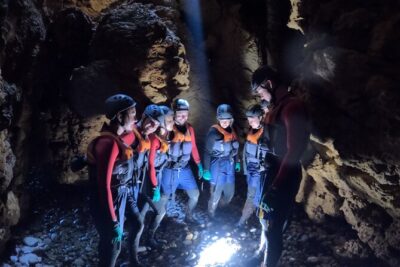
Award Winner Premium Kayak and Coasteering Adventure with Lunch
Read our review →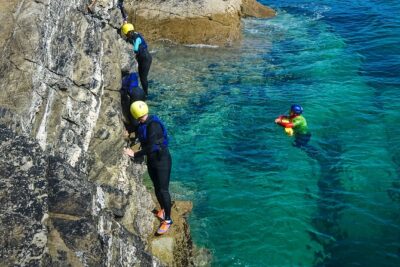
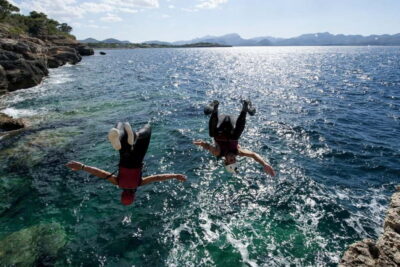
Lisbon: Sesimbra/Arrábida Natural Park Coasteering Adventure
Read our review →
Newquay Coasteering x Cornish Wave | Original Since 2012
Read our review →
Private Tour explore Vulcano Island by Kayak & Coasteering
Read our review →
Sagres: Coasteering – Swimming, Cliff Jump & Rock Climbing
Read our review →Lists this trip sits in