
Review · TENERIFE
Tenerife: Guided Canyoning Experience
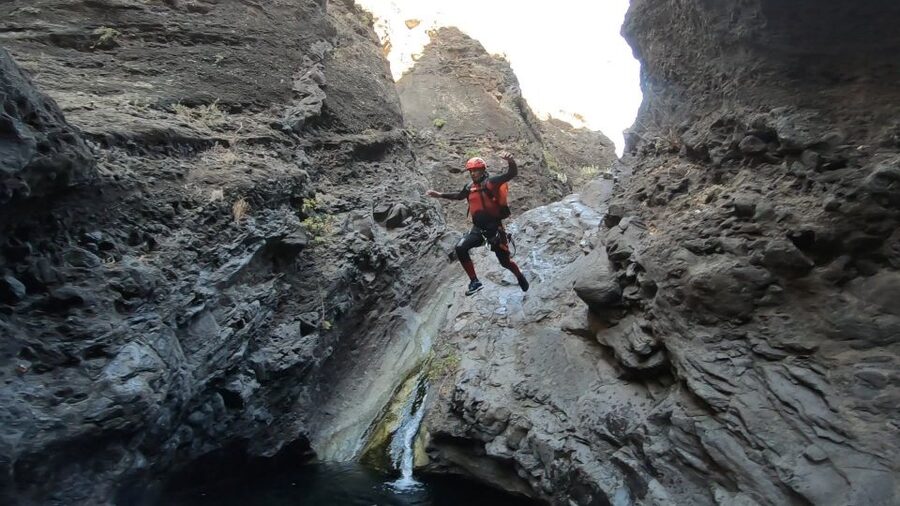
The big draw here is a 15-meter slide into a ravine, reached by a day of rappelling, climbing, jumping, and scrambling through a narrow canyon. You are not simply walking to a viewpoint. You are using ropes, water, rock, and nerve to reach parts of Tenerife that are hard to see any other way.
I like the small group size of five, which gives your guide room to explain each move and keep an eye on everyone. I also like the mix of challenges: jumps up to 8 meters, rappels up to 17 meters, and a long slide, rather than one repeated activity. The catch is clear: this is a demanding outing, not a gentle family adventure. You need to be fit, comfortable with heights, able to swim, and ready for a tough walk back in hot, dry conditions.
Key points to know
- The 15-meter slide is the headline thrill: You finish a technical canyon descent with a long, spectacular slide into the ravine.
- The physical demands are real: The return route can feel more like a climb than a walk, with sections requiring you to move on all fours.
- Jorge is one named guide connected with the activity: Past participants specifically valued his humor, patience, area knowledge, and careful safety briefings.
- You get the core equipment: Hiking boots, backpack, helmet, harness, wetsuit, and insurance are included.
- This is a small-group day out: Groups are limited to five, with English and Spanish guiding available.
- Know your limits before booking: The activity excludes people with vertigo, fear of heights, low fitness, major medical conditions, or an inability to swim.
What this Tenerife canyoning day is really like
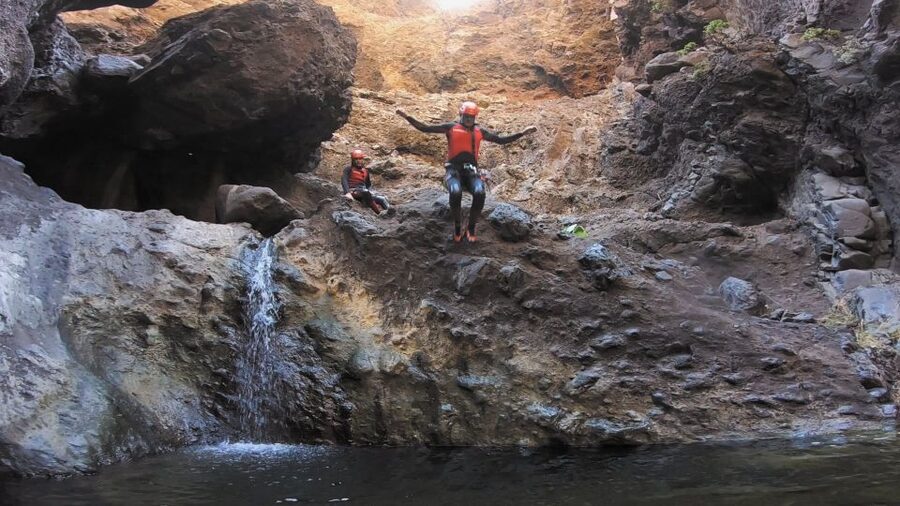
This outing takes you into a narrow ravine for a full day of active canyoning. The route combines a short approach walk, rope work, water-based slides, jumps, scrambling, a snack break, and a physically demanding return.
The setting is one of the main rewards. Cliffs rise close around you, and the canyon creates a more enclosed, dream-like feeling than Tenerife’s usual coastal viewpoints. You get views from inside the ravine, not just from a road or lookout.
The activity is guided in English or Spanish, and the small group limit matters. In a canyon, you may need a clear demonstration before a rappel or jump. A group of five gives the guide enough time to explain the technique, check your harness, and adjust the pace when a section feels difficult.
The activity costs $135 per person. That is not a cheap walk, but it includes a guide, technical gear, hiking boots, wetsuit, helmet, harness, backpack, and insurance. If you had to arrange all of that separately, the price would look more reasonable. The value is strongest for you if you want a serious outdoor challenge and do not already have canyoning equipment.
Food and drinks are not included, and hotel pickup and drop-off are not included in the stated arrangements. Plan your own way to the meeting point, described as a small place on the left side of the road where you can wait for the guide.
More Canyoning Tours in Spain
- From Marbella: Guadalmina River Guided Canyoning Adventure
★ 4.9 · 1,486 reviews - From Marbella: Canyoning Tour in Guadalmina Canyon
★ 5.0 · 778 reviews - Benahavís: Guided Canyoning Adventure (Benahavís River Walk)
★ 4.9 · 540 reviews
Meeting the guide and getting ready
The day begins with an introduction to the guide, equipment, and safety techniques. This is an important part of the outing, not paperwork to rush through. You will need to understand how the harness and ropes work before reaching the first serious drop.
The included equipment makes packing simpler. You receive hiking boots, a backpack, helmet, harness, and wetsuit, along with insurance. You should still bring water, food, beachwear, outdoor clothing, sportswear, and any personal medication you need.
Bring spare clothes. At the end, you change out of the wet gear before leaving. That small detail can make the difference between finishing the day comfortably and sitting in damp clothing on the way home.
The activity is limited to five participants, so this is not a large commercial outing. That can make the technical instruction feel more personal. It also means you should expect to spend much of the day with the same small team, moving at a shared pace.
Walking toward the ravine
After the equipment briefing, you make a short walk toward the canyon entrance. This approach lets you get used to the boots and the setting before the more technical sections begin.
Once you reach the ravine, the route changes character. The cliffs close in, the ground becomes more uneven, and you begin moving through a space where each step and handhold matters. The canyon itself is the setting, obstacle course, and viewpoint all at once.
You should not expect a smooth path. Canyoning often involves awkward body positions, wet rock, and careful foot placement. The supplied information specifically warns that you may need to get down and climb on all fours during the later slope and return. That is useful to know now, especially if you have back, knee, or mobility problems.
The narrow walls are also what make the outing feel special. You are not only looking at Tenerife’s cliffs from a distance. You are moving between them, with the rock close on both sides and the route unfolding one obstacle at a time.
Rappelling down drops of up to 17 meters
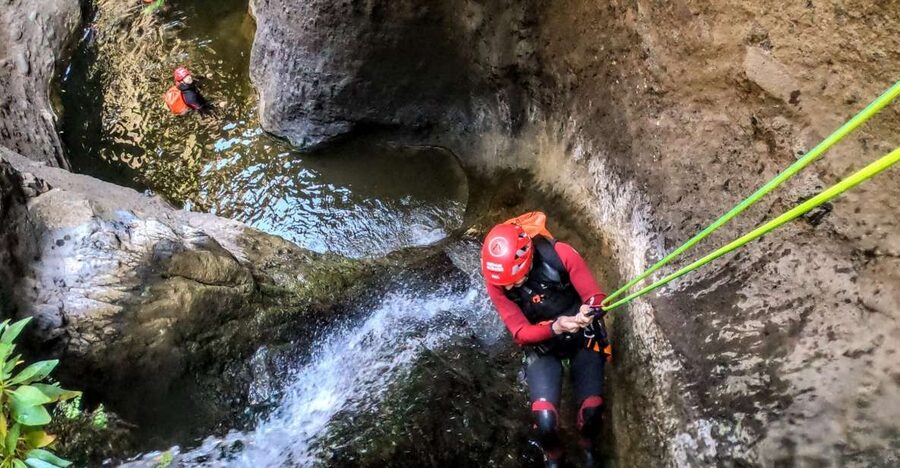
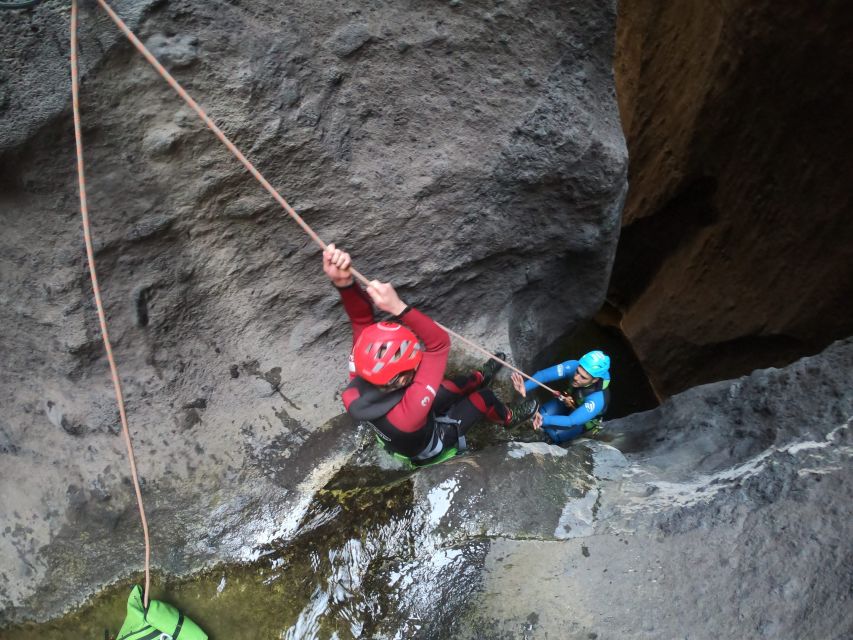
Rappelling is one of the central skills on this route. The largest stated rappels reach 17 meters, a height that feels serious even if you have tried smaller rope descents before.
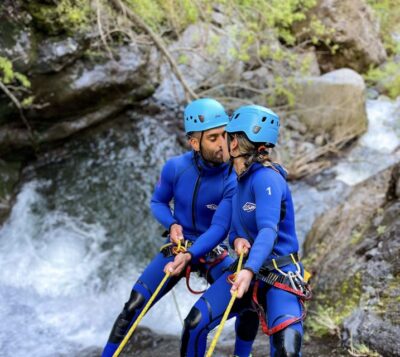
Your guide introduces the technique and controls the activity, but you still need to stay calm and follow instructions. The physical task is not simply lowering yourself. You must manage your position, trust the harness, keep your feet placed well, and avoid panicking when you look down.
The guide’s role is especially valuable here. Jorge is named by several participants connected with this activity, and he was praised for being friendly, funny, patient with questions, and careful about safety. That kind of calm instruction matters when you are standing at the edge of a drop and trying to remember what you were just shown.
You do not need to be an expert climber based on the information provided, but you do need to be fearless enough to attempt the sections and physically ready to handle them. If heights make you freeze, this is not the place to test that reaction for the first time.
Same nerve, a different drop:
- Barcelona Costa Brava Kayak, Snorkel & Cliff Jump Day Tour
★ 5.0 · 3,872 reviews - Barcelona: Costa Brava Kayak, Snorkel & Cliff Jump & Lunch
★ 4.9 · 2,391 reviews - Mallorca: Quad Bike Tour, Snorkeling, and Cliff Jumping
★ 4.8 · 2,294 reviews - Mallorca: Kayaking, Sea Cave, Cliff Jumping & Snorkel Tour
★ 4.8 · 1,447 reviews
Jumps up to 8 meters, with no pressure to pretend
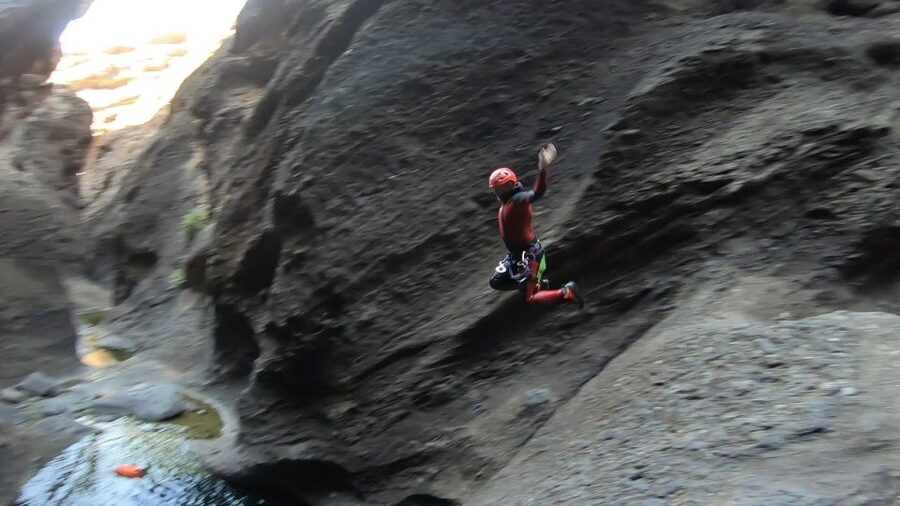
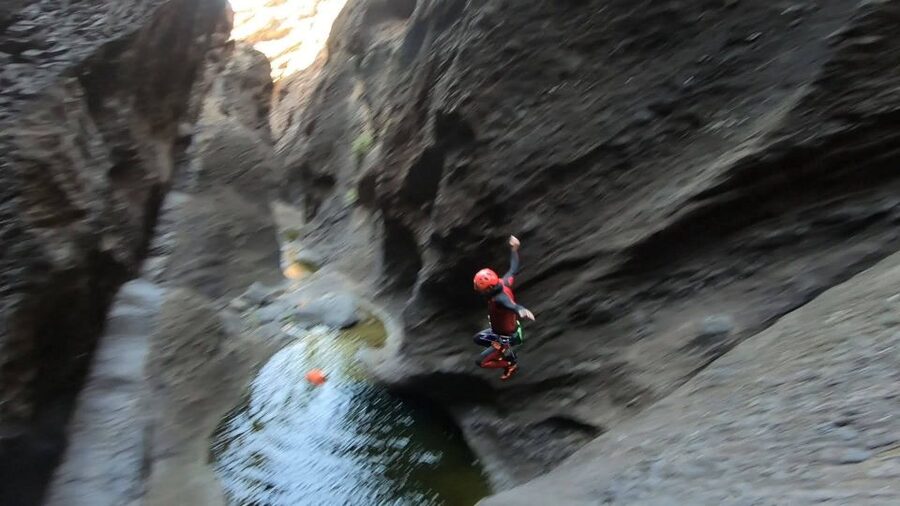
The canyon includes several jumps, reaching as high as 8 meters. These are part of the appeal, but also part of the screening process. The activity specifically says participants must be fearless with jumping.
That warning should be taken literally. If you dislike jumping into water, hesitate at height, or cannot swim, choose another Tenerife outing. This is not a walk with one optional splash at the end.
Different jumps give the day some variety. You move from rope work to a direct physical decision: step, leap, and land safely in the water below. The guide provides instruction, but your own comfort and physical condition remain important.
The canyon environment adds drama. You may be surrounded by close rock walls, looking down into a pool or ravine rather than an open beach. That can feel thrilling, but it can also make the height seem greater than it would from a normal swimming spot.
The 15-meter slide into the ravine
The longest slide is the signature moment of the day. At 15 meters, it is far more than a short natural water chute. You slide down into the ravine as part of the canyon route, with the cliffs close around you.
This is the sort of activity that gives the day a clear sense of progression. You start with instruction and smaller techniques, then work through rappelling and jumps before reaching one of the most memorable features.
The exact pace can depend on the group and the guide’s judgment. You should not assume every section will be completed at maximum speed. A responsible guide may spend extra time explaining a move, checking conditions, or helping someone find the right position.
That is a good thing. Canyoning is exciting because the setting is serious, not because the guide rushes you through it.
A break, a snack, and the hard route back
After the main descent, you stop for a small break to eat and recharge. Food and drinks are not provided, so you need to carry your own snack and water.
This pause matters because the day uses more energy than the headline numbers suggest. Rappelling, climbing, jumping, walking on uneven rock, and wearing wet gear can leave you tired before the final section begins.
The route back is one of the most important details to consider. The information describes a slope with striking views, but also sections where you may need to descend and climb on all fours. One participant described the final hike as more like a climb and called it very demanding.
The heat and dryness add to the work. You should carry enough water, wear suitable outdoor clothing, and avoid treating the return as an easy stroll. If you have a low fitness level, this is likely the part that turns a fun day into an uncomfortable one.
The return walk eventually brings you back to the starting point. You can change into spare clothes there and finish the day with the practical satisfaction of having made it through a demanding route.
Who should book this adventure
I would recommend this outing to a fit adult who wants a full day of outdoor action and is comfortable with heights, water, and uneven ground. It suits someone who would rather rappel and scramble through a canyon than spend the day on a sightseeing bus.
You should be able to swim and must be willing to jump. You also need enough strength and stamina for a demanding return route in hot, dry conditions.
The listed restrictions are strict. The activity is not suitable for children under 16, pregnant women, people with back or heart problems, mobility impairments, vertigo, fear of heights, pre-existing medical conditions, low fitness, or an inability to swim. It also excludes people over 60 and people over 243 pounds, or 110 kilograms.
Those limits may seem broad, but they reflect the nature of the route. A canyon is not an easy place to leave if you decide you have had enough halfway through.
What to bring and what not to expect
Pack light, but pack well. You need water, food, beachwear, outdoor clothing, sportswear, spare clothes, and personal medication. Beachwear is useful beneath the wetsuit, while outdoor clothing is better for the walk and return.
The provider supplies the main technical equipment, including boots and a backpack. You do not need to bring your own helmet, harness, or wetsuit.
Do not plan on a provided lunch or drinks. Also do not assume hotel transportation is part of the $135 price. The official information says hotel pickup and drop-off are not included, so arrange your own route to the meeting point.
The meeting point is described simply as a small place on the left side of the road where you wait for the guide. Pay close attention to the exact directions you receive when booking, since a basic roadside meeting point may not have the signs or services of a large attraction.
How the value compares with a normal Tenerife outing
At $135, this costs much more than a self-guided walk. But it is not really competing with a walk. You are paying for technical supervision, specialized gear, insurance, and access to a route that would be difficult to handle alone.
The strongest value comes from the combination of activities. You get a canyon descent, rappels, jumps, a 15-meter slide, scrambling, and views inside the ravine. You also get the confidence of having a guide nearby when the route becomes technical.
The price is less attractive if you are looking for a relaxed nature day or are likely to skip the jumps and rappels. The physical demands are not a minor part of the package. They are the reason the outing feels memorable, and they are also the reason some people should not book it.
The small group helps justify the cost. With no more than five participants, you are not one person in a large line waiting for a turn at every obstacle.
Booking flexibility and final practical advice
You can cancel up to 24 hours in advance for a full refund, and the reserve-now, pay-later option gives you some flexibility while planning Tenerife. The activity is valid for one day, with starting times based on availability.
Check the weather and your own condition before going. If you are tired, injured, dehydrated, or uncertain about swimming or heights, do not force the booking. The provider puts safety first, and you should do the same.
Take the equipment briefing seriously, ask questions, and tell the guide if you are unsure about a technique. The best day is not the one where you act fearless. It is the one where you stay controlled and finish the canyon safely.
Should you book this Tenerife canyoning experience?
Book it if you want a genuine adrenaline day and you are fit, confident in water, and comfortable with jumps and height. The mix of 17-meter rappels, 8-meter jumps, a 15-meter slide, and a strenuous return gives you a full outdoor challenge rather than a short thrill ride.
Skip it if you want an easy walk, dislike jumping, have a medical or mobility concern, or are unsure about the climb back. For the right person, this is one of Tenerife’s more active ways to reach dramatic canyon scenery, with a small group and the gear already arranged.
FAQ
How much does the Tenerife canyoning experience cost?
The price is $135 per person.
How long does the canyoning activity last?
The activity lasts one day.
How high are the jumps?
The canyon includes jumps of up to 8 meters.
How high are the rappels?
The largest stated rappels reach up to 17 meters.
How long is the main slide?
The main slide is 15 meters long and leads into the ravine.
What equipment is included?
The activity includes hiking boots, a backpack, helmet, harness, wetsuit, insurance, and a guide.
Is food included?
No. You need to bring your own food and drinks, including a snack for the break.
Is hotel pickup included?
No. Hotel pickup and drop-off are not included in the stated activity arrangements.
What languages does the guide speak?
Guiding is available in English and Spanish.
How many people are in each group?
The group is limited to five participants.
Who should not take part?
The activity is not suitable for children under 16, pregnant women, people with back or heart problems, mobility impairments, vertigo, fear of heights, low fitness, pre-existing medical conditions, or an inability to swim. It also excludes people over 60 and people over 243 pounds, or 110 kilograms.
Can I cancel the booking?
Yes. You can cancel up to 24 hours in advance for a full refund.
Fresh thrills added around Spain
- Mallorca Coasteering Adventure★ 3.0 · 2 reviews
- From Estepona: Guided Via Ferrata Adventure in Benalauría★ 5.0 · 8 reviews
- From Marbella: Guided Canyoning Tour in Sima del Diablo★ 5.0 · 2 reviews
- From Estepona: Guided Canyoning Tour on the Guadalmina River★ 5.0 · 51 reviews
- Private canyoning adventure in the Buitreras Canyon★ 5.0 · 23 reviews
- Guided Canyoning Adventure Near Marbella (Benahavís River Walk)★ 5.0 · 116 reviews
- Try adventure, try coasteering – North coast★ 5.0 · 7 reviews
- Coasteering Cliff jumping★ 5.0 · 27 reviews
Canyoning Tours, side by side
Full Day Canyoning Activity in Da Lat with Lunch
Read our review →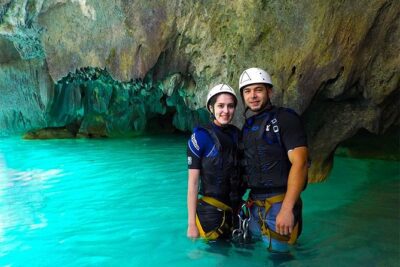
Matacanes : Canyoning + Hiking + Water Jumps + Rappel + Caves
Read our review →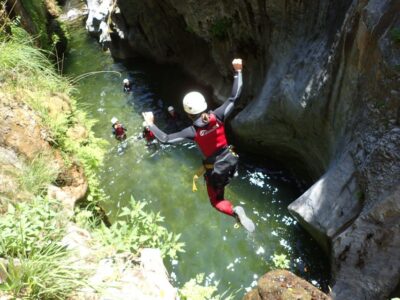
From Marbella: Guadalmina River Guided Canyoning Adventure
Read our review →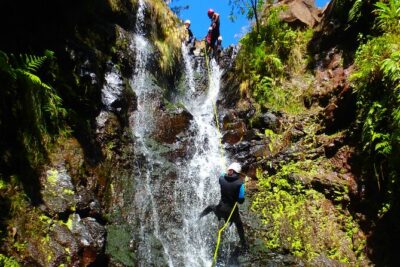
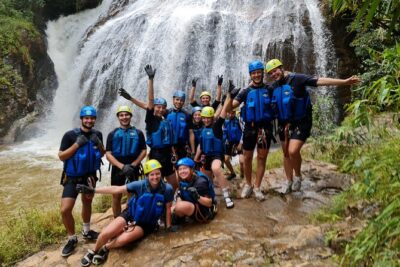
From Funchal: Intermediate (Level 2) Canyoning Adventure
Read our review →
Lists this trip sits in