
Review · IRELAND
Coasteering on Irelands Wild Atlantic Way
The most exciting part of this Connemara outing is the way it gets you into the Atlantic itself. You swim, scramble, climb through cracks, explore caves, and jump from cliffs shaped by the ocean over thousands of years. This is active coastal adventure, not a sightseeing cruise with a view from a safe distance.
I like two things right away: the guides adjust the action to your group, and the equipment list is generous, with wetsuits, helmets, buoyancy aids, gloves, shorts, and runners available. Danny has a knack for pushing adventurous people without losing sight of safety. The main catch is simple: rough weather can cancel the session, and the sea-based format will not suit anyone looking for a gentle outing.
Key points at a glance
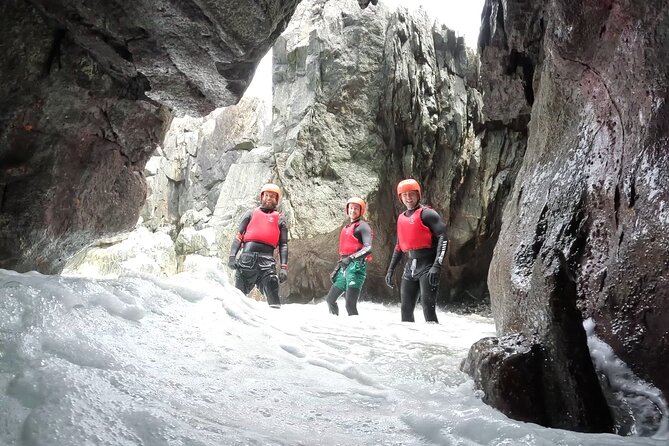
- Swimming is only one part of it: Expect caves, gullies, scrambling, climbing, and cliff jumping.
- Danny and Steve lead the action: Their instruction and ability to adjust challenges are central to the experience.
- Your group sets the pace: Jumps and climbs can be adapted to fitness, confidence, and ability.
- Gear is supplied: Wetsuits, buoyancy aids, helmets, gloves, shorts, and runners are included.
- The meeting point is practical: Start and finish at Keogh’s MACE in Ballyconneely, County Galway.
- Allow about two and a half hours: The session is short enough to fit into a Connemara day, but active enough to feel like a proper adventure.
Meeting the Atlantic at Ballyconneely
You begin at Keogh’s MACE in Ballyconneely, a useful meeting point near Clifden and the western part of Connemara. The outing also ends here, so you do not need to arrange a second pickup point or figure out how to reconnect with your car afterward.
That detail matters more than it may seem. Coasteering leaves you wet, salty, and likely ready for dry clothes. Returning to the same place keeps the day tidy and removes one small travel headache.
From the meeting point, the Real Adventures team takes you to a coastal setting they know well. The exact route is not fixed in the information provided, and that is sensible for an activity ruled by tides, sea conditions, and the ability of the group. You should expect a rugged Atlantic setting rather than a marked walking path or a fixed sequence of tourist stops.
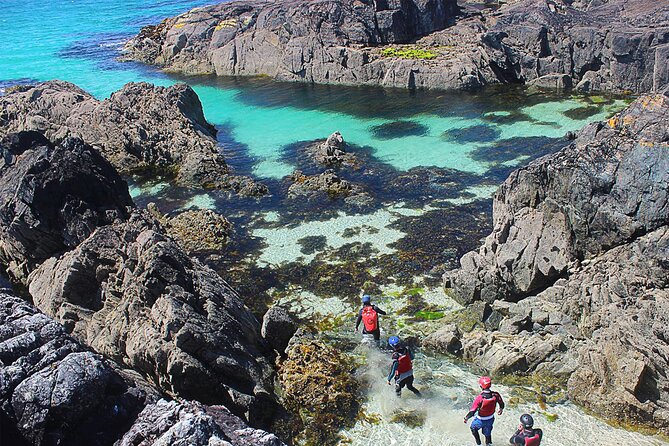
The coast here is best understood through movement. Rock formations shaped by the Wild Atlantic Ocean become handholds, ledges, channels, and entry points into small caves. You are not simply looking at the shoreline. You are using it.
More Coasteering Tours in the world:
- Award Winner Premium Kayak and Coasteering Adventure with Lunch
★ 5.0 · 472 reviews - Coasteering Experience in Newquay
★ 5.0 · 465 reviews - Mallorca: Half-Day Coasteering Experience
★ 4.7 · 447 reviews
What happens during the 2.5-hour session
The experience combines several activities into one compact outing. Swimming takes you between rocky sections, while scrambling and climbing bring you up and over them. Caves, gullies, cracks, and unusual rock shapes give the session variety, so you are not repeating the same task for two and a half hours.
Your guide begins by explaining how the activity works and how to handle the coastal setting. The practical value of this briefing is clear: you need to know how to move in the water, how to approach the rocks, and how to handle a jump before the action begins.
The session is not presented as a strict test with one correct route. Real Adventures can shape the level of challenge around the group. If your party is keen for a stronger physical outing, the guides can add more demanding climbs and jumps where suitable. If someone is less confident, the same session can be adjusted rather than turning into a contest.
That flexibility makes a major difference for mixed groups. One person may be comfortable with cliff jumping but less at ease on a rock climb. Another may enjoy scrambling but prefer to skip a jump. You are not forced into one identical version of the experience.
The activity has an energetic rhythm. You move from water to rock, from a narrow gap to a larger open section, and from a climb to a jump or swim. The variety keeps the session lively, but it also means you should arrive ready for sustained physical effort.
Swimming, caves, and Atlantic rock
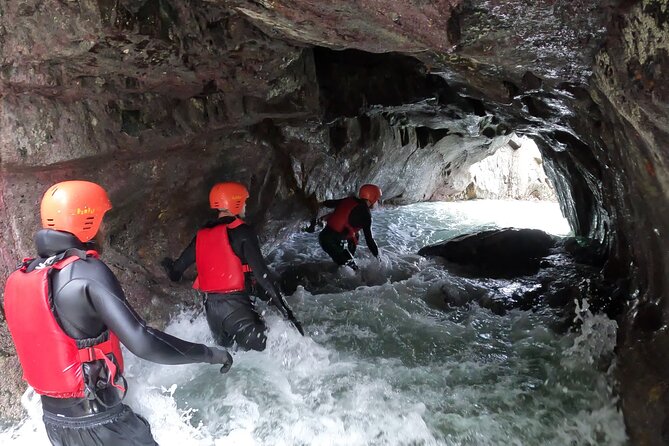
The ocean is the main attraction, but the rock formations give coasteering its character. Over long periods, waves have cut into the coast, creating gullies, cracks, and caves. These features turn a familiar shoreline into a natural obstacle course.
Caves are not just scenic backdrops here. They form part of the route and give you another way to read the coast. You might pass into a darker opening, work your way around a narrow section, or use a sheltered gap between more exposed rocks. The supplied details do not promise a specific cave or route, so keep your expectations flexible.
Scrambling is equally important. This is hands-on movement over rock, with the guide showing you where to place your feet and how to use the natural shape of the stone. It requires more care than ordinary walking, especially when everything is wet. A good pair of water-friendly runners can help, and the provider supplies footwear if needed.
Climbing is where the activity may ask the most from you. One family account singled out the rock climbing as a part that required skill, which is useful advice for anyone comparing this with a simple sea swim. You do not need to arrive as a climber, but you should be comfortable listening closely and using your body carefully.
The attraction is not polished or predictable. The Atlantic has made the route irregular. That raw quality is exactly why the experience feels connected to Connemara rather than like a standard amusement activity.
Cliff jumps with room to choose
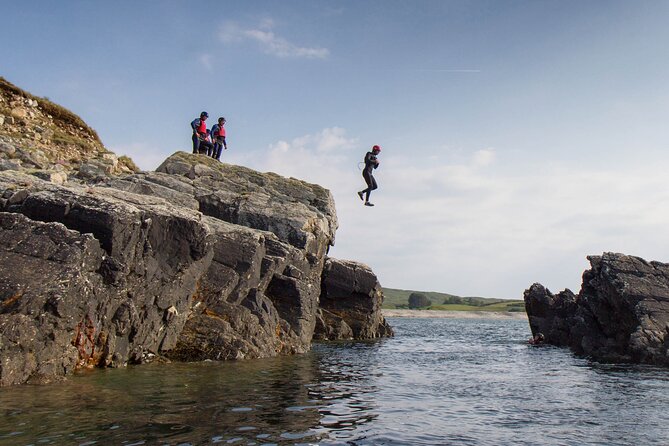
Cliff jumping is likely to be the moment many people remember most. It supplies the adrenaline, but the best part is that the guide can match the challenge to the people in front of him.
Danny received especially strong praise for his instruction, safety checks, and ability to cater to different levels. That is important because confidence can change quickly when you are standing above cold Atlantic water in a helmet and wetsuit. Clear direction helps you decide what you actually want to do instead of reacting to pressure from the group.
You should not assume that every participant must make every jump. The stated approach is to tailor the session to the group’s sense of adventure, fitness, and ability. That gives families and mixed-ability parties a better chance of enjoying the same outing together.
At the same time, this is not a passive activity. If the idea of jumping from a coastal ledge, swimming through open water, or scrambling over wet rock sounds unpleasant, you may be happier with a land-based walk. Coasteering works best when you want a challenge and are willing to get wet.
The session’s safety comes from preparation and judgment rather than from removing all risk. Your guide knows the location and decides what is suitable for current conditions. Listen carefully, ask questions, and be honest about your comfort level.
More adrenaline activities around the world:
- ThrillSeekers: Aruba UTV Tour & Cliff Jump at Natural Pool
★ 5.0 · 5,733 reviews - Luquillo Beach Horse Ride from Carabalí Rainforest Adventure Park
★ 5.0 · 4,762 reviews - Aruba UTV Tour with Natural Cave Pool and Cliff Jumping
★ 5.0 · 4,492 reviews - Barcelona Costa Brava Kayak, Snorkel & Cliff Jump Day Tour
★ 5.0 · 3,872 reviews
Danny, Steve, and the value of good instruction
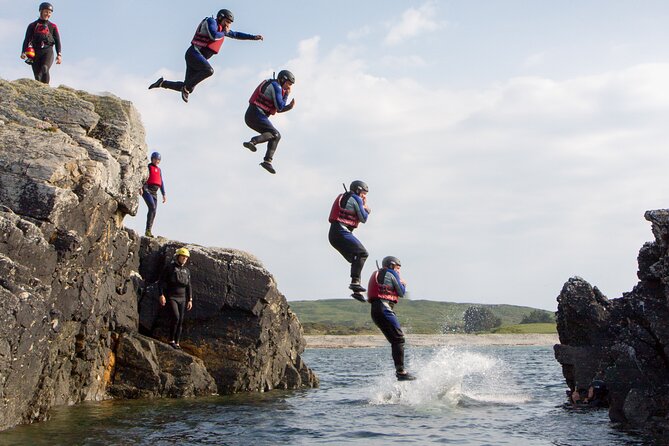
A guide can make or break an activity like this. Danny is identified as an especially engaging instructor who challenged the group while keeping the session safe and enjoyable. Steve also led a memorable outing, particularly for first-time participants who needed the basic movements explained clearly.
That combination matters more here than on a standard walking tour. You need practical help, not a long talk about local sights. The guide must explain how to use the equipment, assess the conditions, watch the group, and decide when a climb or jump is suitable.
First-timers should find the instruction reassuring because the activity does not assume you already know how coasteering works. The guides explain the process and adjust the difficulty. Experienced outdoor people, meanwhile, should still find enough action to keep the session interesting.
The maximum group size is 21 people. That is not a tiny private outing, so the feel may depend on the actual number booked. A full group can mean more waiting between sections, particularly if everyone takes turns at a climb or jump. On the other hand, a larger group can suit families and friends who want to share the experience.
The most important question is not whether the group is large or small. It is whether the guides keep the activity moving while giving each person the attention needed for safe decisions.
What to wear and what you receive
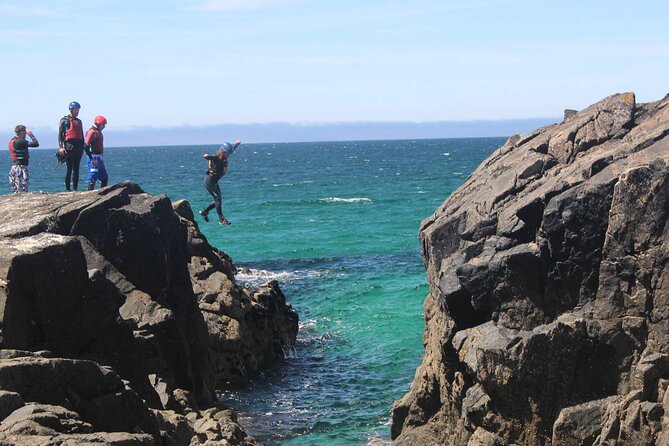
The provider supplies a wetsuit, buoyancy aid, helmet, gloves, shorts to wear over the wetsuit, and runners. That is a strong equipment package for an activity where warmth, flotation, grip, and head protection all matter.
You need to bring your own swimming suit or shorts to wear under the wetsuit. You also need a towel. Those are easy items to forget, especially if coasteering is one part of a wider day out in Connemara.
You may bring your own runners if you prefer. If not, footwear is supplied. Since scrambling forms a major part of the session, do not treat footwear as a minor detail. Secure, suitable shoes are part of what lets you move with confidence over uneven rock.
The supplied gear also makes the price easier to assess. You are not paying only for a guide to point out a shoreline. You are receiving specialist clothing and safety equipment, along with instruction and access to a managed coastal route.
Is $92.51 good value?
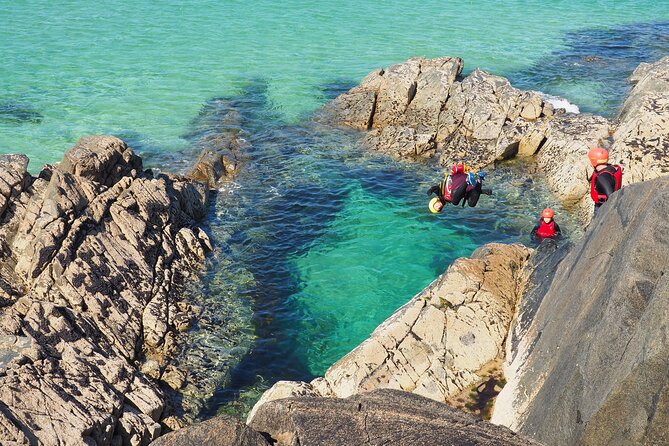
At $92.51 per person, this is not the cheapest way to spend a morning or afternoon in Connemara. It is also more than a short guided walk. The fair comparison is with other active outdoor experiences that include equipment, instruction, and a trained guide.
For that comparison, the price is reasonable if you plan to use the full session. The activity lasts about two hours and 30 minutes, and the cost includes the main equipment you need. You also get a structured route through coastal features that would be difficult to explore safely on your own.
The value is strongest for first-timers, families with adventurous children or adults, and visitors who want to feel the Atlantic rather than only photograph it. If you already own water gear and know the coast well, the included equipment may matter less to you. You still pay for local route knowledge, group management, and the guide’s judgment.
I would think of this as a special-activity price, not an everyday excursion price. If you have only one open slot in your Connemara plans and want something physical and memorable, it can earn its place. If your main goal is scenery with minimal effort, spend the money elsewhere.
The experience is booked, on average, 37 days ahead. That suggests you should plan it before arriving, especially if you have a tight schedule or need a particular date.
Weather, fitness, and who should book
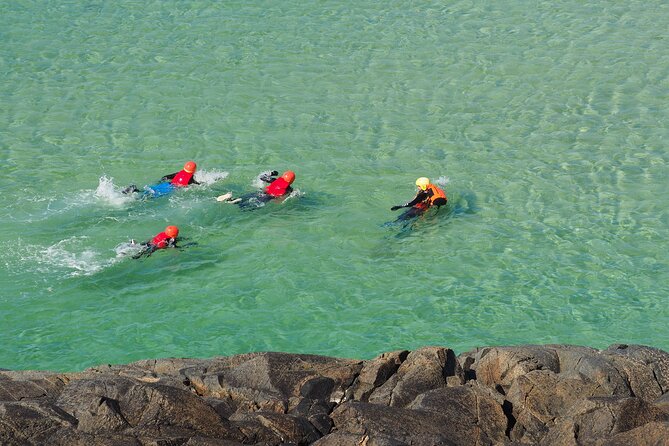
Coasteering depends on good weather. Poor conditions can lead to a new date or a full refund, which is sensible for an activity that uses exposed coastal rock and the sea. Build a little flexibility into your plans if possible.
Most people can participate, but the wording should not be confused with effortless. You will swim, scramble, climb, and possibly jump. A basic willingness to be active is more important than specialist outdoor experience.
This suits you if:
- You like physical activities with a strong sense of place.
- You want to try several coastal skills in one session.
- You are comfortable getting wet and following safety instructions.
- You are visiting Connemara with friends or family members who have different confidence levels.
- You want an experience that feels more adventurous than a normal coastal walk.
It may not suit you if you dislike cold water, enclosed rocky spaces, heights, or uncertain weather. The session can be adapted, but it remains an Atlantic adventure. Adapted does not mean completely gentle.
The mobile ticket is convenient, and confirmation arrives at booking. Free cancellation is available until 24 hours before the start time for a full refund. Changes or cancellations inside that 24-hour window are not accepted, and no refund is provided. If the minimum number is not reached, the provider offers another date or experience, or a full refund.
How it fits into a Connemara day
Because the session begins and ends at Keogh’s MACE in Ballyconneely, you can build the rest of your day around that fixed point. Keep your schedule sensible. A two-and-a-half-hour activity can take more energy than its clock time suggests, especially if you choose the harder climbs and jumps.
You may want a quiet plan afterward rather than another demanding outdoor activity. The return to the meeting point helps you change clothes, collect your belongings, and continue without arranging transport between separate locations.
The format also works well as a highlight within a wider visit to County Galway. It gives you a close look at the coast while adding physical participation. You will not cover a long stretch of shoreline, but you will experience one coastal area in much greater detail than from a roadside viewpoint.
Should you book Coasteering on Ireland’s Wild Atlantic Way?
Book it if you want the Wild Atlantic Way to be something you feel in the water, under your hands, and in your legs. The combination of caves, swimming, climbing, scrambling, and cliff jumping gives the session real variety, while Danny and Steve bring the instruction needed to make the challenge manageable.
The strongest reasons to go are the adaptable difficulty, full equipment package, and direct contact with Connemara’s Atlantic coast. The main reasons to hesitate are the price, weather dependence, and physical demands.
For an adventurous first-timer, an active family, or anyone who wants more than a scenic stop near Clifden, this is a strong choice. Bring a swimsuit, shorts, and towel, leave room in your schedule, and be ready to make sensible choices about which jumps and climbs suit you.
FAQ
Where does the coasteering experience start and finish?
It starts and ends at Keogh’s MACE in Ballyconneely, County Galway, Ireland.
How long does the activity last?
The session lasts approximately two hours and 30 minutes.
What activities are included?
The experience combines swimming, cave exploration, climbing, scrambling, and cliff jumping along the Atlantic coast.
Is equipment provided?
Yes. Wetsuits, buoyancy aids, helmets, gloves, shorts to wear over the wetsuit, and runners are included. You may bring your own runners if you prefer.
What should I bring?
Bring a swimming suit or shorts to wear under the wetsuit, along with a towel.
Can beginners take part?
Yes. The activity can be adjusted for the group’s sense of adventure, fitness, and ability, and most people can participate.
What happens if the weather is poor?
If poor weather causes the experience to be canceled, you will be offered another date or a full refund.
Fresh thrills added around the world
- Southern California Extreme UTV Tour (19-Mile Tour)★ 5.0 · 19 reviews
- Rappelling Adventure in Joshua Tree National Park (6 Hours)★ 5.0 · 2 reviews
- Mallorca Coasteering Adventure★ 3.0 · 2 reviews
- Private Climbing and Rappelling Experience in Oaxaca★ 5.0 · 6 reviews
- Adrenalin Junkie Tour – 60 mins (min 2)★ 5.0 · 19 reviews
- Rappelling Adventure in Joshua Tree National Park (4 Hours)★ 5.0 · 12 reviews
- Canyoning Adventure in Hidden Mountain Rapids near Geilo★ 4.5 · 16 reviews
- High Adrenaline Rafting in Dagali near Geilo in Norway★ 5.0 · 17 reviews
Coasteering Tours, side by side
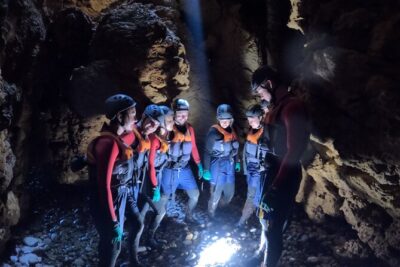
Award Winner Premium Kayak and Coasteering Adventure with Lunch
Read our review →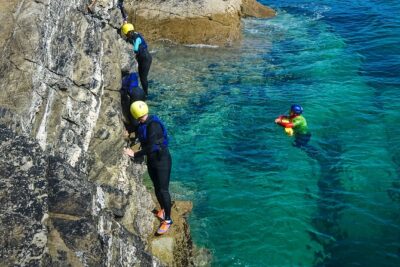
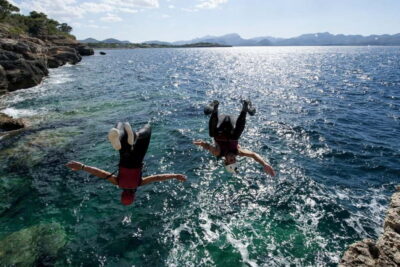
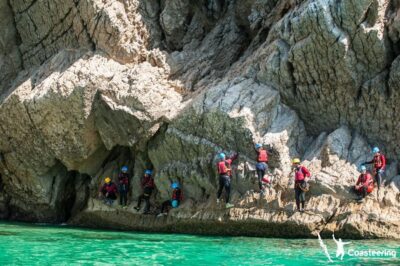
Lisbon: Sesimbra/Arrábida Natural Park Coasteering Adventure
Read our review →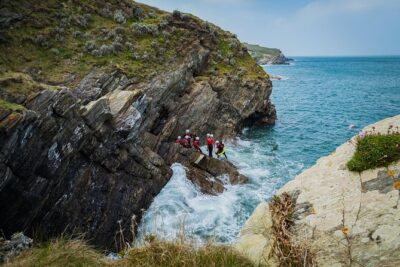
Newquay Coasteering x Cornish Wave | Original Since 2012
Read our review →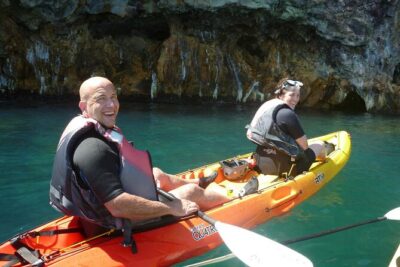
Private Tour explore Vulcano Island by Kayak & Coasteering
Read our review →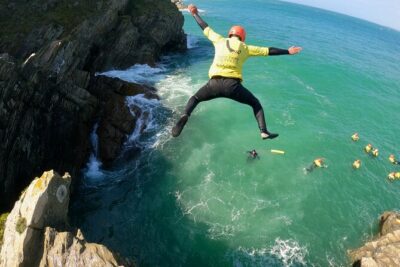
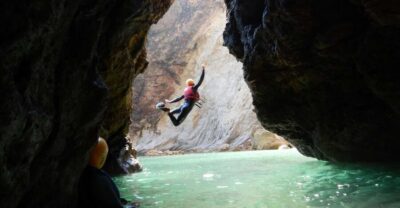
Sagres: Coasteering – Swimming, Cliff Jump & Rock Climbing
Read our review →Lists this trip sits in