Review · MALLORCA
Coasteering in South Mallorca with Transfers
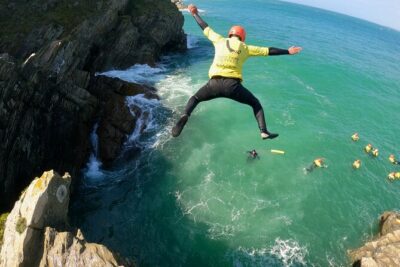
The main event here is simple to understand and hard to forget: you move along Mallorca’s rocky shore by jumping, swimming, climbing, and rappelling. Jumps begin low and can build toward 12 meters, but you are not pushed to take any leap you do not want.
I like the gradual pace and the personal guiding. José, Joni, Mario, Niko, Rafael, and other local guides are praised for giving clear instructions and helping nervous beginners. I also like that pickup, transport, wetsuits, helmets, buoyancy aids, shoes, insurance, and a small group of no more than 10 are included.
The main caution is that this is a physical outing on rough rock, not a gentle coastal walk. Sea conditions can make the swimming and climbing harder, and the meeting point can be confusing if you expect an office or changing room. Check your footwear and equipment before starting.
Key points to know before you book
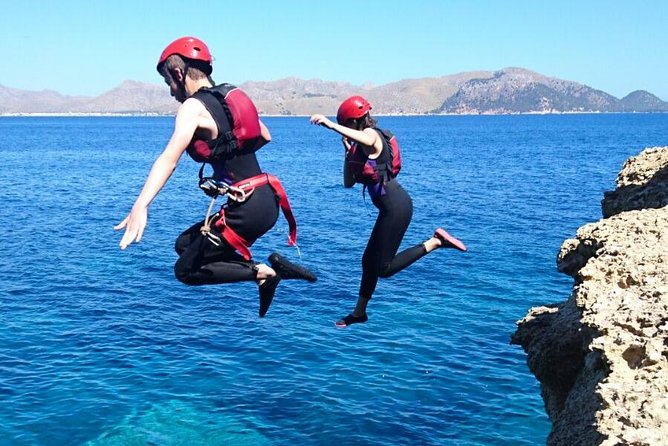
- Jumps build from about 2 meters to as high as 12 meters, with smaller options available.
- The route mixes several skills, including swimming, scrambling, rappelling, sea-cave exploration, and a zip line.
- Hotel pickup and return transport are included in many southern Mallorca areas, with special zones for Alcudia, Cala d’Or, and Cala Ratjada.
- Groups are capped at 10 people, so the guide can adjust the pace and challenge level.
- The shore can be rough underfoot, and climbing takes more strength than the photos may suggest.
- A swimsuit, towel, sunscreen, water, and lunch are useful, even though the activity provides the main safety equipment.
What coasteering in Mallorca really involves
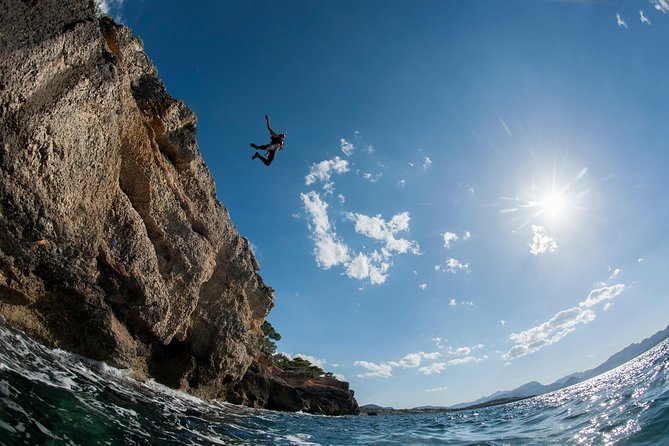
Coasteering is not a boat trip with a few optional swims. It is a moving outdoor course along the waterline. You scramble over rock, lower yourself with a rope, swim across small inlets, climb along cliff edges, and jump into the sea when the route calls for it.
The exact course can change with weather, sea conditions, and the group. Some outings use a beautiful cove such as Caló d’en Monjo, while the listed meeting point is at Cala Fornells. Pickup zones also affect the route. The operator lists a northern course for people staying around Alcudia and an eastern course for those in Cala d’Or or Cala Ratjada.
That matters because the title can make the activity sound like one fixed route. It is better to think of it as a guided coastal adventure in the part of Mallorca that fits your pickup zone and the day’s conditions.
The advertised tour lasts about four hours, with some descriptions putting the active portion closer to three and a half hours. Add pickup and return transport, and you have a substantial half-day outing.
More Coasteering Tours in Mallorca
- Mallorca: Half-Day Coasteering Experience
★ 4.7 · 447 reviews - Coasteering Mallorca
★ 5.0 · 40 reviews - Shore Excursion: Coasteering in Mallorca
★ 5.0 · 40 reviews
From hotel pickup to the rocky shore
Pickup is offered across southern Mallorca, from Puig de Ros along the coast to Andratx. You can also meet at a central point, with Cala Fornells listed as a starting location. Hotel pickup and drop-off are included for the covered areas, and meeting arrangements can be made for apartment rentals.
The transport is by minivan. This is useful if you are staying away from the activity site, since you do not need to work out a coastal drive or find parking near a remote cove. It also means the day begins and ends with a transfer rather than at the water itself.
Give yourself extra time at the meeting point. The pickup location may simply be a place where you wait for the van, not a staffed shop with signs, toilets, or changing rooms. One practical account describes confusion in a one-way town and uncertainty about where to wait. Confirm the exact pickup instructions in advance, especially if you are meeting rather than being collected at your hotel.
The start time shown is 10 a.m., though morning and afternoon departures are offered. Your confirmation should settle the actual time and pickup point.
Getting fitted with wetsuits, helmets, and water shoes
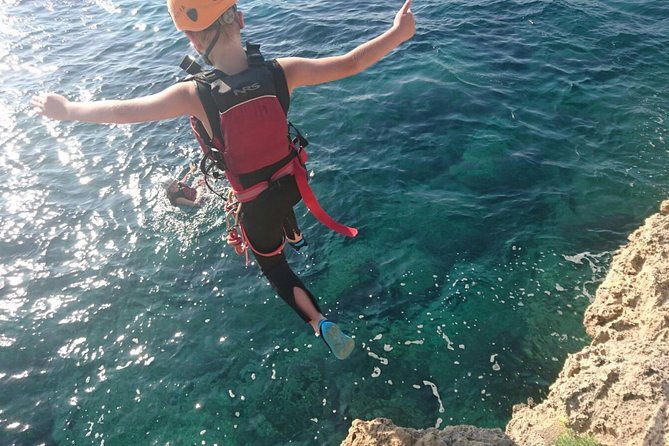
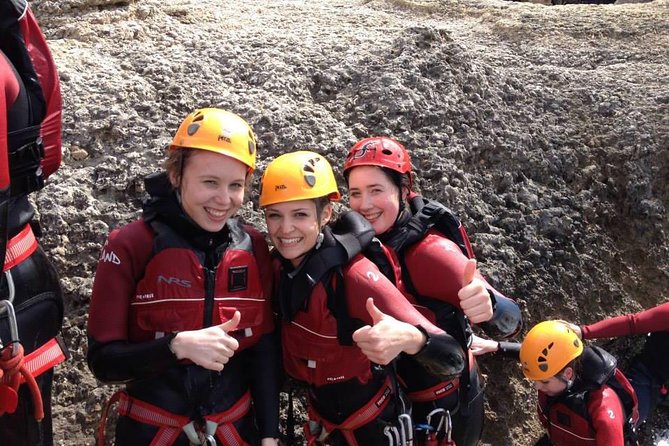
The operator supplies a wetsuit, helmet, buoyancy aid, climbing equipment, and shoes. You must provide your height, weight, and shoe size when booking so the gear can be prepared.
Bring your swimsuit and towel. Wear comfortable clothing and hiking shoes for the approach, but expect to change into the supplied water equipment before heading to the coast. Bring sunscreen, bottled water, and your own lunch or snack. Food and drinks are not included.
The wetsuit serves more than one purpose. It gives some warmth in the water and helps protect your skin from sharp rock. A full-length suit is especially useful when you are repeatedly hauling yourself out of the sea or moving close to cliff faces.
Footwear deserves a quick check. One dissatisfied participant raised concerns about grip and worn equipment, while the operator stated that its shoes are used regularly and that people may choose to bring their own. The sensible approach is to inspect the soles and fit before leaving the van. If you have suitable water shoes with reliable grip, ask if they are acceptable. Do not wait until you are on wet rock to discover that your footwear feels loose.
The first jumps help you find your nerve
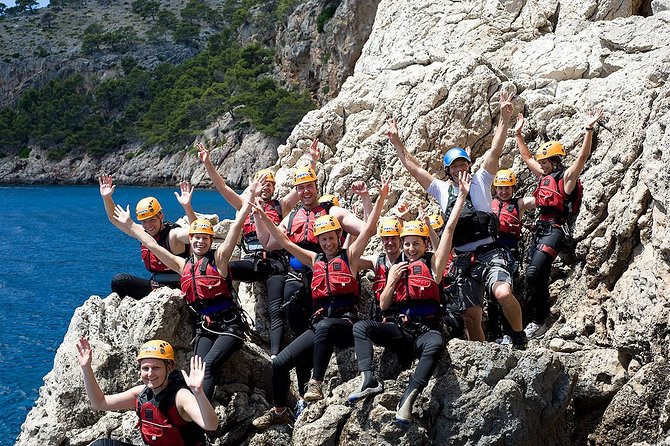
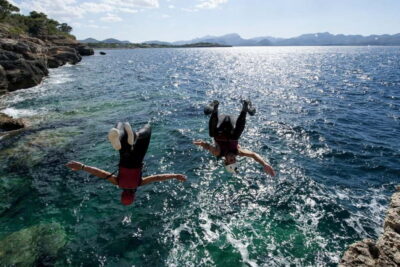
The guides generally begin with lower jumps, often around 2 to 3 meters, before offering higher choices. This progression is one of the best parts of the outing. You learn how to enter the water, where to place your feet, and how to listen for instructions before the height becomes intimidating.
The final jump may reach about 9 meters at some sites, while the advertised maximum is 12 meters. Those numbers feel different once you are standing above the water. A jump that sounds modest at breakfast can feel serious when you are at the edge in a helmet and wetsuit.
You can stay with the lower jumps, skip a jump, or choose a different route. The guides are described as encouraging rather than forceful, and the activity is designed to work for mixed abilities. That makes it suitable for a family with active children, a group of friends, or a first-timer who wants a challenge without committing to the highest leap.
The sea is not always calm. Rougher water can make the landing and swim-out more demanding, and the rock can be slippery. Listen closely to the guide’s instructions about where to jump and how to move away from the landing area.
More Coasteering Tours in Spain
- Kayak & Coasteering
★ 5.0 · 38 reviews - Coasteering Cliff jumping
★ 5.0 · 27 reviews - North Mallorca Coasteering Tour with Transfers
★ 4.5 · 19 reviews - Mallorca: coasteering South
★ 4.5 · 14 reviews
Climbing, scrambling, and the psicobloc section
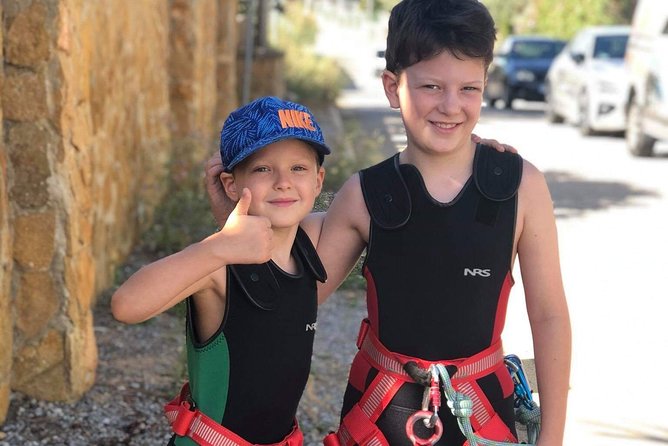
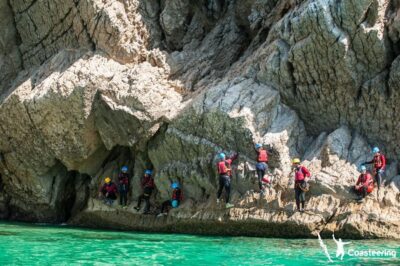
The climbing here is not a long roped climbing session. Much of it is low-level scrambling and horizontal movement along rock above the water. In places, you may climb around a cliff edge to reach the next jump.
The local term psicobloc refers to climbing without ropes above deep water, with the sea providing the landing. The height above the water may be modest in some sections, but the rock is uneven and the repeated climbs can tire your hands and arms.
One account compares the climbing to scrambling and bouldering, with no belay needed for that part. Another points out that the hands can feel beaten up the next day from climbing out of the water. That is a useful warning. You do not need to be an expert climber, but basic fitness, balance, and comfort using your hands will make the outing much easier.
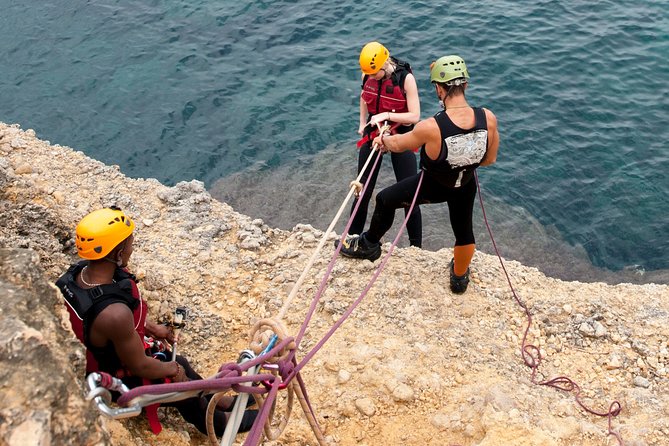
Guides may also use a rope and rappel device to lower you from a sea cliff. This gives the day a different rhythm: one moment you are choosing a jump, and the next you are descending carefully toward a pool or cave.
Sea caves, coves, and the improvised zip line
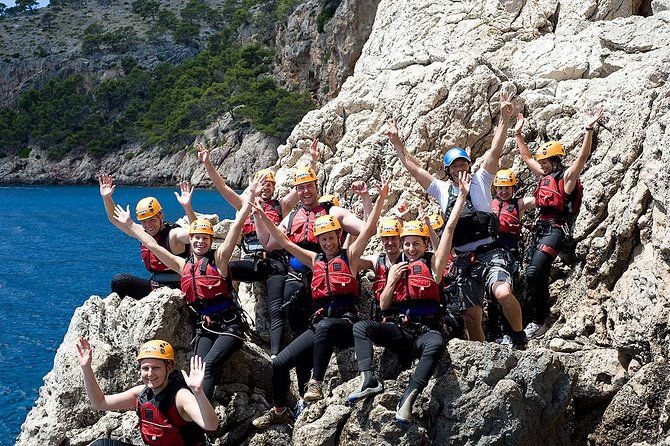
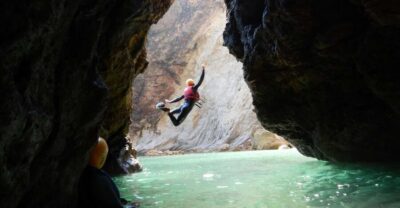
The coast is the star of the outing. Expect clear water, rock formations, small pools, and sea caves reached by swimming or scrambling. At sites such as Caló d’en Monjo, the setting combines open sea with sheltered rock and striking views.
The short zip line is often built at the site rather than being a permanent amusement-park installation. Guides have created a line between rocks so the group can finish with a swing or glide into the water. It can involve a swim and a climb to reach the launch point, so it is not simply a walk-up attraction.
This is one of the memorable touches of the day, but it also shows why the route is active from start to finish. You may need to swim, climb, and move over rough ground before getting your turn.
Keep in mind that the bags may be left in one place while the group moves between nearby activity areas. Some participants have carried waterproof phone cases or cameras and returned to their bags between sections. Do not assume professional photographs are included. If you want pictures, bring a secure waterproof phone case or your own action camera, but protect it carefully and follow the guide’s instructions.
How hard is it for families and beginners?
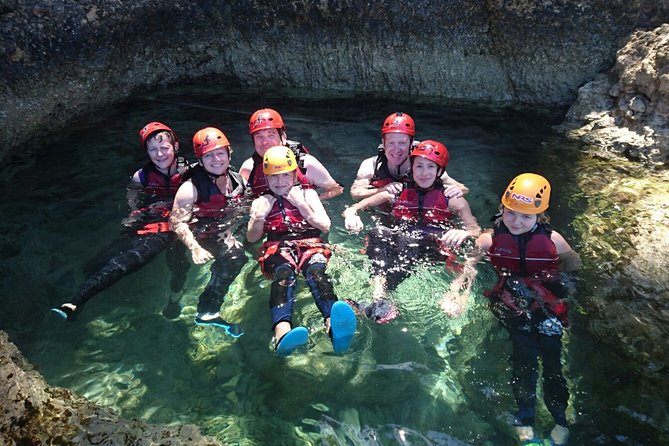
The minimum age is 8, and most participants can take part. The practical question is not just age. You should also consider swimming ability, comfort in open water, balance, and willingness to climb over rough rock.
Active children often enjoy the jumps and the variety. A family with teenagers completed the higher jumps and described the climbing as demanding but rewarding. Younger or less confident participants can stay with lower jumps and skip the more exposed sections.
You do not need specialist climbing experience. Still, this is not a passive sightseeing trip. The approach may include a short hike, often around 10 minutes, and the day involves repeated entries and exits from the water. If your group includes someone nervous about heights, make sure everyone understands that participation is flexible but the setting itself remains exposed.
The guides are a major part of the experience. Names reported for different departures include José, Gemma, Joni, Alfonso, Mario, Niko, and Rafael. Language support is offered in English, and Spanish and English are the minimum languages normally spoken. French may not be available, so check before booking if that is important to your group.
What the $90.51 price covers
At $90.51 per person, the price is fair if you use the included pickup and equipment. A half-day activity with a guide, minivan transport, insurance, wetsuit, helmet, buoyancy aid, water shoes, and climbing gear would be costly and awkward to arrange independently.
The value is strongest for visitors without a rental car or personal equipment. You are paying for the route, safety setup, gear fitting, transport, and the guide’s judgment about which jumps and climbs suit the group.
The price does not include food or drinks. Bring water and a small lunch, though you may not have much interest in eating during the active part. A snack for the ride home is a sensible addition.
The tour is recommended by 95 percent of its 55 listed ratings and carries a 4.8 score. Those figures suggest a strong record, but they should not hide the physical demands or the occasional concern about equipment and meeting arrangements.
Weather, cancellation, and practical planning
Good weather is required. If conditions force a cancellation, you are offered another date or a full refund. The same applies if the minimum number of participants is not reached.
You can cancel for a full refund up to 24 hours before the start time. Changes or cancellations inside that window are not accepted for a refund, with cut-off times based on Mallorca’s local time.
Plan this outing on a day when you do not need to look polished afterward. You will be wet, salty, and likely tired in the arms and legs. If you have an evening plan, leave a generous gap.
The group limit of 10 is helpful. A smaller group gives the guide more room to help with jump choices and climbing technique, though the pace can still vary if some people want every available challenge and others prefer to stay low.
Who should book this Mallorca adventure?
I would choose this for an active family, a couple wanting something beyond beaches, or a group of friends who like a clear dose of adrenaline. It is also a good first coasteering outing because the jumps usually rise in stages and you can opt out of individual elements.
I would think twice if you dislike open water, have trouble climbing from the sea, or want a relaxed walk along the coast. The scenery is beautiful, but you earn it with wet shoes, rough rock, and repeated physical effort.
You should also book carefully if pickup is outside the southern zone. Alcudia, Cala d’Or, and Cala Ratjada have separate route arrangements, and selecting the correct area matters.
Should you book it?
Book it if you want Mallorca from the waterline rather than from a beach chair. The strongest reasons are the mix of activities, the patient guide-led progression, and the included transport and equipment.
Skip it if you want a predictable route, easy access, or a quiet swim. Before paying, confirm your pickup zone, ask about the day’s meeting point, provide accurate sizing details, and check the condition and grip of your footwear. Done with realistic expectations, this is a memorable half-day challenge with enough flexibility for beginners and enough height for experienced thrill-seekers.
FAQ
How long does the coasteering activity last?
The outing lasts about four hours, with some descriptions indicating roughly three and a half hours of active time. Pickup and return transport add to the total time away from your hotel.
Where does the activity start?
Cala Fornells is listed as a starting meeting point at Carrer de Cala Fornells, 30. Hotel pickup is offered in southern Mallorca from Puig de Ros along the coast to Andratx, and arrangements can be made for apartment rentals.
Is hotel pickup included?
Yes. Hotel pickup and drop-off are included for the covered pickup areas. Separate coasteering zones are used for people staying around Alcudia, Cala d’Or, and Cala Ratjada.
What activities are included?
The activity can include cliff jumping, swimming, sea-cave exploration, rappelling, rock scrambling, low-level climbing, and a zip line between rocks.
How high are the jumps?
Jumps range from about 2 meters to as high as 12 meters, depending on the location and conditions. Lower jumps are available, and you do not have to take every jump.
What equipment is provided?
The operator provides wetsuits, shoes, helmets, buoyancy aids, climbing equipment, and other required safety equipment. Insurance and minivan transport are also included.
What should I bring?
Bring a swimsuit, towel, sunscreen, bottled water, comfortable clothes, hiking shoes, and your own lunch or snack. Food and drinks are not included.
What is the minimum age?
The minimum age is 8 years. Participants should also be comfortable with swimming, climbing, rough ground, and outdoor activity.
Can I cancel for a refund?
You can cancel up to 24 hours before the start time for a full refund. Poor weather or failure to meet the minimum number of participants can also lead to an alternative date or a full refund.
Fresh thrills added around Mallorca
- Try adventure, try coasteering – North coast★ 5.0 · 7 reviews
- Coasteering Cliff jumping★ 5.0 · 27 reviews
- Kayak & Coasteering★ 5.0 · 38 reviews
- Small-Group Cliff Jumping Experience in Mallorca★ 5.0 · 84 reviews
- Jet Boat Excursion in South West Coast of Mallorca★ 5.0 · 110 reviews
- Extreme e-scooter off-road excursions★ 5.0 · 3 reviews
- Kayak Tour with Caves, Snorkeling and Picnic (+ Cliff Jump)★ 5.0 · 118 reviews
- Hidden Mallorca: Sea Caving Adventure★ 5.0 · 3 reviews
Coasteering Tours, side by side
Award Winner Premium Kayak and Coasteering Adventure with Lunch
Read our review →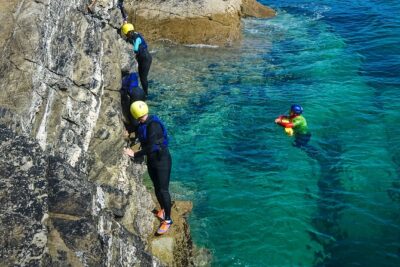
Lisbon: Sesimbra/Arrábida Natural Park Coasteering Adventure
Read our review →
Newquay Coasteering x Cornish Wave | Original Since 2012
Read our review →
Private Tour explore Vulcano Island by Kayak & Coasteering
Read our review →