
Review · JAPAN
Tokyo Bay: Scenic Skyline Go-Kart Tour (120 Minutes)
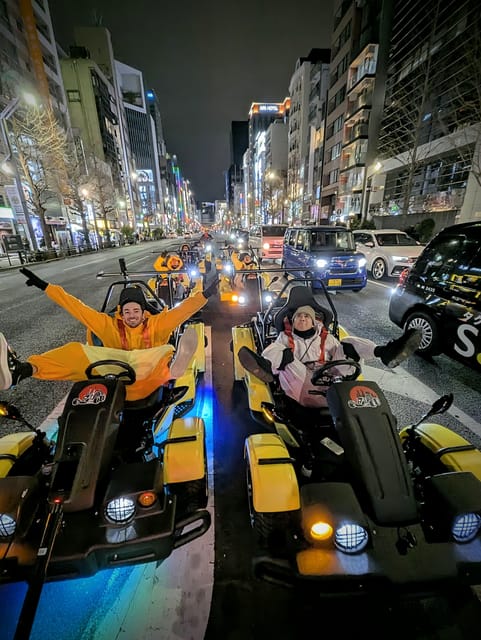
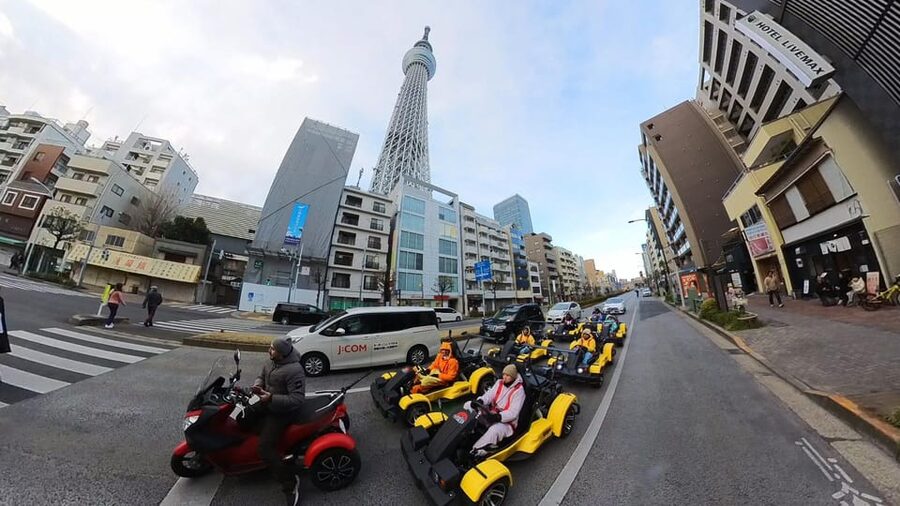
Tokyo looks different from behind a steering wheel. This two-hour route rolls from the Tokyo Skytree area through waterfront districts, Ginza, Tokyo Station, and the Imperial Palace surroundings, giving you a street-level view of places you might otherwise see only from a train or sidewalk. The guide stays connected by two-way radio, mixing road instructions with stories about the city.
I like the small group of up to eight and the comfort-focused karts, especially for first-time drivers or taller people. I also like that fuel, insurance, drinks, costume rental, and an optional Insta360 camera are included in the package. The main catch is the paperwork: you need the correct driving permit, and arriving without it means you cannot drive or receive a refund.
Key points before you book
- Tokyo Skytree starting point: The tour begins and ends at Kartzilla Go Kart Tokyo, near Hiraki Children’s Clinic and clearly marked with an outdoor sign.
- Two hours on city streets: The route connects Skytree, Toyosu, Ginza, Tokyo Station, and the Imperial Palace area in one guided loop.
- Radio contact throughout: Your guide provides live safety instructions and commentary while you drive.
- Comfortable street-legal karts: Advanced suspension, hydraulic brakes, reinforced frames, and stable handling are designed for city driving.
- Strict license rules: Bring your passport, driving license, and the required International Driving Permit or official Japanese translation.
- Up to eight participants: A small group keeps the experience more personal and makes it easier to follow the guide.
What this Tokyo go-kart tour is really like
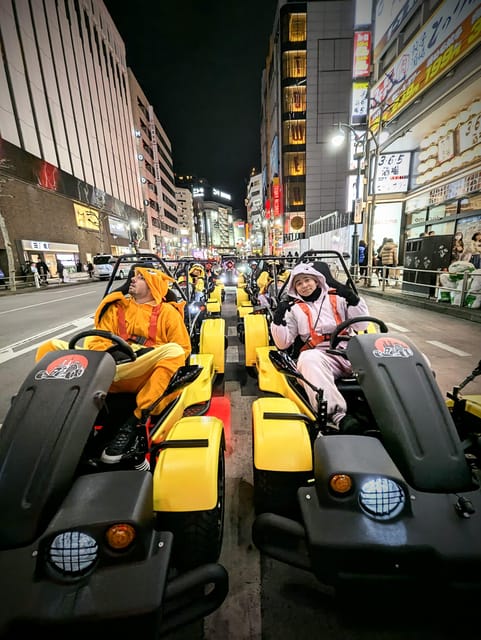
This is not a racetrack session. You are not racing, drifting, or setting lap times. You are driving a professionally engineered, street-legal go-kart in ordinary Tokyo traffic, following a local guide at a relaxed pace.
That difference matters. The appeal is not speed. It is the odd and memorable feeling of moving through Tokyo at road level while landmarks, shop fronts, bridges, and city neighborhoods pass close by. The route gives you a broad look at the city rather than keeping you in one entertainment district.
Before departure, you receive a road-safety briefing and simple driving instructions. The guide leads the group and remains in contact through a two-way radio. That means you can receive directions as the route changes, rather than trying to guess where to turn while watching traffic.
The karts are built with comfort in mind. Advanced suspension should make the ride less jarring than a basic recreational kart, while hydraulic brakes offer more precise stopping. Reinforced frames are intended to accommodate big and tall riders, and stable handling helps make the kart approachable if you have never driven one before.
You can also use an onboard Insta360 camera. A Micro SD card is required, and you can buy one onsite if needed. The tour includes free photos of the experience, but you should not assume the camera recording is included without the card. Bring your own compatible card if you want to avoid an extra purchase.
More Go-Kart Sessions in the world:
- Livigno: Adrenaline Ice Karting Experience
★ 4.7 · 8 reviews
From Tokyo Skytree to the first city streets
The facility near Tokyo Skytree is both the meeting point and the start and finish line. The building has a Kartzilla Go Kart outdoor sign, and Google Maps is described as reliable for reaching it. You should still allow plenty of time, since check-in and the mandatory briefing require you to arrive at least 40 minutes before departure.
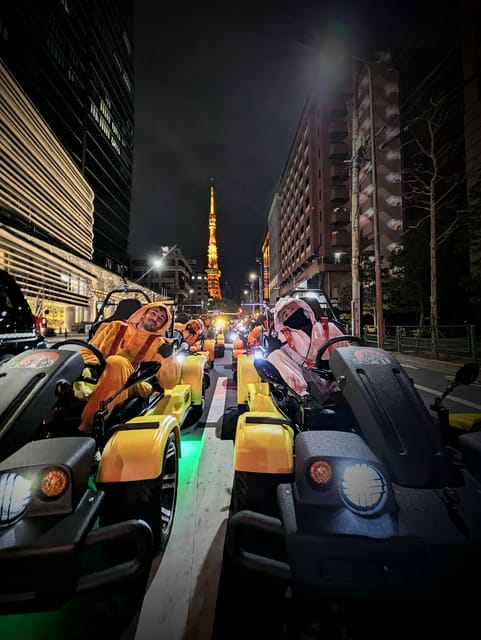
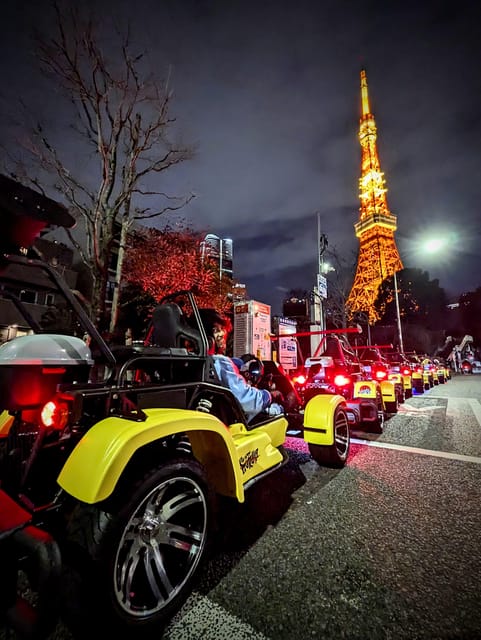
Tokyo Skytree gives the opening section an unmistakable reference point. Even if you do not stop for a formal visit, the tower helps you understand where you are as the group sets off. The first part of the drive is about learning the kart, settling into the controls, and getting used to moving as part of a guided line.
This is also where the guide’s radio communication becomes useful. You can hear safety reminders and route directions while keeping your attention on the road. The experience is beginner-friendly, but you still need to be an alert driver.
Monzen-Nakachō and Tokyo’s older side
Monzen-Nakachō Station marks a change from the Skytree area to one of Tokyo’s more established city neighborhoods. The route includes a guided drive and scenic views along the way, with the guide providing local context over the radio.
The value here is contrast. Tokyo is not only towers, department stores, and huge crossings. A route through different districts lets you see how modern streets connect with older urban areas and everyday city life. You will not get a long walking visit at each stop, so think of Monzen-Nakachō as a moving introduction rather than a detailed neighborhood tour.
For me, this is one of the better reasons to choose a route that covers several districts. You get a sense of Tokyo’s scale and variety without spending the day changing trains.
Toyosu Fish Market, Ariake, and Harumi
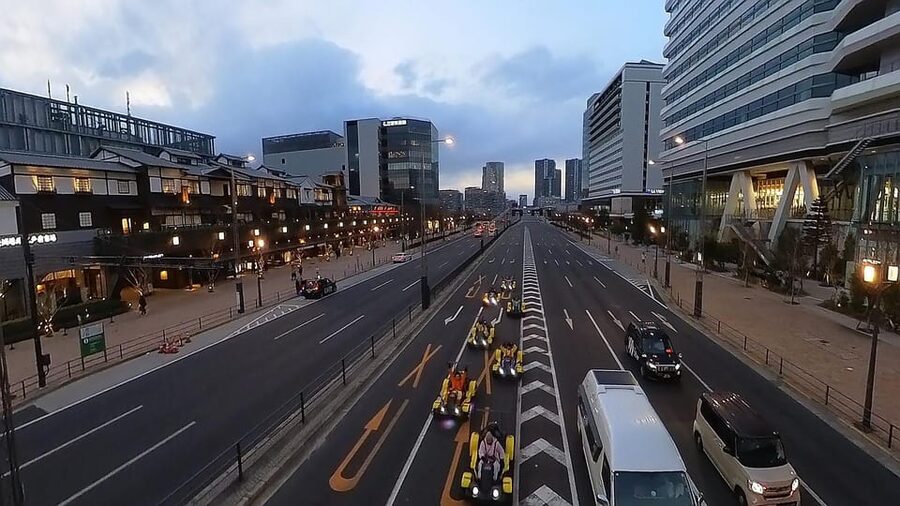
The route then heads toward Toyosu Fish Market, Ariake Coliseum, and Harumi. These stops bring waterfront Tokyo into the picture and add a different feel from the central streets.
Toyosu is one of the city’s best-known food-market areas, while Ariake and Harumi show Tokyo’s modern bay districts. The tour does not describe a market meal, market entry, or an extended stop inside any of these locations, so plan to see them from the road. Meals are not included, and this is not a food tour.
The waterfront portion can be particularly useful if your Tokyo plans focus mainly on temples, shopping streets, or central stations. From the kart, you can connect the districts geographically and see how the bay side fits into the wider city. At the same time, the exact views will depend on traffic, weather, and the pace of the group.
Same nerve, a different drop:
- ThrillSeekers: Aruba UTV Tour & Cliff Jump at Natural Pool
★ 5.0 · 5,733 reviews - Luquillo Beach Horse Ride from Carabalí Rainforest Adventure Park
★ 5.0 · 4,762 reviews - Aruba UTV Tour with Natural Cave Pool and Cliff Jumping
★ 5.0 · 4,492 reviews - Barcelona Costa Brava Kayak, Snorkel & Cliff Jump Day Tour
★ 5.0 · 3,872 reviews
Ginza and Kabuki-za from the driver’s seat
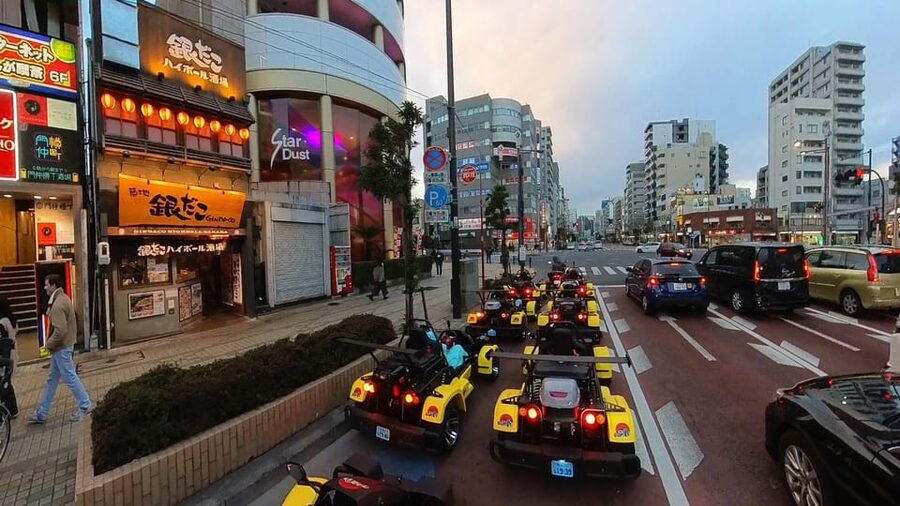
Ginza brings the route into one of Tokyo’s best-known central shopping districts. Here, the attraction is the city setting itself: major streets, polished commercial areas, and the sense of moving through one of Tokyo’s most recognizable urban centers.
Kabuki-za adds a cultural landmark to this section. The tour includes a guided drive past the theater, not a performance or interior visit. If you want to attend kabuki, you will need to arrange that separately.
Driving near Ginza can feel more exposed than cruising through a quiet side street, which is another reason the radio guidance matters. You need to follow the guide, obey traffic rules, and keep your focus on driving. The tour offers a relaxed pace, but relaxed does not mean passive.
I like this section because it puts you in the middle of Tokyo’s public life. You are not simply looking down at the city from a tower or passing through it underground. You are sharing the road and seeing the streets as an active part of the experience.
Tokyo Station and the Imperial Palace surroundings
The route continues to Tokyo Station and the area around the Imperial Palace. Tokyo Station is a major city landmark with a strong connection to transport, business, and central Tokyo. Seeing it from the road gives you a useful sense of how the station relates to the surrounding streets.
The Imperial Palace section provides another shift in mood. The tour describes the area around the palace rather than promising entry, so expect an exterior drive and guide commentary. You should not book this tour if your main goal is a palace interior visit or a long walking tour of the grounds.
This part of the route works well as a city overview. In two hours, you move from a soaring tower to older neighborhoods, bay districts, luxury shopping streets, a major theater, a central station, and the palace surroundings. You will not study each place in detail, but you will see how these pieces fit together.
Why the radio guide matters
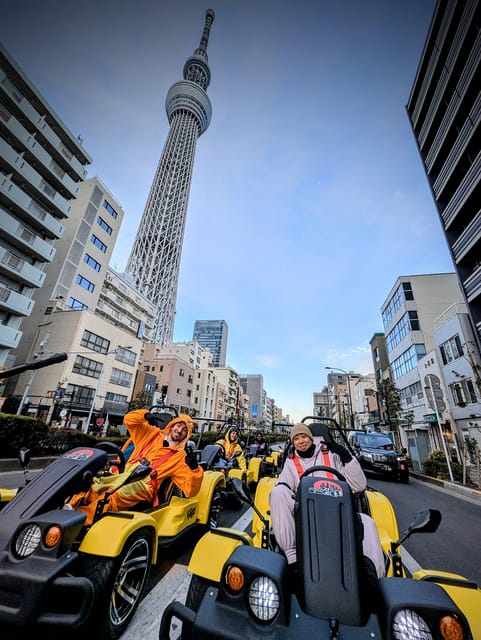
The guide is doing two jobs at once. You receive practical instructions about road position, turns, and group movement, while also hearing stories about landmarks and local culture.
That combination is more important than it might first appear. Tokyo traffic can be distracting, and stopping to consult a phone would be unsafe and awkward. With a two-way radio, the guide can keep the group informed in real time.
The available guide languages are English, German, Spanish, and Persian. Specific guide names are not provided, so you should not expect to request a named guide based on the information available. The small group limit of eight should make communication easier than on a large motor tour.
The guide does not remove your responsibility as a driver. You still need to hold the wheel, observe traffic, and follow Japanese road rules. The radio is a useful support system, not a substitute for a valid license or careful driving.
The practical value of the $116 price
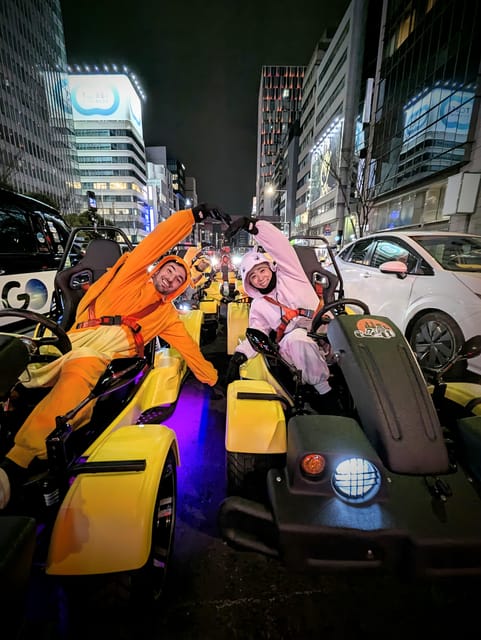
At $116 per person, this is more expensive than a normal sightseeing walk or train ride, but the comparison is not quite fair. The price includes the street-legal kart, fuel, guide, accident insurance, anime costume rental, drinks, and use of an onboard Insta360 camera. Free photos are also included.
The cost makes the most sense if you want an activity rather than simple transport between landmarks. You are paying for the vehicle, the guide, the planned route, the safety briefing, and the unusual access of seeing Tokyo from the driver’s seat.
The value is weaker if you dislike driving, want long visits at each landmark, or mainly want an inexpensive way to see the city. You will not have time to tour Toyosu Fish Market, enter Kabuki-za, visit Tokyo Station, or explore the Imperial Palace grounds during this two-hour loop.
Fuel is included, so you do not need to budget for that separately. Meals are not included, and hotel pickup and drop-off are not provided. Drinks such as water, tea, and coffee are included, which is useful before or after the drive but does not replace a meal.
The license rules are the key booking issue
You must bring a passport, driving license, and the correct international documentation. A Japanese license is accepted for Japanese citizens and residents of Japan.
For non-residents, the accepted document is an International Driving Permit issued under the 1949 Geneva Convention. A license from Switzerland, Germany, France, Belgium, Monaco, or Taiwan must be paired with an official Japanese translation issued by JAF.
Digital licenses, license photos, and expired licenses are not accepted. If you arrive without the required valid document, you cannot participate and no refund is provided. This is the detail I would check before paying for the tour.
Drivers must be at least 18 years old, and people over 95 are not accepted. The activity is not suitable for people with visual impairments or people without a driver’s license. The tour is wheelchair accessible, but the supplied information does not explain the exact kart transfer process, so you should confirm any specific mobility needs before booking.
Who will enjoy this route most
I would choose this tour if you want a playful way to connect several parts of Tokyo in a short time. It suits confident drivers who like city scenery, guided activities, and a little costume-based fun without needing to commit to a full day.
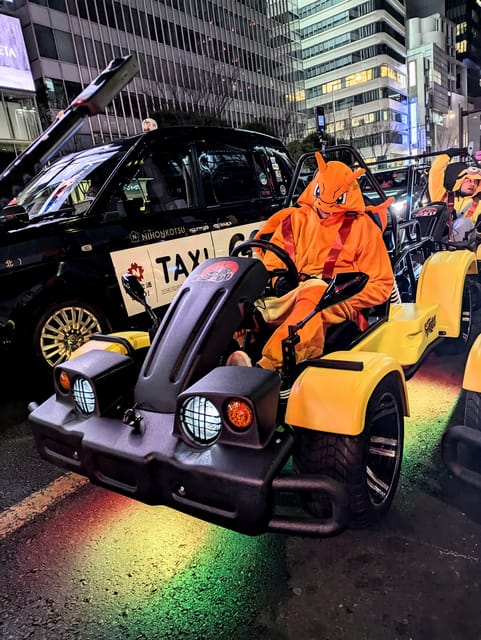
It is also a good fit for a small group of friends or family members who want shared photos and a clear route. The anime costume rental gives the outing a light, themed quality, while the guide’s commentary keeps it connected to Tokyo rather than making it only a novelty ride.
You may want another activity if you prefer quiet sightseeing, long museum visits, or detailed time at one landmark. You should also skip it if handling city traffic makes you anxious. The pace is described as relaxed and beginner-friendly, but you are still operating a vehicle on public roads.
For the best experience, arrive early, wear practical clothing, and check your driving documents before leaving home. If you want video, bring a Micro SD card. If you are relying on an international permit, check that it was issued under the correct convention rather than assuming any international license will work.
Should you book the Tokyo Uptown Route?
Book it if the idea of driving past Tokyo Skytree, Toyosu, Ginza, Tokyo Station, and the Imperial Palace area sounds more appealing than viewing them from a bus window. The small group, radio contact, included fuel, insurance, drinks, and comfort-focused kart design give the $116 price a reasonable basis.
Do not book it as a substitute for a walking tour or landmark admission. This is a moving city sampler, with the added thrill of driving. The deciding factor is simple: if you have the correct license and enjoy being behind the wheel, it offers an unusual look at Tokyo. If not, choose a sightseeing format that lets you focus fully on the city.
FAQ
Where does the Tokyo Bay go-kart tour start and finish?
The tour starts and ends at Kartzilla Go Kart Tokyo, near Hiraki Children’s Clinic. The building has a clearly marked Kartzilla Go Kart outdoor sign, and Google Maps is reported to be reliable for reaching the location.
How long does the tour last?
The guided experience lasts two hours, or 120 minutes. Starting times depend on availability.
What landmarks are included on the route?
The route includes Tokyo Skytree, Monzen-Nakachō Station, Toyosu Fish Market, Ariake Coliseum, Harumi, Ginza, Kabuki-za, Tokyo Station, and the area around the Tokyo Imperial Palace.
Is a driving license required?
Yes. You must have a valid accepted driving license and bring the required supporting documents. Drivers under 18 cannot participate.
Which licenses are accepted for non-residents?
Non-residents need an International Driving Permit issued under the 1949 Geneva Convention. Licenses from Switzerland, Germany, France, Belgium, Monaco, or Taiwan must be accompanied by an official Japanese translation issued by JAF.
Can I use a digital license or a photo of my license?
No. Digital licenses, license photos, and expired licenses are not accepted.
How early should I arrive?
You should arrive at least 40 minutes before your scheduled start time for check-in and the mandatory safety briefing.
Is the camera included?
An onboard Insta360 camera is available for use, but you need a Micro SD card. Cards are available for purchase onsite. Free photos are included.
What languages are available for the live guide?
Live guide service is available in English, German, Spanish, and Persian.
Fresh thrills added around the world
- Southern California Extreme UTV Tour (19-Mile Tour)★ 5.0 · 19 reviews
- Rappelling Adventure in Joshua Tree National Park (6 Hours)★ 5.0 · 2 reviews
- Mallorca Coasteering Adventure★ 3.0 · 2 reviews
- Private Climbing and Rappelling Experience in Oaxaca★ 5.0 · 6 reviews
- Adrenalin Junkie Tour – 60 mins (min 2)★ 5.0 · 19 reviews
- Rappelling Adventure in Joshua Tree National Park (4 Hours)★ 5.0 · 12 reviews
- High Adrenaline Rafting in Dagali near Geilo in Norway★ 5.0 · 17 reviews
- Chasing Waterfalls:Wild Hawaii Rappelling★ 5.0 · 19 reviews
Japan Adrenaline Activities, side by side
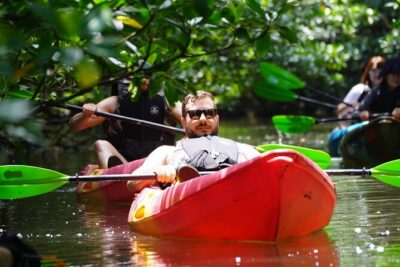
Okinawa Iriomote Mangrove SUP or Canoe and Splash Canyoning Tour
Read our review →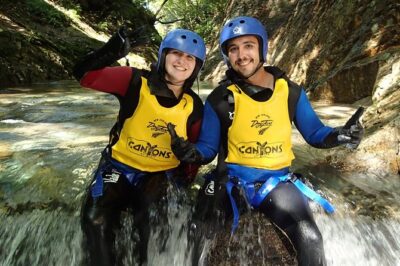
Shizuoka: Advanced Canyoning Activity near Mt. Fuji
Read our review →
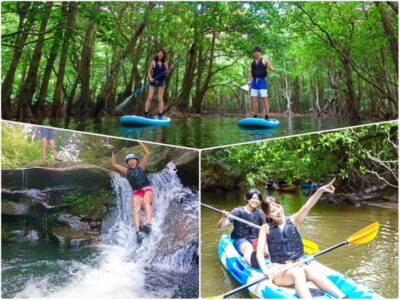
Iriomote Island: SUP or Canoeing and Canyoning Tour
Read our review →
Iriomote Island 1 Day Canyoning & Yubu Island Sightseeing
Read our review →Lists this trip sits in