
Review · GREECE
Heraklion: Family Zorba Treasure Hunt with Food Stop
Heraklion’s best family tour is not a lecture with children trailing behind. It is a two-hour city puzzle that turns monuments, murals, markets, and pastries into clues. You follow Zorba the Greek and writer Nikos Kazantzakis while using your phone to solve riddles and collect tokens for small gifts tied to sustainability, women’s empowerment, and innovation.
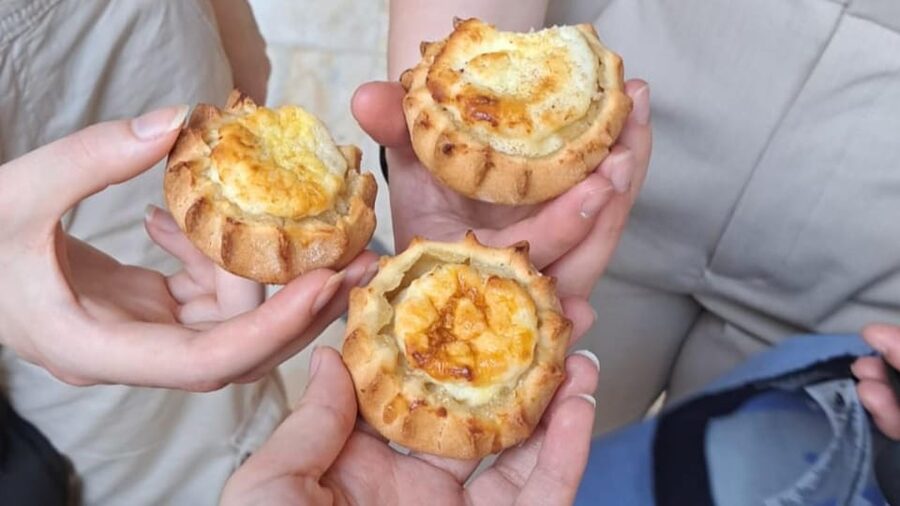
I like the mix of real sightseeing and play, especially the Venetian Loggia, Morosini Lions Fountain, Agios Titos Church, and the sea views from the old walls. I also like the well-timed bakery stop for kaltsounia, a sweet Cretan pastry that gives younger minds and tired feet a welcome pause. The main consideration is pace: two hours covers many stops, so this is a brisk introduction rather than a detailed museum tour.
Why this Heraklion treasure hunt works for families
- Zorba gives the route a clear theme: You collect ideas about living simply and fully rather than just checking off monuments.
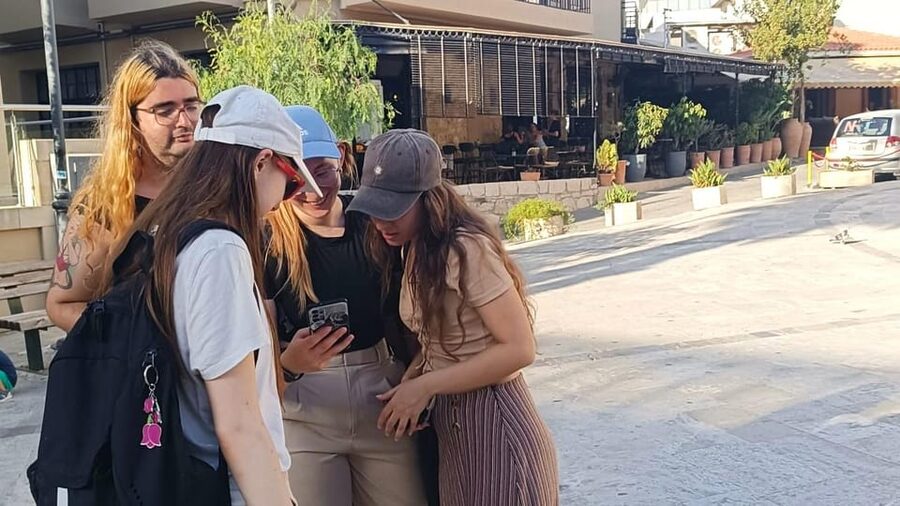
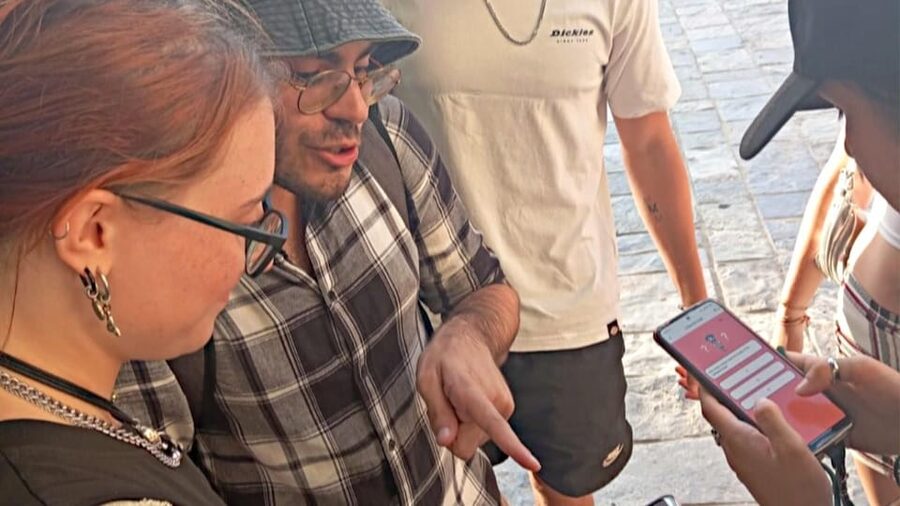
- The phone riddles keep children involved: Observation and teamwork matter as much as knowing Greek history.
- The route covers several eras: Venetian, Ottoman, ancient, modern, and contemporary Heraklion all appear along the way.
- The kaltsounia stop adds a true local taste: The included snack is more meaningful than a generic packaged refreshment.
- The finish can lead to useful online rewards: Collected tokens can be redeemed for gifts that support sustainability, female empowerment, and innovation.
- The route is compact but full: You see major sights in two hours, though you will not have time for long visits inside each one.
Starting at Rocca a Mare Fortress
Your meeting point is Rocca a Mare Fortress, the thick-walled Venetian stronghold at Heraklion’s harbor. The facilitator meets you here, explains the mission, and provides the digital materials needed for the hunt. Bring a fully charged smartphone. The activity is conducted in English.
Starting at the fortress makes good sense. You begin beside the water, with the old port and sea walls setting the scene for Heraklion’s long life as a fortified harbor. This is also where the route introduces its basic rhythm: read a clue, look closely at your surroundings, solve the answer, and move on.
The facilitator is important here. You are not simply handed a phone game and sent off alone. Someone helps keep the group moving and points you toward the next task. The supplied information does not name the facilitator, so do not book this expecting a particular guide by name.
More ways to get the heart going around Greece:
- Hersonissos: Jet Boat Tour with Snorkeling
★ 4.9 · 1,385 reviews - Canyoning trip at Zagori area of Greece – Section A
★ 5.0 · 425 reviews - From Thessaloniki: Half-Day Canyoning Trip to Mount Olympus
★ 5.0 · 267 reviews
The port, old technology, and Heraklion’s first clues
The first stretch takes you through Heraklion Port, where you have time for photographs and views before continuing. The stop is short, about 10 minutes, but it gives you a useful orientation to the waterfront and the fortress.
Next comes the Kotsanas Museum of Ancient Greek Technology. The listed stop is only about five minutes, so you should expect an exterior visit or a quick look rather than a full museum session. That is a recurring feature of this tour: the route uses places as prompts for observation and conversation, not as long indoor visits.
A smaller stop follows at a location described as a hidden spot. I would treat this as one of the route’s clue-based surprises rather than a major landmark. The point is to notice details you could easily pass without the game directing your eyes there.
The mix works well for children. A fortress can feel remote if you only hear dates and names. A riddle asks them to inspect a doorway, mural, arch, or street detail. That small shift can turn a walk through town into a shared family task.
Agios Titos and the Venetian Loggia
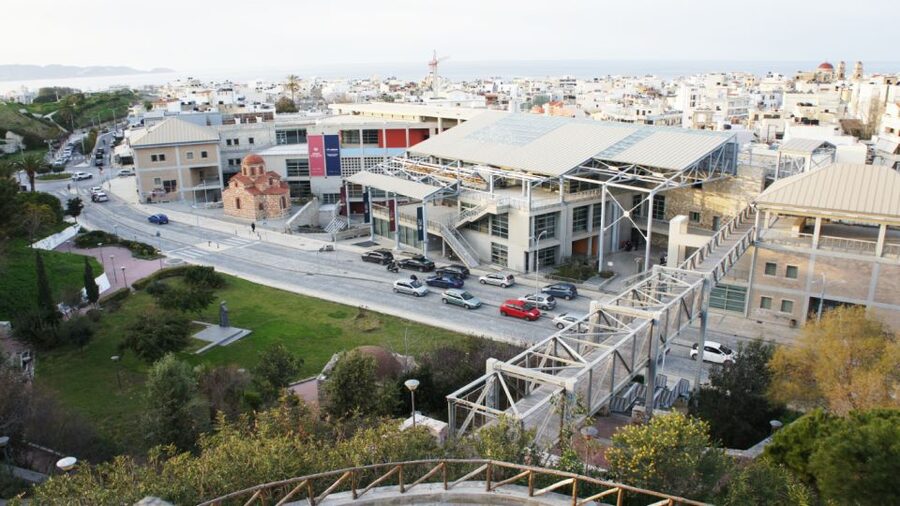
At Agios Titos Church, you stop for photographs and a brief visit. The church is one of Heraklion’s key religious landmarks, and its position in the old center makes it a useful bridge between the city’s Venetian and later chapters.
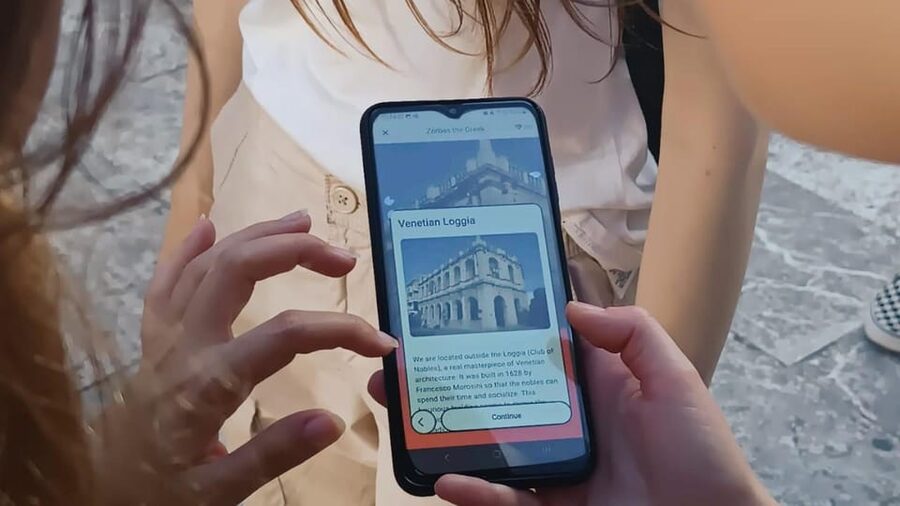
The Venetian Loggia is next. This elegant building is one of the route’s strongest architectural stops. You have around five minutes here, enough to appreciate its graceful lines and take pictures, but not enough for an extended architectural talk. Keep that in mind if you want detailed background on Venetian construction or the building’s civic role.
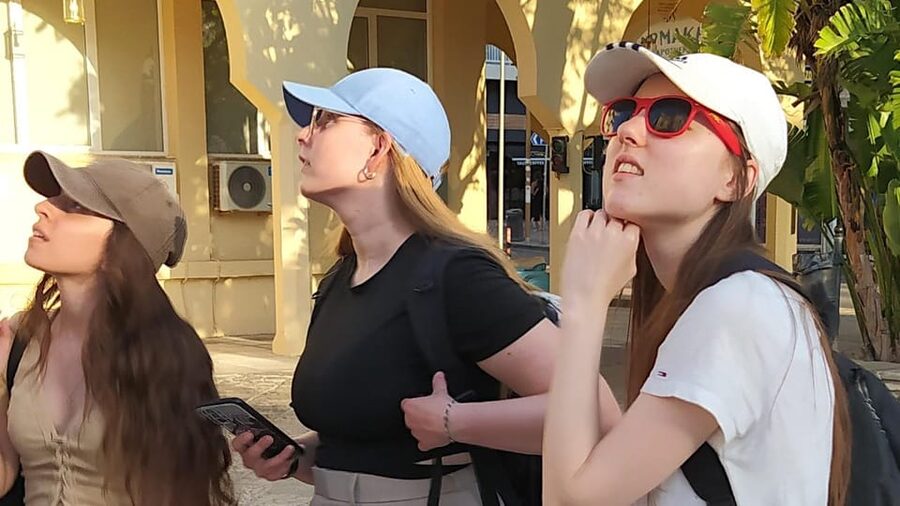
I like the way these stops are handled as part of the puzzle. The tour does not ask you to sit still while an adult speaks for half an hour. It gives you a reason to look at the building, then lets the facilitator add context in plain language. Families with children around 10 to 12 should find the format particularly workable. A 2024 booking by a parent with two children in that age range found the hunt interesting and well organized, with the food break helping the experience along.
A bakery break with Cretan kaltsounia
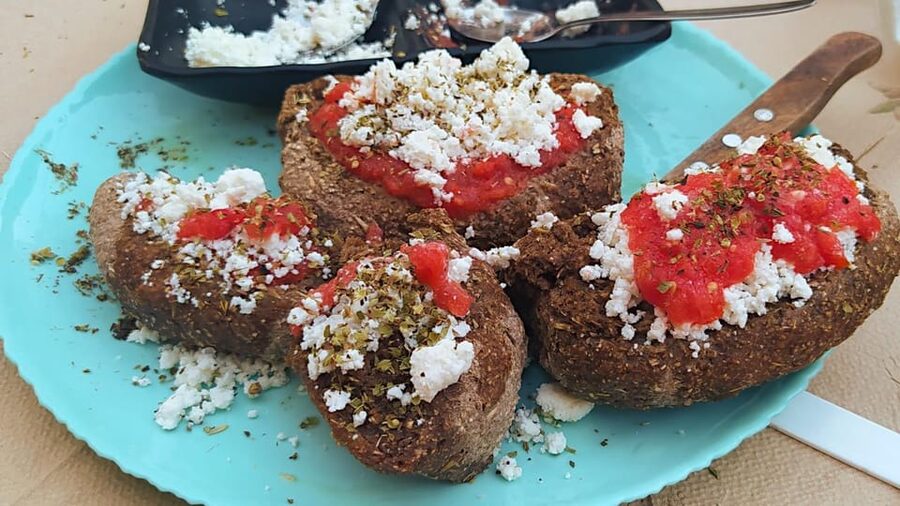
The local bakery stop lasts about 15 minutes and includes traditional kaltsounia pastries and water. This is the tour’s most concrete taste of Crete. Kaltsounia are small pastries associated with Cretan cooking, and their sweet flavor gives the family a quick introduction to local food without taking time away from the route.
The food stop is practical as well as cultural. A two-hour walking activity can feel longer when children are concentrating on clues and adults are keeping everyone together. A pastry and water break resets the group before the next set of churches, fountains, streets, and markets.
Tell the facilitator about dietary restrictions in advance. The activity specifically asks you to provide that information so the food stop can be handled as well as possible. Drinks beyond water are not included, so plan accordingly.
Same nerve, a different drop:
- Rhodes: Beaches Trip by Jet Boat with Snorkeling and Drinks
★ 4.5 · 106 reviews - Canyoning Experience in Neda for Beginners
★ 5.0 · 90 reviews - Santorini: Extreme Horse Safari with Beach Gallop
★ 4.9 · 80 reviews - Canyoning in the water – Kourtaliotiko Gorge
★ 5.0 · 55 reviews
Saint Mark’s Basilica, the Lions Fountain, and 1866 Street
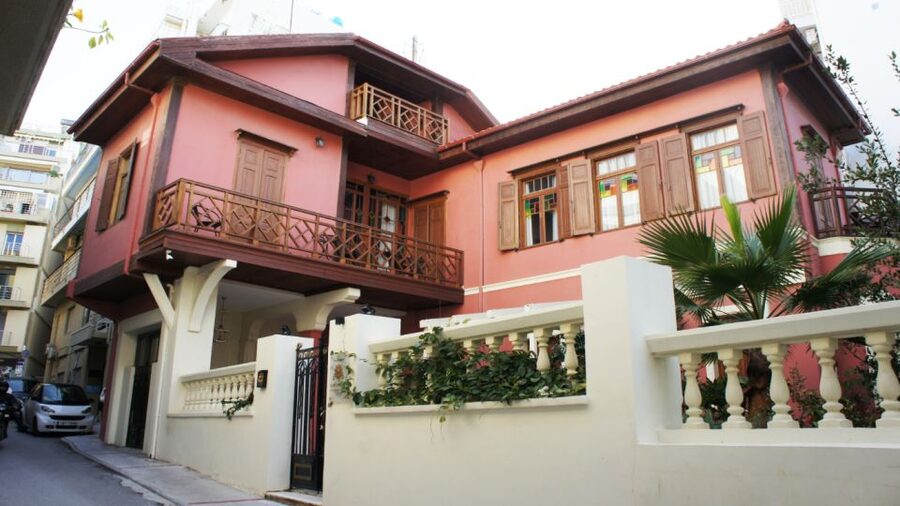
After the bakery, you visit the Basilica of Saint Mark. The stop is brief, around five minutes, but it adds another strong Venetian marker to the route. You then continue to another smaller point of interest before reaching Morosini Lions Fountain.
The fountain is one of Heraklion’s most recognizable public spaces and a natural place for photographs. Its carved details give the riddle game plenty to work with. If your children enjoy visual puzzles, this should be one of the more satisfying stops because the answer may depend on noticing something specific rather than recalling a date.
The route then moves through 1866 Street for about 10 minutes. This is the most market-like section of the walk, with opportunities to look at shops and local street life. The schedule allows some shopping and sightseeing, but it is not a dedicated market tour. You will need to keep an eye on the time if something catches your attention.
This section also shows why the experience is more than a monument checklist. Heraklion is presented as a working city, not a museum set. Venetian buildings, food shops, graffiti, and newer urban details appear in the same walk. The tour’s message is that the old and new city belong together.
Passing the Archaeological Museum and older fountains
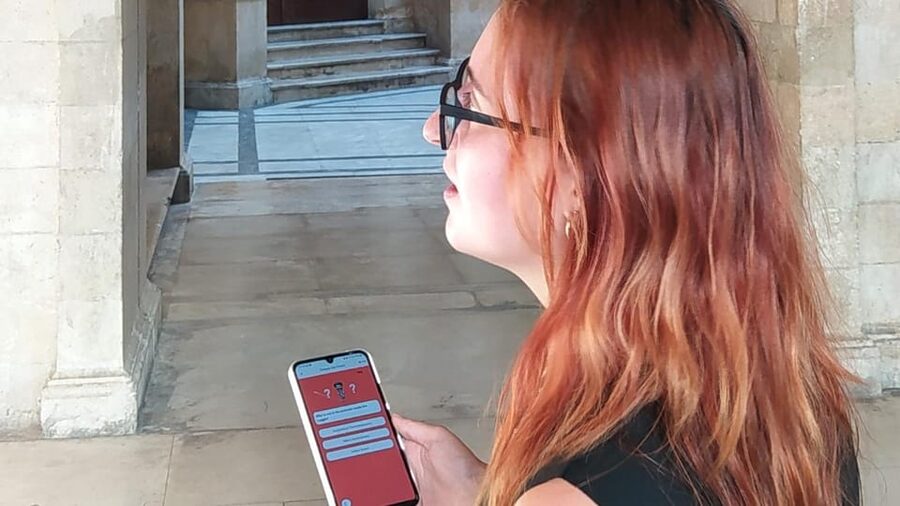
The Heraklion Archaeological Museum appears next, but the itinerary lists it as a pass-by sightseeing stop for about 10 minutes. Do not expect museum admission or time to explore its galleries as part of this activity. If you plan to visit the museum properly, save that for another part of your day.
The Bembo Fountain follows, with another short visit. Like the Morosini fountain, it rewards careful looking. The series of fountains helps you see how public waterworks and civic decoration shaped the old center, even if the tour only spends a few minutes at each.
The route then reaches Agios Minas Cathedral. This is another major religious landmark, and the itinerary gives you about five minutes. The cathedral also serves as the finish point later, so you get a sense of the destination before the final stages of the hunt.
Because each stop is short, I would not choose this tour if your main goal is to enter every church, study every facade, or take detailed architectural notes. Choose it if you want a lively overview that gives you a map of the city and a few reasons to return to the places that interest you most.
Murals, modern Heraklion, and the Zorba mission
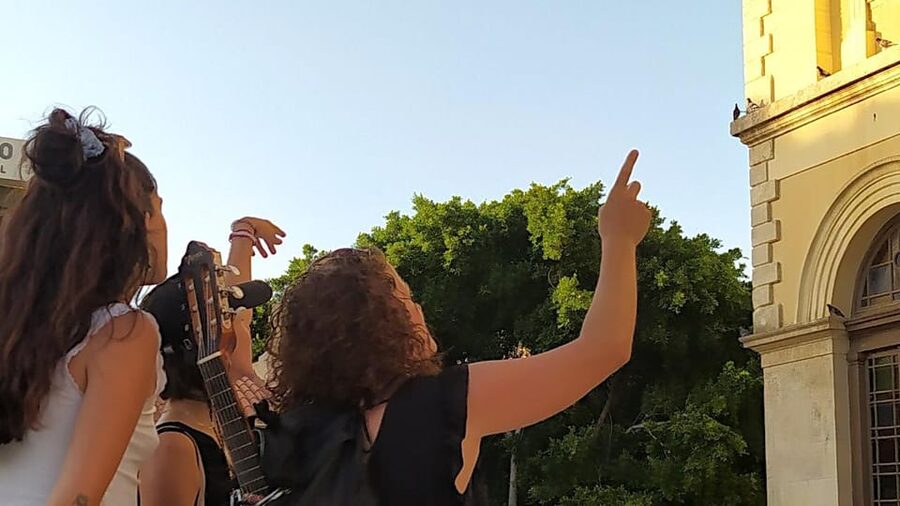
The route also points out murals and contemporary buildings, linking modern street art with older layers of Cretan culture. These details matter because they keep the walk from becoming a parade of stone monuments. You are encouraged to notice graffiti, painted walls, arches, and views toward the Aegean.
Zorba the Greek acts as the guide’s story thread. The character, created by Nikos Kazantzakis, is associated with a simple, full-hearted approach to life. The hunt turns that idea into a series of tokens or pieces of wisdom gathered around the city.
Your goal is to find Kazantzakis himself in the story, reaching a final sanctuary where his ideas and Zorba’s philosophy come together. This is not a literary seminar. It is a light way to introduce older children and adults to a major Greek writer while they are actually walking through the city he helps represent.
I appreciate that the theme gives the activity a little more substance than a standard scavenger hunt. The clues are not only about finding an object or identifying a building. They also connect the streets to questions about how to live well, work together, and pay attention to the present moment.
The final cathedral and the pace of the route
The activity finishes at the Holy Metropolitan Church of Agios Minas. The route is designed to take roughly two hours from the fortress to the cathedral, with the facilitator helping the group move from one clue to the next.
That timing is its strength and its limit. You can fit the hunt into a morning or afternoon without giving up an entire day. It is also a useful first activity after arriving in Heraklion because it shows you where several central sights are located.
On the other hand, the route leaves little room for delays. One past booking noted that the final stop was under renovation, which made it impossible to complete the ending as intended without guessing incorrectly. Conditions can change at historic sites, so keep your expectations flexible. The facilitator should help if a clue becomes impossible, but the supplied information does not promise that every site will always be open or unchanged.
What the $109 price means
At $109 per person, this is not the cheapest way to walk around Heraklion. The price includes a facilitator, the smartphone riddles and materials, the kaltsounia food stop, water, and the online token redemption system.
The value depends heavily on your group. For a family that wants a private-feeling, structured activity with food and storytelling, the cost may be reasonable because you are paying for guidance and a ready-made game rather than just admission to a sight. The facilitator also removes the work of planning a route through the old center.
For adults who are happy to navigate on their own, the price is harder to justify. Most stops are viewed briefly, and no museum entry is included. You are paying for the format, the human assistance, the themed clues, and the family interaction.
The sustainability and empowerment gifts are a pleasant extra, not the main reason to book. I would treat them as a bonus attached to the game rather than as a guaranteed major souvenir.
Who should book this activity
I would recommend this for families with school-age children, especially children who enjoy puzzles, phones, quick challenges, and taking pictures. It also suits mixed-age groups because adults can help with the history and children can lead the observation tasks.
It is a good choice if you want:
- A short introduction to central Heraklion
- An English-speaking facilitator
- A family activity that does not rely on long talks
- A taste of Cretan pastry
- A route covering Venetian, Ottoman, ancient, and modern influences
- A way to connect the city with Zorba and Kazantzakis
I would look elsewhere if you want extensive time inside the Archaeological Museum, a slow food tour, a long historical lecture, or a route built around major archaeological interpretation. This is a walking game first and a formal sightseeing tour second.
Book with a charged smartphone and check your email, including the spam folder, for the exact meeting instructions. Free cancellation is available up to 24 hours before the activity, and you can reserve now and pay later, which is useful when your Heraklion plans are still shifting.
Should you book the Zorba treasure hunt?
Book it if your family wants to see a lot of central Heraklion in a short time and needs a reason for children to stay engaged. The charming facilitator-led format, the kaltsounia break, and the clear Zorba theme give the walk more character than a standard orientation tour.
Skip it if you prefer long visits, detailed museum time, or complete control over your pace. At $109 per person, the experience earns its price through interaction and organization, not through admission tickets or lengthy guided commentary. For the right family, that is exactly the point: you get a shared game, a quick taste of Crete, and a useful first look at the city.
FAQ
How long does the Heraklion treasure hunt last?
The activity lasts two hours. It begins at Rocca a Mare Fortress and finishes at the Holy Metropolitan Church of Agios Minas.
Where does the activity start?
The meeting point is Rocca a Mare Fortress in Heraklion, Greece. After booking, you receive the exact meeting details and further instructions by email.
What language is the activity offered in?
The facilitator and activity are offered in English.
Is the treasure hunt suitable for children?
Yes. The game is suitable for all ages and uses smartphone riddles, observation, and teamwork. Children around 10 and 12 have taken part with a parent.
What food is included?
The food stop includes traditional kaltsounia pastries and water. Drinks other than water are not included. Tell the facilitator about dietary restrictions in advance.
What should I bring?
Bring a charged smartphone. The facilitator provides the other materials needed for the hunt.
Fresh thrills added around Greece
- Olympus Rock Climbing Course and Via Ferrata★ 5.0 · 33 reviews
- Deos Canyoning Experience at Paleochori Metsovo★ 5.0 · 3 reviews
- Guided Canyoning: Manikia Gorge with Lunch and Photos from Athens★ 5.0 · 16 reviews
- Extreme Rafting in Vikos Gorge National Park★ 5.0 · 39 reviews
- Canyoning trip at Zagori area of Greece – Section B★ 5.0 · 13 reviews
- Akrotiri & Zorba: Monastery, Beach & Panoramic Views from Chania★ 5.0 · 3 reviews
- 3-Hour Small Group Coasteering in Sounio★ 5.0 · 12 reviews
- Tinos: Via Ferrata Guided Hike★ 4.8 · 4 reviews
Greece Adrenaline Activities, side by side
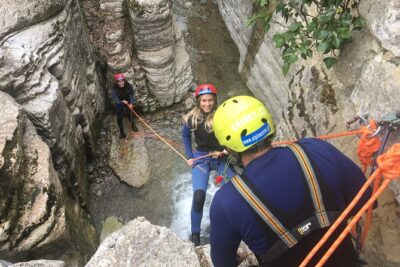
Canyoning trip at Zagori area of Greece – Section A
Read our review →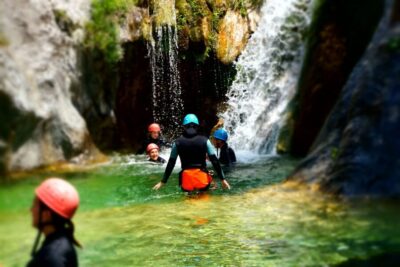
From Thessaloniki: Half-Day Canyoning Trip to Mount Olympus
Read our review →
Rhodes: Beaches Trip by Jet Boat with Snorkeling and Drinks
Read our review →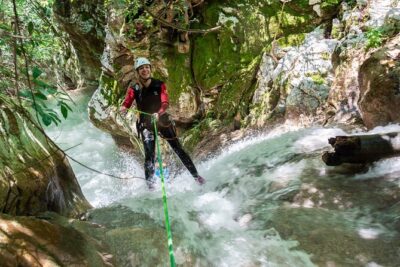
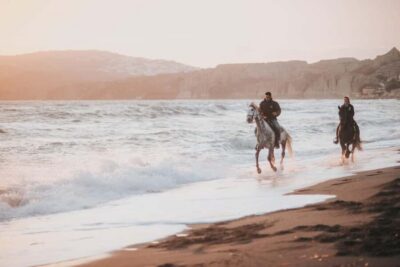
Santorini: Extreme Horse Safari with Beach Gallop
Read our review →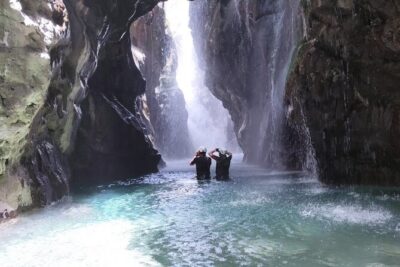

Lists this trip sits in