
Review · PORTUGAL
Madeira: Seixal Canyoning Level 3 Adventure
Seixal’s Level 3 canyoning route gets serious quickly: you rappel down a 60-meter rock wall into a narrow Madeira valley, then work your way through waterfalls, rock formations, and clear natural pools. I like the mix of skills here, especially the long rappel and the 26-meter-high zipline, which gives you a fine view before the next splash. The small group, capped at six, also means less waiting around.
I also like that transport from Funchal, equipment, instruction, and a safety briefing are included. Guides such as Fabrizio and Ben have created a relaxed, clear atmosphere for recent groups. The main caution is that the advertised four hours includes transfers and changing time. One experienced canyoner found the active route closer to two and a half hours and not hard enough, so advanced participants may want a higher level.
Key points to know before you book
- The 60-meter rappel is the headline challenge: You descend a tall rock face into the valley, so comfort with height matters.
- The route ends by the sea: Waterfalls and canyon walls give way to Madeira’s north coast.
- Jumps reach 7 meters: You can expect real height, not just small beginner hops.
- The group is limited to six people: That keeps the instruction personal and the pace more manageable.
- The four-hour schedule is not four hours of action: Transfers, gearing up, and changing reduce time on the route.
- The $153 price covers the basics: Equipment, a certified instructor, safety briefing, and Funchal transfers are included.
Why Seixal makes a strong canyoning setting
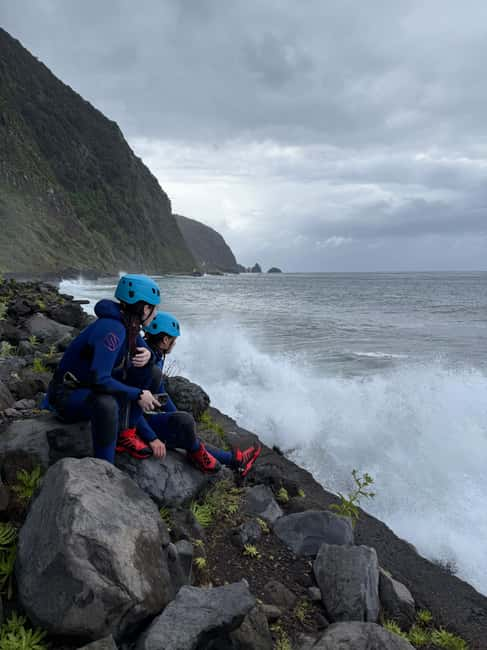
Seixal sits on Madeira’s north coast, an area known for steep rock, running water, and a close connection between mountain and sea. This trip uses that setting well. You are not simply walking through a canyon or standing beside a waterfall for a photo. You move through the gorge by rappelling, ziplining, jumping, and following the water.
That variety matters. A canyoning trip can feel repetitive if it relies only on walking and short drops. Here, each major section asks for something different. The rappel tests your nerve and rope technique. The zipline gives you a quick flight above the route. The jumps add a burst of freedom, though you should only make them if the guide confirms the height and landing are right for you.
The route finishes near the sea, which gives the outing a satisfying sense of place. Madeira’s north coast is not just a backdrop. It is part of the trip’s character, with the canyon carrying you from high rock walls toward the coast.
More Canyoning Tours in Portugal
- Canyoning Madeira Island – Level One
★ 5.0 · 1,362 reviews - Canyoning in Madeira Island- Level 1
★ 5.0 · 1,125 reviews - From Funchal: Intermediate (Level 2) Canyoning Adventure
★ 4.9 · 1,111 reviews
Starting with the 60-meter rappel
The first major challenge is the descent down a 60-meter rock wall. This is the point where you find out how you feel about height. The wall is tall enough to make the experience memorable, but the presence of a certified guide, proper canyoning equipment, and a safety briefing gives you a clear process to follow.
You will need to listen closely before stepping over the edge. The guide explains how the equipment works and how to control your descent. Your job is not to rush. Slow, steady movement is the sensible approach, especially if this is your first serious rappel.
I like this opening because it gives the experience a proper start. You are not easing into the day with a long walk and a few minor obstacles. You begin with the biggest vertical section, then continue through the canyon with a better idea of what the route demands.
Still, this is not an attraction for everyone. The activity is specifically unsuitable for people with vertigo or a fear of heights. If looking down from a high ledge makes you freeze, this is the wrong place to test that fear. You should also be in good physical condition, since the route combines water, rock, height, and repeated movement.
Crossing the 26-meter-high zipline
After the rappel, the 26-meter-high zipline changes the rhythm. Instead of controlling a slow descent, you travel across the canyon and take in the setting from above. It is a short but distinctive part of the route, and it adds a different kind of height challenge.
The zipline is useful for people who enjoy adventure but want variety. You are not repeating the same rope technique from the rappel. You are suspended above the valley and moving across it, with the rock walls and greenery around you.
You may find this section easier than the rappel, or the reverse may be true. Some people prefer motion to a controlled vertical descent. Others find the exposure more noticeable when they are crossing open space. Either way, the guide remains close to the activity and explains what you need to do.
This is also where the small group helps. With no more than six participants, you should have a better chance to hear instructions and watch the person ahead of you before taking your turn. A large group could make a zipline or rappel feel slow. Here, the limit keeps the experience more personal.
Natural pools and jumps up to 7 meters
The canyon’s natural pools provide the most playful part of the trip. You can jump from heights of up to 7 meters into clear water, with the guide directing you through the route. These are not casual roadside swimming holes. You need to follow instructions, check each landing, and stay aware of the changing rock and water around you.
The jumps are a big reason to choose Level 3 rather than a gentler introduction to canyoning. They bring a strong burst of excitement, but you should not feel pressured to prove anything. A good guide will explain each move and help you understand what is expected before you commit.
The water and rock make this part more than a simple series of jumps. You are moving through a natural setting shaped by waterfalls and flowing water. The clear pools give the route a refreshing feel, especially after the rope sections, but you should bring a change of clothes for afterward.
You also need to bring your own water and snacks. They are not included. A towel is not included either, so pack one along with dry clothing. These are small details, but forgetting them can make the ride back to Funchal less pleasant.
Same nerve, a different drop:
- Madeira: Beginner Canyoning – Level 1
★ 5.0 · 1,072 reviews - Albufeira: MiniGolf Adventure Park Entry Ticket
★ 4.4 · 1,040 reviews - Canyoning Experience at Ribeira Grande
★ 5.0 · 965 reviews - Beginner Canyoning Madeira
★ 5.0 · 798 reviews
Waterfalls, rock formations, and the route toward the coast
Between the headline activities, the canyon itself carries much of the appeal. Waterfalls cut through the rock, and unusual formations give you something to look at while you move between sections. The setting feels active rather than decorative. Water is part of the route, not just something you see from a viewing platform.
The trip asks you to pay attention to your footing and your guide at the same time. That makes the experience more involved than a standard sightseeing stop. You are not merely taking in Madeira’s scenery. You are using the canyon as a route and responding to its shape.
The final approach toward the sea gives the outing a natural ending. You begin high in the canyon and gradually reach the coast, with the mood changing as the valley opens out. The combination of mountain water and ocean views is one of the strongest reasons to choose Seixal over an inland-only canyoning trip.
The exact pace can vary with the group. A first-time participant may need more explanation and reassurance, while an experienced canyoner may move faster. The guide’s job is to keep the group together and safe, so do not expect to race through the route.
What the four-hour schedule really means
The listed duration is four hours, but you should not read that as four full hours of active canyoning. Transport from and back to Funchal is included, and time is needed to reach the starting point, change, and put on equipment.
One recent departure began at 9 a.m. at a parking area and returned to the vehicle around 12:30 p.m. That gives you a useful planning guide: the active section may feel closer to two and a half hours, with the rest of the time taken by driving, preparation, and changing.
This is not necessarily a flaw. Canyoning equipment takes time to organize, and a proper safety briefing should not be rushed. Still, you should leave enough room in your day rather than booking a tight lunch, flight, or another timed activity immediately afterward.
The four-hour format works well for people who want a substantial outdoor outing without giving up the entire day. It is long enough to include several different challenges, yet short enough to fit into a wider Madeira plan.
Small groups and the guide experience
The group size is limited to six, which is one of the trip’s practical strengths. A small group means fewer pauses while people take turns, and it gives the guide more time to watch each person through the technical sections.
Fabrizio and Ben have guided recent trips, and their approach has been described as both professional and relaxed. That combination matters in canyoning. You want clear instructions when you are standing above a rappel, but you also want a calm atmosphere rather than a stern military exercise.
English, Portuguese, and Spanish are available. Be sure to select or confirm the language you need when booking, especially if the technical instructions will be easier for you in one language than another.
A small group does not guarantee a private trip, but it can feel close to one if only a few people book. One recent group had two guides for a very small party, which made the outing particularly personal. Group size and guide assignment can vary, so treat that as a possibility rather than a promise.
Is $153 a fair price?
At $153 per person, this is not a cheap half-day activity. The price makes more sense when you count what is included: canyoning equipment, a certified instructor, the safety briefing, and transfers from and to Funchal.
You are also paying for access to a technical route that would be difficult to arrange on your own. The guide manages the rope sections, explains the jumps, and keeps the group moving through a canyon where good judgment matters. For a first Level 3 experience, that support is a major part of the value.
The calculation changes if you already canyon regularly. One experienced participant who had done canyoning several times in Austria found this route too easy and too short. Higher levels, from Level 4 through Level 7, may be available through direct arrangements with the operator, so experienced canyoners should ask about alternatives before paying for this one.
For a newcomer or an intermediate participant, the price is easier to justify. You get a full set of activities in one outing, rather than paying separately for transport, equipment rental, and instruction. Just remember that snacks, water, and a towel are extra.
Who should choose this Level 3 route?
I would point this trip toward someone who is active, comfortable around heights, and ready for a genuine physical challenge. You do not need to be a technical canyoning expert, but you should be able to follow instructions, handle wet rock, and stay focused through a series of obstacles.
It is particularly suitable if you want more than a sightseeing walk. The 60-meter rappel and 7-meter jumps give the day a stronger edge than a soft introduction. The zipline adds variety, and the route finishes by the sea rather than ending in the middle of the valley.
I would not choose it for a pregnant person, anyone with a mobility impairment, or anyone with vertigo. It is also a poor fit if you dislike heights but hope the scenery will make you forget them. The route puts height at the center of the experience from the opening rappel onward.
If you have canyoned many times and prefer demanding technical routes, ask about a higher level. This Level 3 outing may feel too gentle, especially if you are comparing it with advanced canyoning in the Alps.
What to bring and how to prepare
Bring a towel, water, snacks, a change of clothes, and anything else you need to feel comfortable after getting wet. The operator supplies the canyoning equipment, but not these personal items.
Wear clothing that you do not mind getting wet. The route includes waterfalls, pools, and jumps, so dry clothes for afterward are essential rather than optional.
Give yourself time to listen during the safety briefing. The best way to enjoy the route is to understand the equipment and the guide’s signals before the first major descent. You should arrive ready to take the activity seriously, even though the atmosphere may be friendly and relaxed.
Free cancellation is available up to 24 hours before the activity for a full refund, and you can reserve now and pay later. That flexibility helps if your Madeira schedule depends on weather or changing plans, but you should still check the available start times before committing.
Should you book the Seixal Level 3 canyoning trip?
Book it if you want a compact, high-energy Madeira outing with a 60-meter rappel, a high zipline, waterfall sections, and jumps into natural pools. The small group, multilingual guides, equipment, and Funchal transfers make the $153 price reasonable for first-time and intermediate canyoners.
Think twice if heights make you uneasy, if you have mobility limits, or if you already handle advanced canyoning routes with ease. For experienced participants, the route may feel short and less demanding than expected.
For everyone else, this is a strong way to see Seixal from inside the canyon rather than from a roadside viewpoint. Pack a towel, water, snacks, and dry clothes, then leave enough time after the four-hour window. You will get the most from it if you treat the trip as an active adventure, not simply a scenic excursion.
FAQ
Where does the canyoning experience take place?
The experience takes place in Seixal on Madeira’s north coast, with the route passing through a valley and finishing near the sea.
How long does the activity last?
The scheduled duration is four hours. This includes transportation, changing, preparation, and the canyoning route itself.
How high is the main rappel?
The main rappel descends a 60-meter rock wall into the valley.
How high is the zipline?
The zipline crosses the canyon from a height of 26 meters.
How high are the jumps?
The route includes jumps into natural pools from heights of up to 7 meters.
Is equipment included?
Yes. Canyoning equipment, a certified instructor, and a safety briefing are included.
Is transportation from Funchal included?
Yes. Transfer from and back to Funchal is included.
Who should not take part?
The activity is not suitable for pregnant women, people with mobility impairments, people afraid of heights, or people with vertigo. Participants should also be in good physical condition.
Fresh thrills added around Portugal
- Deep canyoning★ 5.0 · 4 reviews
- Rappelling and Climbing Adventure in Lamas de Mouro★ 5.0 · 19 reviews
- Canyoning on the River Varziela – Initiation Route★ 5.0 · 9 reviews
- Canyoning in Madeira – Level 2★ 5.0 · 25 reviews
- Coasteering Adventure with Snorkeling from Funchal★ 5.0 · 60 reviews
- Coasteering Tour – Cliff jumping, swimming, scrambling.★ 5.0 · 69 reviews
- Canyoning Experience Level II Moderate★ 5.0 · 72 reviews
- Level 2 – Canyoning Adventure – Intermediate | Funchal★ 5.0 · 79 reviews
Canyoning Tours, side by side
Full Day Canyoning Activity in Da Lat with Lunch
Read our review →
Matacanes : Canyoning + Hiking + Water Jumps + Rappel + Caves
Read our review →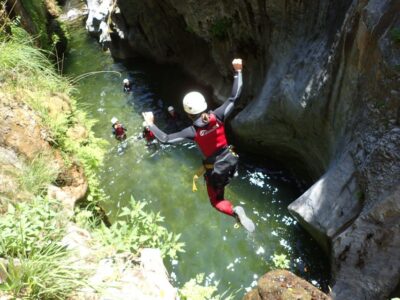
From Marbella: Guadalmina River Guided Canyoning Adventure
Read our review →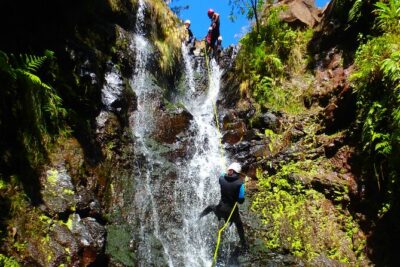
From Funchal: Intermediate (Level 2) Canyoning Adventure
Read our review →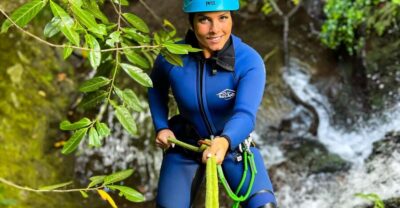
Lists this trip sits in