
Review · PORTUGAL
Portinho da Arrábida: Coasteering Boat Tour
Portinho da Arrábida’s coast is not a place you simply look at from a beach towel. On this four-hour coasteering route, you scramble over cliffs, squeeze through caves, rappel down rock, and finish sections by swimming through clear Atlantic water. The route covers about 800 meters, but the variety makes it feel much bigger.
I like the way every challenge has an alternative, so you can take part without forcing yourself into a jump or climb that feels wrong. I also like the mix of natural and built-in thrills: the Santa Margarida cave, its 17th-century sanctuary, a 50-meter handrail climb, and a zip line that sends you straight into the sea.
The main consideration is that this is an active outing, not a gentle boat trip. You need to be comfortable in water, wear shoes that can get wet, and accept a fair amount of scrambling and confined spaces. The meeting point is at Portinho Arrábida Beach, in a forested area that can feel less polished than a standard tour office.
Key points to know before you book
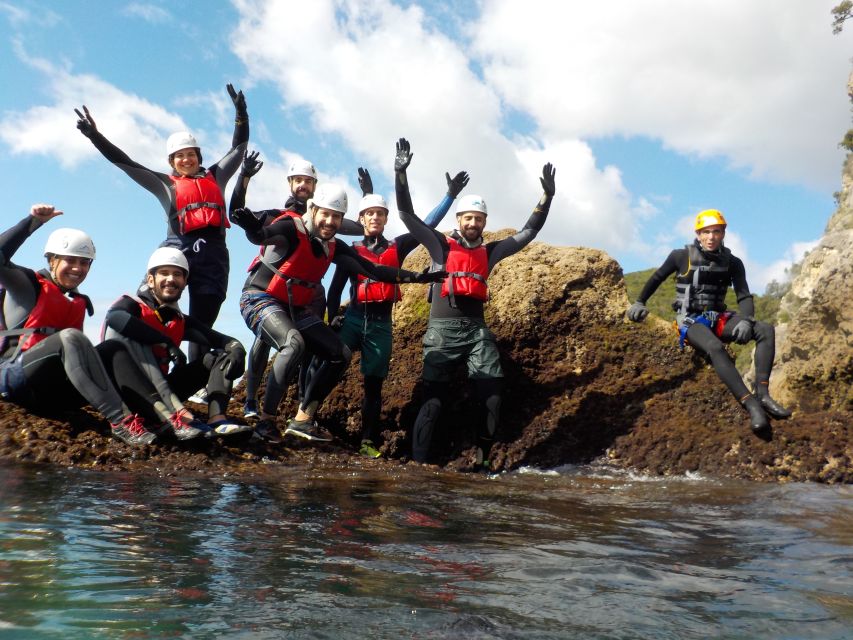
- The route packs in several activities: Expect rock climbing, rappelling, cave passages, swimming, a zip line, and cliff jumps.
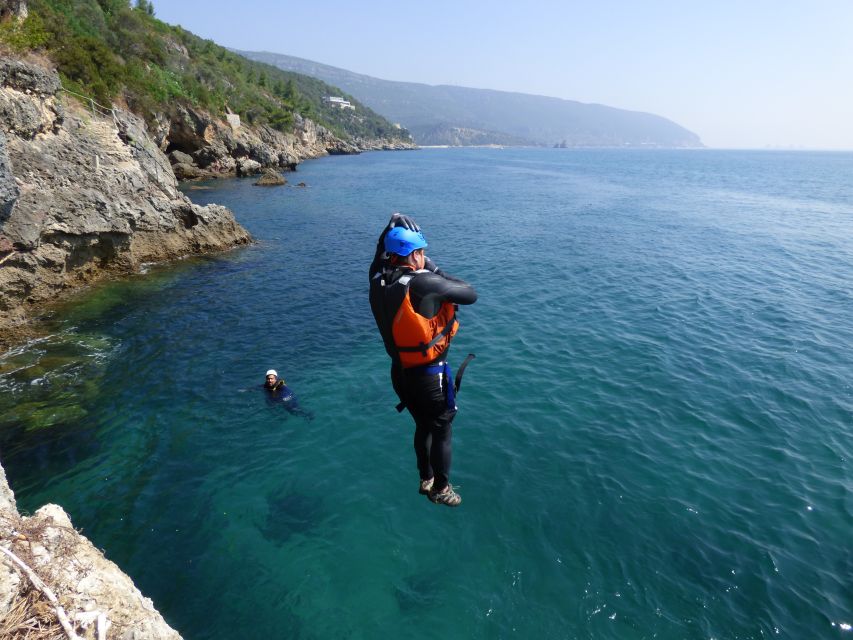
- Jumps are optional: The water jumps range from 1 to 10 meters, and an alternative is available for every obstacle.
- Santa Margarida cave is a highlight: You may pass through a sea cave containing a small 17th-century sanctuary.
- A 5.5mm wetsuit is included: You also receive a life jacket, gloves, helmet, climbing harness, insurance, and boat support.
- Guides make a real difference: Rui, Marco, Cam, Ruy, David, and Anibal have led groups with a strong focus on clear instruction and safety.
- Bring practical extras: Pack wet shoes, a towel, spare sneakers, and an elastic band if you have long hair.
Why Portinho da Arrábida makes a fine coasteering base
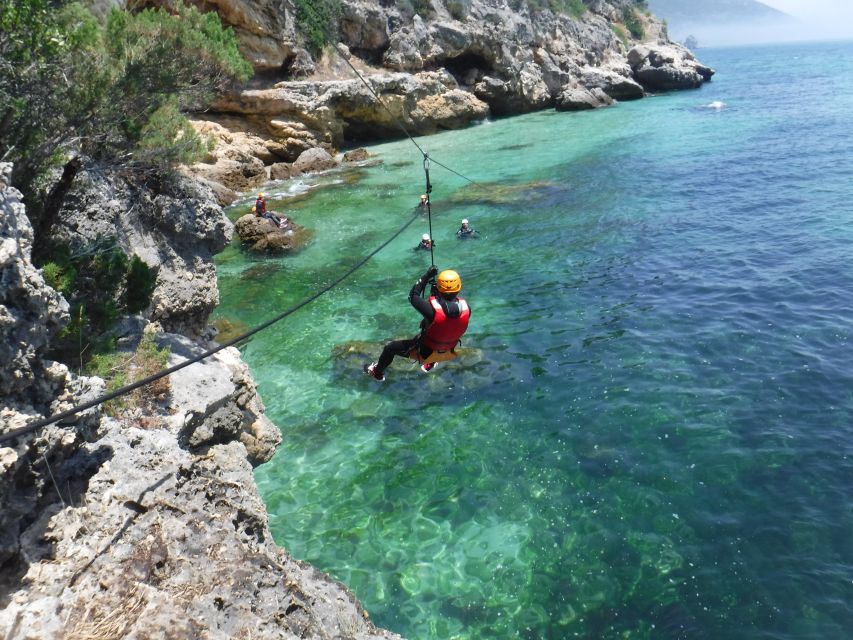
Arrábida Natural Park gives this outing more character than a standard beach adventure. Along the Portinho da Arrábida coast, cliffs drop toward coves, caves cut into the rock, and small beaches appear between steep sections of shoreline. You are not just moving through a set of artificial obstacles. The rock itself shapes the route.
The geology matters here. The coast has cliffs, narrow passages, sea caves, and sheltered coves packed into a fairly short stretch. That lets the tour change pace often. One moment you may be walking a trail above the water, and the next you are lowering yourself down a rock face or swimming around a bend.
I especially like the way the route uses the coast as a natural adventure course. The 800-meter circuit is short enough to manage within four hours, but it includes enough changes in terrain to keep the outing from becoming repetitive.
A boat accompanies the activity, which gives the operation extra support on the water. You also have a life jacket and professional supervision throughout. The boat does not turn this into a sightseeing cruise, but its presence is useful when the route moves between rocky sections and open water.
More Coasteering Tours in Portugal
- Award Winner Premium Kayak and Coasteering Adventure with Lunch
★ 5.0 · 472 reviews - Lisbon: Sesimbra/Arrábida Natural Park Coasteering Adventure
★ 4.9 · 345 reviews - Sagres: Coasteering – Swimming, Cliff Jump & Rock Climbing
★ 4.9 · 226 reviews
The first steps: gear, instructions, and getting comfortable
The activity begins with guidance from the professional team and the issue of safety equipment. You receive a 5.5mm wetsuit, life jacket, gloves, helmet, and climbing harness. Activity insurance and boat support are also included in the price.
The wetsuit is important. You will spend time swimming and entering the sea, and the water can feel cool even on a bright day. The gloves help protect your hands on rock and cables, while the helmet and harness are essential for the climbing and rappelling sections.
Listen closely during the safety briefing. The guides explain how to move along the rock, how to use the climbing system, and how to approach the jumps. Several people have praised the patient coaching from guides such as Rui, Marco, Ruy, Cam, David, and Anibal. That matters most when you reach a section that looks more dramatic from above than it did from the beach.
You do not need to arrive as an expert climber. The route is designed around instruction and support. Still, you should be ready for physical movement, wet shoes, uneven surfaces, and the occasional tight passage.
Climbing the 50-meter handrail section
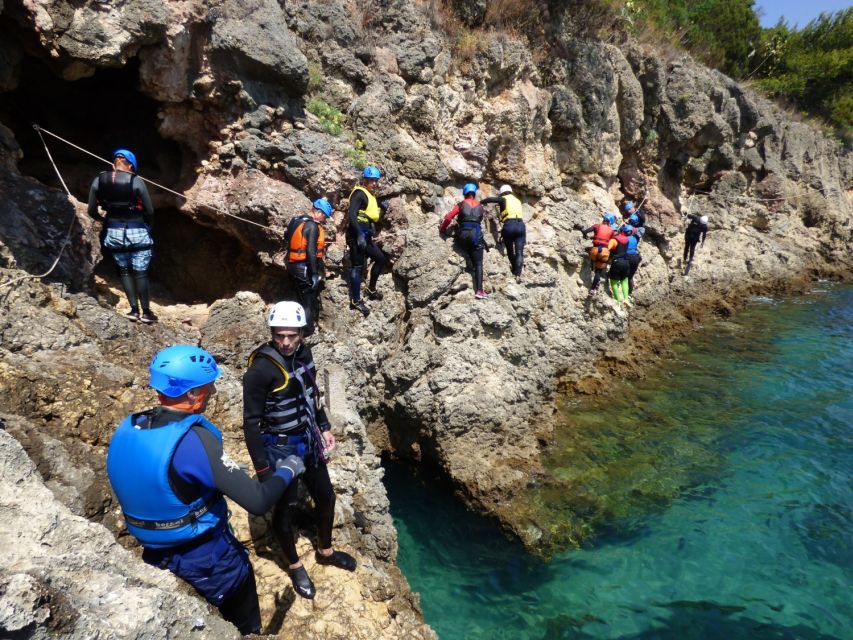
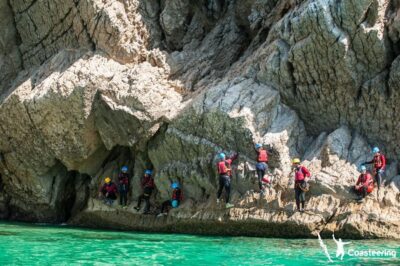
One of the more unusual parts of the route is the handrail climbing section, which is about 50 meters long. Rather than climbing a conventional wall, you use fixed protection and handholds along the rock to move across a cliff section.
This is a good example of what makes coasteering different from an ordinary hike. The goal is not simply to reach a viewpoint. You must use your hands, feet, balance, and the safety system while staying aware of the sea below.
The harness gives you security, but it does not remove the effort. You will still need to place your feet carefully and keep moving along the rock. If you are nervous with heights, tell the guide early. The staff can explain the next move and help you judge the route without making you feel rushed.
The climbing section also gives you a closer look at the rock. From a boat, the cliffs can seem smooth and distant. Along the handrail, you notice ledges, cracks, and small changes in texture that shape how you move.
Rappelling down the cliffs
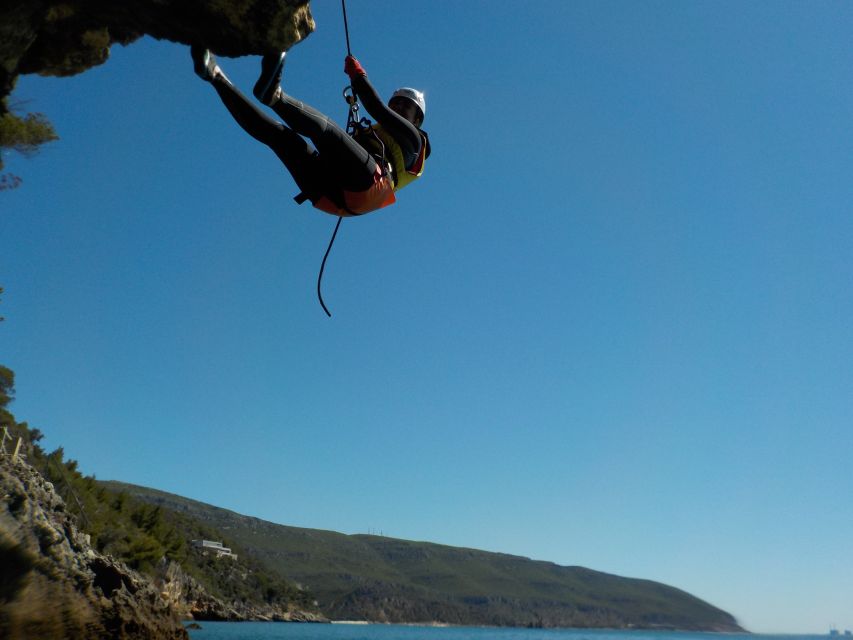
The route also includes abseiling, or rappelling, down sections of cliff. Here, your harness and rope control your descent while the guide manages the system and explains how to position your feet.
For many people, this is the first moment when the outing feels like a serious adventure. You lean back against the rock, lower yourself step by step, and look out toward the water. The height can be exciting, but the pace is controlled.
Rappelling also shows the value of professional instruction. You need to understand how the equipment works and how to keep your body positioned. The guides have been praised for taking safety seriously and for coaching people through the more intimidating sections.
The exact balance of activities can change. One group found that the zip line was not set up, but the guide replaced it with an additional rappelling exercise. That is worth knowing if you are booking for one specific feature. The team appears to adapt the route rather than leave a gap in the experience.
Same nerve, a different drop:
- Canyoning Madeira Island – Level One
★ 5.0 · 1,362 reviews - Canyoning in Madeira Island- Level 1
★ 5.0 · 1,125 reviews - From Funchal: Intermediate (Level 2) Canyoning Adventure
★ 4.9 · 1,111 reviews - Madeira: Beginner Canyoning – Level 1
★ 5.0 · 1,072 reviews
Entering Santa Margarida cave
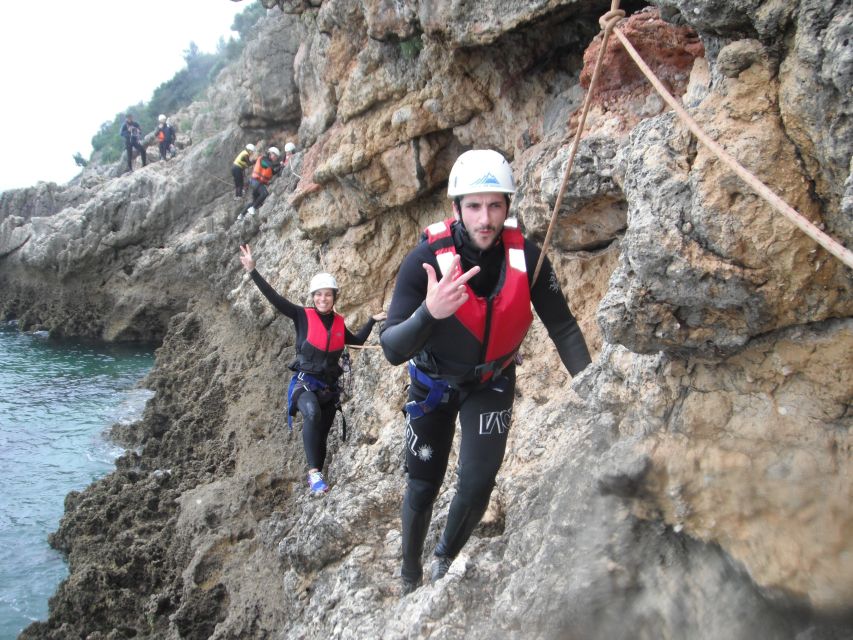
The cave section adds history and atmosphere to the physical challenges. The route can take you through the emblematic Gruta de Santa Margarida, which contains a 17th-century sanctuary.
This is not a museum visit with polished floors and display panels. You reach the cave as part of a coastal route, moving through a confined natural space after crossing other obstacles. The sanctuary gives the cave a human story as well as a geological one.
You may find bats inside, though wildlife sightings are not guaranteed. The cave itself is the main reward. You get a brief change from open sea and bright sky to rock walls, shadow, and narrow passages.
If confined spaces make you uncomfortable, take that seriously before booking. The activity includes cave passages and other tight areas. You can skip individual obstacles, but the route is built around moving through a varied coastal setting, not staying in wide-open water at all times.
The zip line that ends in the sea
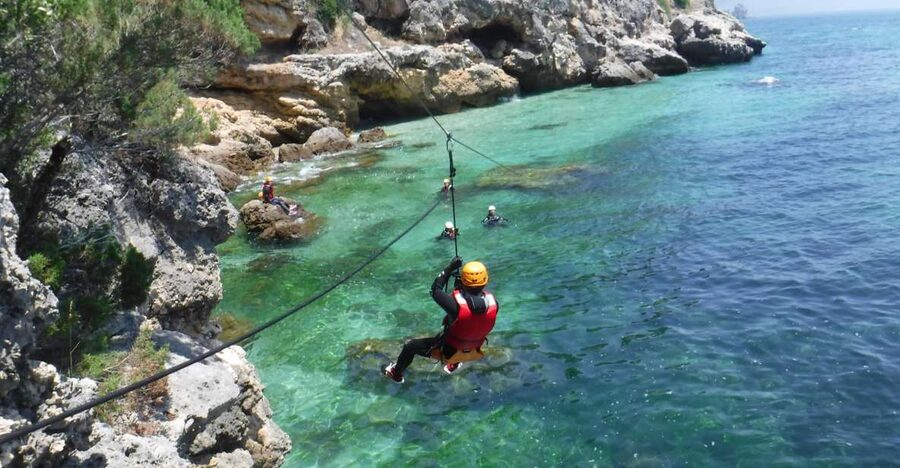
When operating, the zip line is one of the most memorable features. You slide along a steel cable and land directly in the water. It is a neat combination of a dry-land thrill and an immediate swim.
The landing is part of the appeal. You do not zip across a platform and walk away. You finish in the sea, so the wetsuit, life jacket, and water shoes become practical rather than optional extras.
As noted above, the zip line may not always be available. Conditions or setup can affect the activity, and the staff may substitute another challenge. If the zip line is the one feature you absolutely want, ask about its status before paying.
Swimming, sea caves, and optional cliff jumps
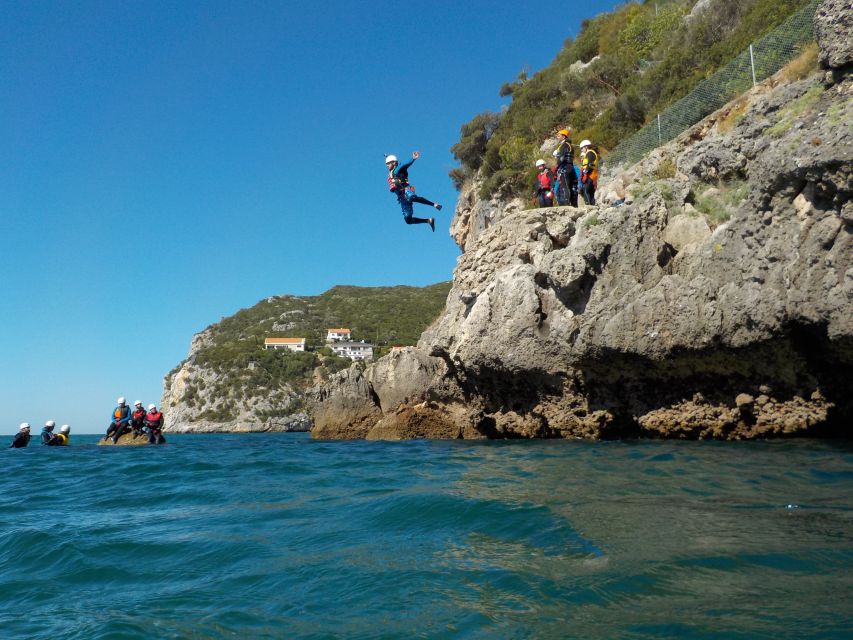
Swimming connects the separate parts of the route. You may swim between rocky sections, pass through water near caves, or use the sea as the way forward after a jump or zip line. The water around Arrábida is known for its clarity, and that makes these short swims more enjoyable.
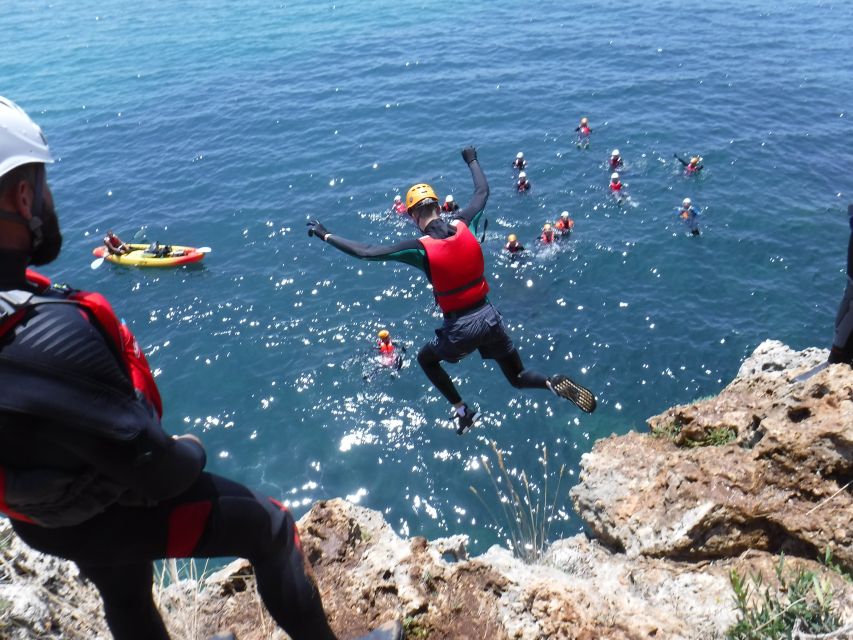
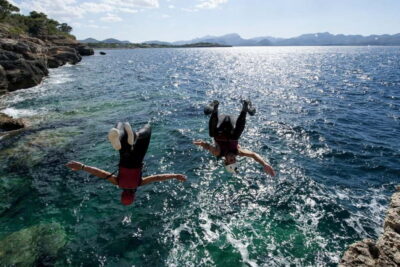
The most dramatic option is the cliff jumping. The jumps range from 1 to 10 meters, so there is a wide spread between a small hop and a serious leap. You do not have to jump. Every obstacle has an alternative, and the guides can direct you along another part of the route.
That flexibility is one of the tour’s strongest features. You can challenge yourself without treating the highest jump as a test you must pass. The guide can coach you through the decision, but the final choice remains yours.
Conditions matter here. Water movement, confidence, and the height of the jump can all change how a section feels. Do not let an enthusiastic group push you into something you do not want to do. The activity is meant to be adventurous, not coercive.
If you are lucky, bottlenose dolphins may appear in the wider area. That is an occasional bonus, not a promised part of the outing. The cliffs, caves, and sea jumps are the reliable attractions.
What the $82 price really covers
At $82 per person, this is not a cheap beach activity, but the price includes a substantial amount of equipment and supervision. You receive the wetsuit, life jacket, gloves, helmet, climbing harness, instruction, insurance, and boat support.
Those inclusions matter. Renting or buying this collection of safety gear separately would be impractical for a short visit, and you would still need trained staff to manage the climbing and rappelling systems.
The price is easier to justify if you want several activities in one morning or afternoon. A simple kayak trip might offer more time on the water, while a basic cliff walk would cost less and require less effort. This experience combines swimming, climbing, rappelling, cave exploration, and jumps in one four-hour outing.
There are limits. Meals are not included, and you should bring your own towel and extra footwear. You are also paying for an active route rather than a relaxed coastal cruise, so the value depends on what you want from your day in Arrábida.
Who will enjoy this most
I would recommend this outing to you if you like physical activities and want to see the coast from close range. It suits confident swimmers, people curious about climbing, and anyone who enjoys a little controlled fear.
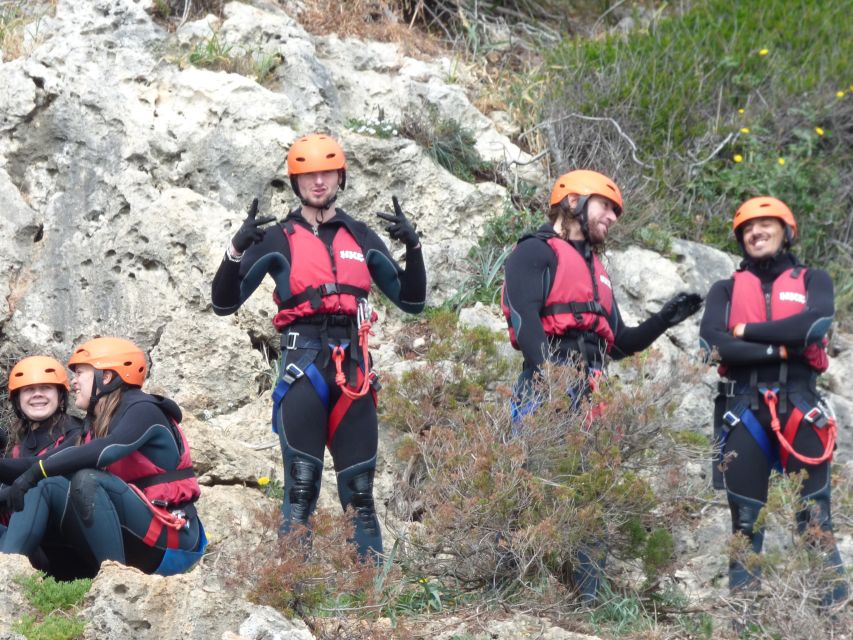
You do not need to jump from 10 meters or complete every obstacle. The route works better for mixed-confidence groups than many adventure activities because alternatives are available. One person can take a lower jump or bypass an obstacle while another chooses the harder option.
It is less suitable if you want a quiet day by the water, dislike helmets and harnesses, or feel uneasy in caves. You should also consider your comfort with wet clothing, uneven rock, and repeated movement over several hours.
The guides are a major part of the experience. Rui and Ruy have been singled out for humor, coaching, and clear explanations. Marco and Cam have also led groups through the route, with Marco noted for patience and encouragement. That style can turn a nervous beginner into someone willing to try the next section.
Practical advice for the meeting point
The meeting point is Portinho Arrábida Beach in Arrábida Natural Park. The area can feel somewhat rough and forested rather than like a formal marina or hotel pickup point, so give yourself time to find the correct place.
Wear shoes that can go into the water. Ordinary shoes you want to keep dry are a poor choice. Bring a beach towel and an extra pair of sneakers, since your footwear may be wet or sandy after the activity.
Tie back long hair and bring spare elastic bands. This is a small detail, but it matters when you are wearing a helmet, moving through caves, and using ropes.
The tour lasts about four hours, with starting times depending on availability. Guides speak Spanish, English, and Portuguese. Free cancellation is available up to 24 hours before the activity, and you can reserve now and pay later, which is useful when your Portugal plans are still shifting.
Should you book the Portinho da Arrábida coasteering tour?
Book it if you want a full-action coastal outing and like the idea of choosing your own level of challenge. The strongest reasons are the variety of the route, the cave with its old sanctuary, the clear water, and the patient safety coaching from the guides.
Think twice if you are seeking a restful boat ride or if confined spaces and cliff edges make you uncomfortable. Also ask about the zip line if that feature matters to you, since it may be replaced by another activity.
For the right person, $82 buys more than a swim and a view. It buys four hours of guided movement through one of Portugal’s most striking coastal areas, with enough choice to keep the adventure exciting without making every obstacle compulsory.
FAQ
Where does the coasteering tour meet?
The meeting point is Portinho Arrábida Beach in Arrábida Natural Park, in Portugal’s Lisbon District.
How long does the activity last?
The experience lasts around four hours.
How long is the coasteering route?
The route covers about 800 meters along the coast.
What languages do the guides speak?
The live guides speak Spanish, English, and Portuguese.
Is the cliff jumping compulsory?
No. The jumps are optional, and an alternative is available for each obstacle.
How high are the jumps?
The jumps range from 1 meter to 10 meters.
What equipment is included?
The activity includes instructions, a 5.5mm wetsuit, life jacket, gloves, helmet, climbing safety harness, activity insurance, and boat support.
Do I need to bring water shoes?
You should wear shoes that can be used in the water. An extra pair of sneakers is also recommended.
Should I bring a towel?
Yes. A beach towel and spare sneakers are recommended.
Is food included?
No. Meals are not included in the activity price.
Fresh thrills added around Portugal
- Deep canyoning★ 5.0 · 4 reviews
- Rappelling and Climbing Adventure in Lamas de Mouro★ 5.0 · 19 reviews
- Canyoning on the River Varziela – Initiation Route★ 5.0 · 9 reviews
- Canyoning in Madeira – Level 2★ 5.0 · 25 reviews
- Coasteering Adventure with Snorkeling from Funchal★ 5.0 · 60 reviews
- Coasteering Tour – Cliff jumping, swimming, scrambling.★ 5.0 · 69 reviews
- Canyoning Experience Level II Moderate★ 5.0 · 72 reviews
- Level 2 – Canyoning Adventure – Intermediate | Funchal★ 5.0 · 79 reviews
Coasteering Tours, side by side
Award Winner Premium Kayak and Coasteering Adventure with Lunch
Read our review →
Lisbon: Sesimbra/Arrábida Natural Park Coasteering Adventure
Read our review →
Newquay Coasteering x Cornish Wave | Original Since 2012
Read our review →
Private Tour explore Vulcano Island by Kayak & Coasteering
Read our review →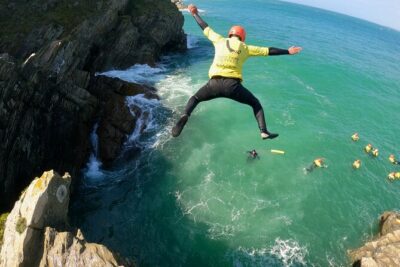
Sagres: Coasteering – Swimming, Cliff Jump & Rock Climbing
Read our review →Lists this trip sits in