
Review · SPAIN
Anna: Guided Canyoning Tour
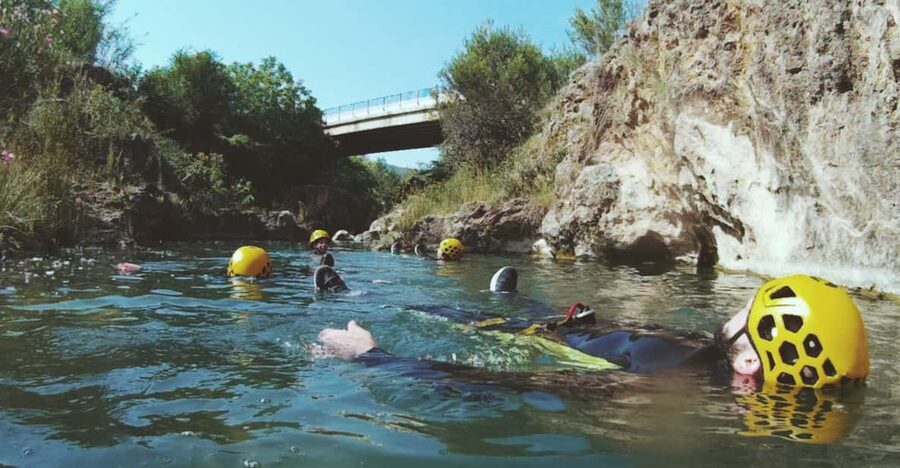
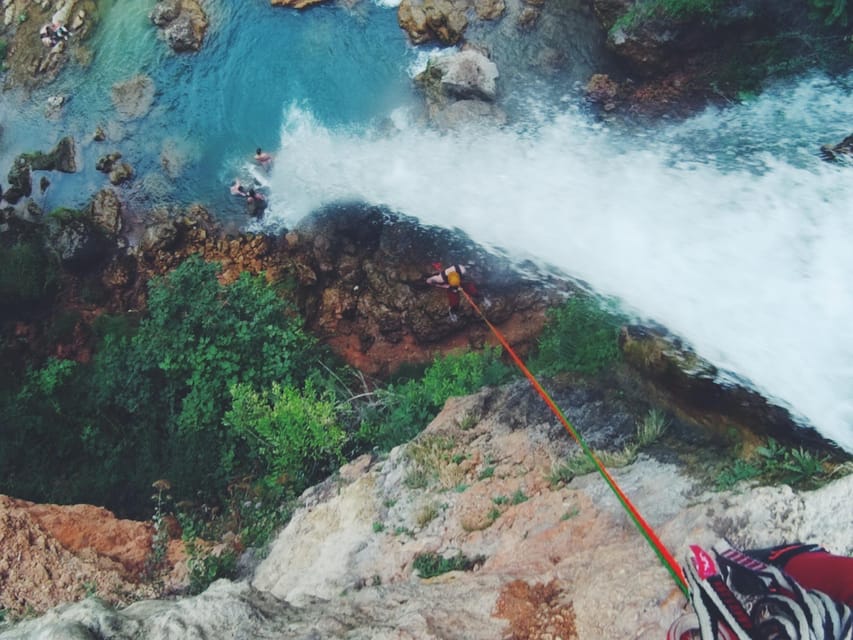
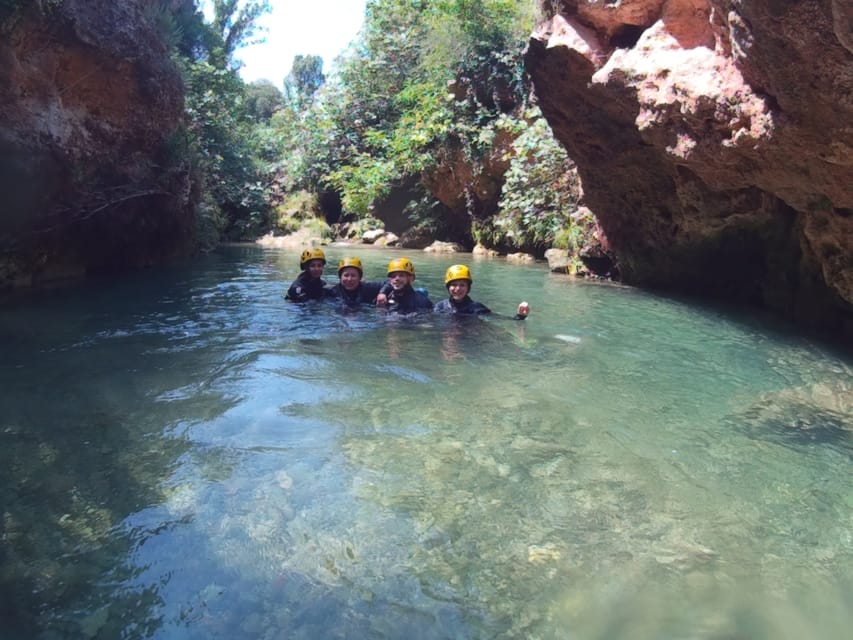
The best part of this Anna canyoning trip comes at the end: a 20-meter waterfall descent that gives the outing a real adventure finish. Before that, you work through a watery ravine with jumps, natural slides, and rappelling, all in a green setting near Valencia.
I like the mix of choice and challenge. You can try jumps reported at roughly 3, 5, and 7 meters, but the risky sections are optional, with another route available. I also like that the €65 price includes equipment, insurance, guides, and photos, so you are not adding several costly extras.
The main thing to consider is swimming ability. Some sections require you to move through water without standing, and the activity is not suitable if you cannot swim. A large group may also mean waiting between obstacles, especially when weather changes affect other departures.
Key points to know before you book
- The 20-meter waterfall rappel is the grand finale: You finish the canyon by descending the waterfall on a rope.
- The bigger jumps are optional: You can attempt jumps of about 3, 5, and 7 meters, or use an alternative route.
- You must know how to swim: Some stretches are deep enough that you cannot stand.
- Bring proper shoes: Sports shoes or hiking shoes with closed toes are required. Water shoes are not allowed.
- Miriam and Maria have guided the route: They are noted for clear explanations and careful attention to safety.
- The €65 fee covers the essentials: Neoprene suit, helmet, harness, accident and liability insurance, photos, and guiding are included.
What the Anna canyoning route is really like
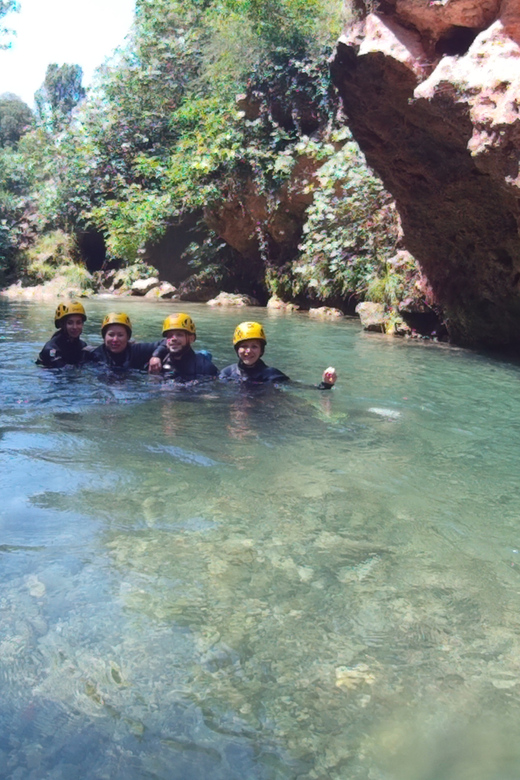
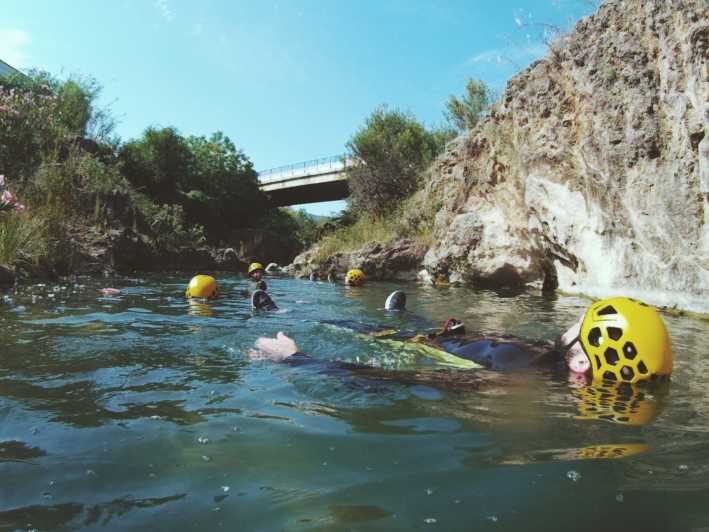
This is an introduction to aquatic canyoning in Anna, in Valencia province. The route is built around moving through a natural ravine rather than simply walking beside it, so expect water, rock, short swims, jumps, rope work, and slides.
The outing lasts about 3.5 hours. That is long enough to make the trip feel like a proper half-day activity, but not so long that you spend an entire day in wet gear. Your guide leads the group through the canyon and explains each obstacle before you tackle it.
The word initiation matters here. This is aimed at first-timers and families, not people looking for a technical canyoning expedition. You do not need to commit to every challenge. The difficult or high-risk steps are optional, and an alternative path is available when you would rather stay on the ground.
Still, beginner-friendly does not mean effortless. You need to be comfortable in water and physically ready to move through a ravine. The route includes sections where you cannot stand, so basic swimming ability is a firm requirement.
More Canyoning Tours in Spain
- From Marbella: Guadalmina River Guided Canyoning Adventure
★ 4.9 · 1,486 reviews - From Marbella: Canyoning Tour in Guadalmina Canyon
★ 5.0 · 778 reviews - Benahavís: Guided Canyoning Adventure (Benahavís River Walk)
★ 4.9 · 540 reviews
Gearing up in neoprene and safety equipment
The activity begins with the practical side of canyoning: getting into the equipment. Cint Climbing provides a neoprene suit, helmet, and harness, along with guiding and insurance for civil liability and accidents.
The neoprene suit is useful for more than appearance. Water in a canyon can feel cold, and the suit helps you stay warmer while moving through wet sections. It also gives a bit of protection against rock as you work your way through the ravine.
The helmet and harness are central to the rope sections, especially the final waterfall descent. Your guide should explain how the equipment works and how to approach each obstacle. The experience is designed for beginners, so clear instructions are part of the value, not a small extra.
You need to bring your own footwear. The instructions are specific: wear sports shoes or hiking shoes with closed toes. Water shoes are not allowed. That is worth sorting out before you leave, since sandals and open footwear are not suitable for the route or the safety equipment.
Wet shoes can also feel heavier and less secure on rock, so use a pair that fits well and can handle water. The supplied information does not specify whether the shoes will be returned dry, so bring only footwear you are comfortable getting wet.
Jumps, slides, and the choice to sit one out
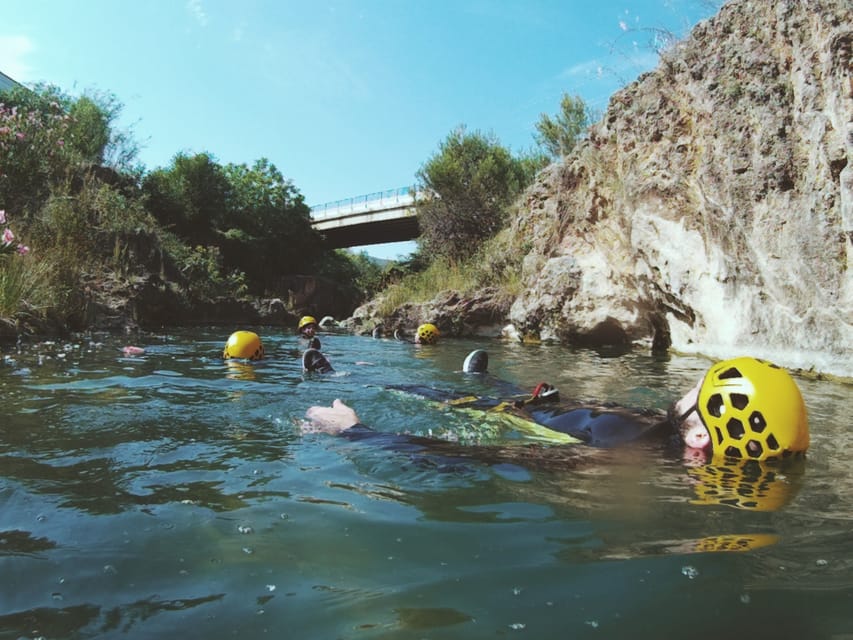
The canyon’s action comes in short stages. You may jump into pools, pass through natural slides, and rappel down rock. The exact order can vary with conditions and the group, but the appeal is the steady change from one type of obstacle to the next.
One detailed account describes three rock jumps at around 3 meters, 5 meters, and 7 meters. Those heights give you a useful sense of the scale. The first may feel manageable, while the higher jumps can look serious if you are new to canyoning.
You are not forced to make them. The route provides alternatives for the risky sections, and the activity description makes clear that all such steps are optional. That is one of the strongest features for a mixed group. One person can test their nerve while another takes the safer route without abandoning the trip.
I would still ask the guide about each jump before deciding. Look at the landing area, listen to the instructions, and do not let the group’s excitement make the choice for you. A jump that feels fine for one person may not feel right for another.
The natural slides add a different kind of fun. Instead of stepping off a ledge, you use the shape of the rock to move through the water. These slides are part of what makes the canyon feel like an adventure playground formed by nature, though you should expect the guide to control how and when each one is used.
The 20-meter waterfall descent
The final waterfall descent is the feature that gives this trip its strongest sense of occasion. You finish by descending about 20 meters on a rope, with water running through the canyon around you.
This is not the same as simply jumping from a waterfall. You are attached to the harness and guided down the rock, making it a more controlled challenge. For a first canyoning trip, it is a memorable way to finish because it combines height, water, and rope work in one obstacle.
If you are nervous about heights, the descent may be the part that requires the most preparation. Listen closely to the guide, follow the instructions, and take the movement slowly. The aim is not speed. It is controlled progress.
The reviews of the guides are especially strong on safety and explanations. Miriam and Maria are specifically praised for being attentive and for explaining everything clearly. That matters most here, when a simple instruction about your footing, rope, or body position can make a big difference to your confidence.
The description calls this a 20-meter fly, but the experience is presented as a waterfall descent by rope. I would think of it as a waterfall rappel and ask the guide to clarify the exact setup before starting if the wording is unclear.
Same nerve, a different drop:
- Barcelona Costa Brava Kayak, Snorkel & Cliff Jump Day Tour
★ 5.0 · 3,872 reviews - Barcelona: Costa Brava Kayak, Snorkel & Cliff Jump & Lunch
★ 4.9 · 2,391 reviews - Mallorca: Quad Bike Tour, Snorkeling, and Cliff Jumping
★ 4.8 · 2,294 reviews - Mallorca: Kayaking, Sea Cave, Cliff Jumping & Snorkel Tour
★ 4.8 · 1,447 reviews
Why the guides matter on a beginner route
Canyoning can look simple from the outside. You jump, slide, and rappel. In practice, a good guide determines how safe and relaxed the route feels.
For first-timers, the useful work happens before each obstacle. You need to know where to place your feet, how to enter the water, when to wait, and how to use the harness. A guide also has to judge when a person should use the alternative route rather than push ahead.
Miriam is named as one of the guides, and Maria is also specifically mentioned. The strongest praise centers on their attention and clear explanations. That is exactly what I would want from this kind of activity, especially when the group includes several ages or different levels of confidence.
The guide also manages the pace. One departure had longer waits because a larger group was combined after an afternoon canyoning session was cancelled due to an approaching storm. That sounds like an unusual weather-related situation rather than a standard feature, but it shows how group size and changing conditions can affect the day.
If you dislike waiting, ask about the expected group size and start time before booking. If you are bringing children or a nervous first-timer, a patient guide and a group that moves at a moderate pace may matter more than squeezing in every possible jump.
Safety, swimming, and weather
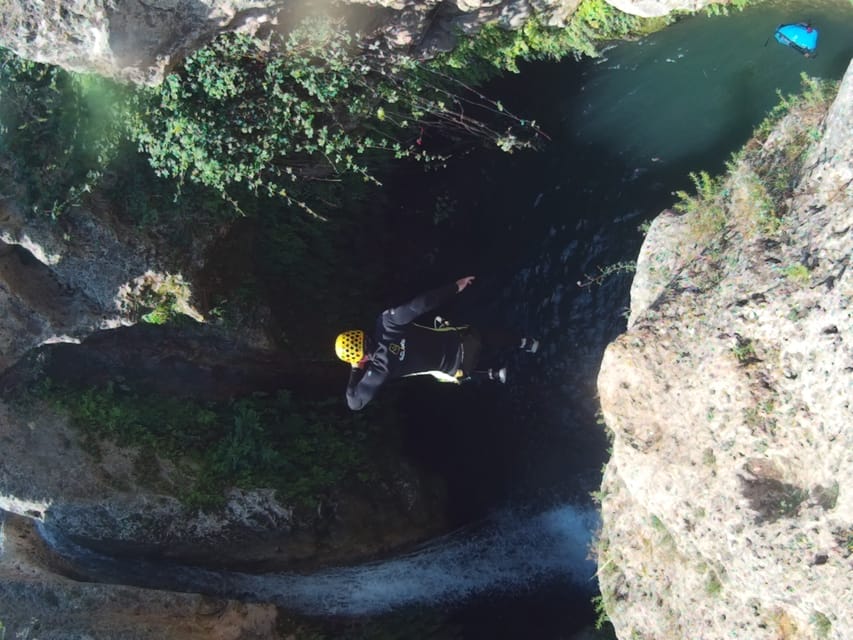
The route is suitable for all levels and ages according to the activity details, but that does not remove the basic physical demands. You must know how to swim, and some parts of the canyon require movement through water where your feet cannot reach the bottom.
That requirement should guide your booking decision. If you are only comfortable standing in shallow water, this is not the right activity. If you can swim but feel uncertain, tell the guide at the start and use the optional routes when needed.
Safety insurance is included for civil liability and accidents. The equipment is also provided, which reduces the need to buy or rent specialist gear before your trip. These inclusions help explain the price and make the activity easier to arrange.
Weather can affect the day. One afternoon session was cancelled because a storm was approaching, and another group became larger as a result. The available cancellation terms allow a full refund when you cancel at least 24 hours in advance, but weather changes close to the activity can still affect plans. Ask the provider how weather decisions are handled when you arrive at the booking stage.
What the €65 price includes
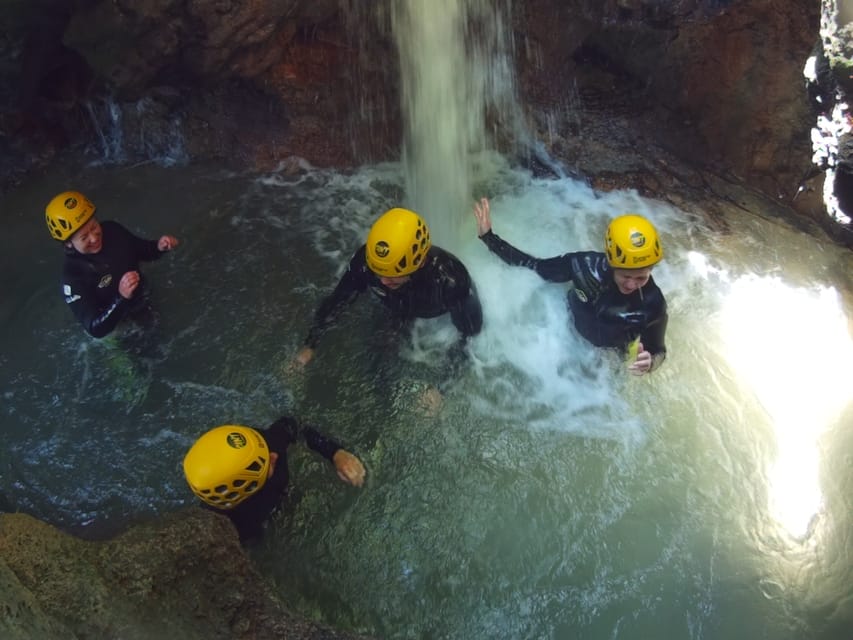
At $65 per person, this is a fair price for a guided half-day activity if you want to try canyoning without purchasing equipment. The fee includes the neoprene suit, helmet, harness, guide service, accident and liability insurance, and photos of the experience.
The photos are a useful inclusion. Canyoning is not an easy activity for taking your own pictures, since your hands are busy with movement, rope work, or balance. Having photos provided means you can concentrate on the route instead of protecting a phone from water.
The value is strongest for beginners. You receive the equipment and instruction needed for a first outing, and the optional obstacles mean you are not paying for a highly technical route that demands advanced skills.
The price does not mention transport, meals, or personal footwear. Plan to get yourself to the activity and bring suitable closed-toe sports or hiking shoes. You should also expect to manage your own food and other personal items unless the provider tells you otherwise.
Who will enjoy this most
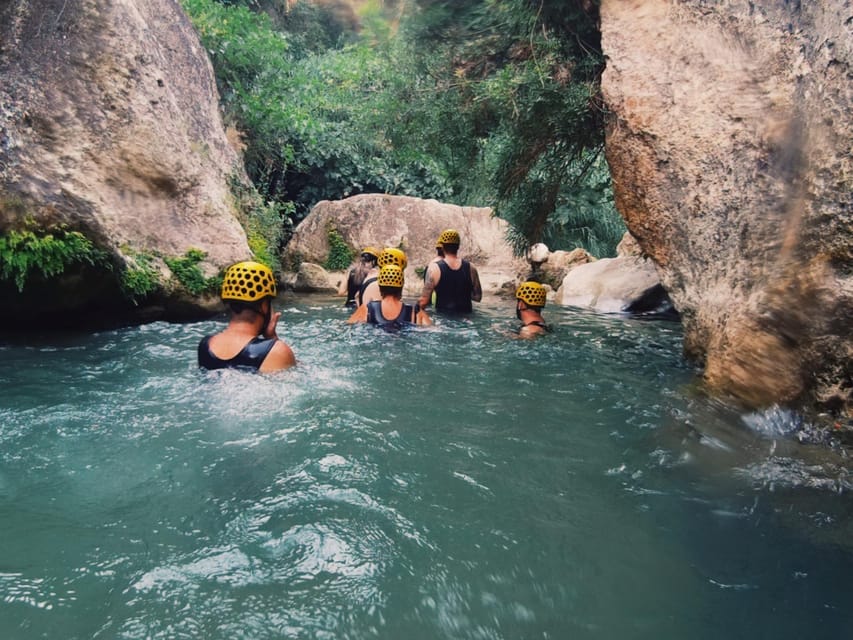
I would recommend this trip to a family with older children who can swim, a couple looking for a physical day near Valencia, or a first-time canyoning group that wants choice rather than pressure.
It also suits mixed-ability parties. One person can attempt the higher jumps while another takes the easier route, then both can continue through the canyon together. That flexibility is much more useful than a route where every participant must complete the same obstacle.
This is less suitable if you dislike getting wet, feel uncomfortable in water, or want a quiet nature walk. It is also not ideal for someone seeking a serious technical canyoning challenge. The route is designed as an introduction, with optional risk and guide support.
Age alone is not enough to decide. The activity says it is suitable for all ages and levels, but swimming ability and comfort with the physical demands are the better tests. If you are booking for children, confirm any age or size requirements with Cint Climbing, since those details are not provided here.
Useful planning tips for Anna
Wear the required footwear from the start. Closed-toe sports shoes or hiking shoes are the safe choice, and water shoes are not accepted.
Bring only items that can handle a wet activity, and follow the guide’s instructions about where to leave personal belongings. The supplied details do not state what storage is available, so do not assume you can keep valuables beside you in the canyon.
Choose your jumps based on your own comfort, not on the people ahead of you. The alternative paths are part of the design, not a failure to complete the activity.
Allow the full 3.5 hours. Even if the route itself moves quickly, equipment checks, instructions, group pacing, and time at the obstacles all form part of the experience. A larger group may add waits.
English and Spanish guiding are available. If you need detailed instructions in English, select that language when booking and confirm it in advance.
Cint Climbing also offers reserve-now, pay-later booking, and free cancellation up to 24 hours before the activity for a full refund. Those terms are useful if your Valencia plans are still shifting, but they do not remove the need to check the weather forecast and your own swimming confidence.
Should you book the Anna canyoning tour?
Book it if you want a lively half-day in Valencia province, can swim, and like the idea of choosing your own level of challenge. The combination of optional jumps, natural slides, rope work, and a 20-meter waterfall descent gives you plenty to remember without requiring advanced canyoning experience.
The strongest reasons to go are the flexible route, included equipment, clear guide support, and solid value at $65. The biggest cautions are the swimming requirement, wet and physical conditions, possible waiting in a large group, and the chance that storms may alter plans.
For a first canyoning outing, this is a sensible choice. Bring proper shoes, trust your own limits, and treat the optional jumps as choices rather than tests. If that sounds like your kind of day, Anna offers a good introduction to aquatic canyoning without making you commit to every difficult section.
FAQ
Where does the canyoning tour take place?
The activity takes place in Anna, in the province of Valencia, within the Valencian Community of Spain.
How long does the activity last?
The guided canyoning experience lasts 3.5 hours.
What languages are available for the guide?
Guiding is available in English and Spanish.
Do I need to know how to swim?
Yes. You must know how to swim because some sections require you to move through water without being able to stand.
Are the jumps mandatory?
No. The risky sections, including the jumps, are optional. An alternative path is available if you prefer not to take one.
How high are the jumps?
One detailed description gives approximate jump heights of 3 meters, 5 meters, and 7 meters.
What equipment is included?
The activity includes a neoprene suit, helmet, harness, guiding, civil liability and accident insurance, and experience photos.
What shoes should I bring?
Bring closed-toe sports shoes or hiking shoes. Water shoes are not allowed.
Can I cancel for a full refund?
Yes. You can cancel up to 24 hours in advance for a full refund.
Fresh thrills added around Spain
- Mallorca Coasteering Adventure★ 3.0 · 2 reviews
- From Estepona: Guided Via Ferrata Adventure in Benalauría★ 5.0 · 8 reviews
- From Marbella: Guided Canyoning Tour in Sima del Diablo★ 5.0 · 2 reviews
- From Estepona: Guided Canyoning Tour on the Guadalmina River★ 5.0 · 51 reviews
- Private canyoning adventure in the Buitreras Canyon★ 5.0 · 23 reviews
- Guided Canyoning Adventure Near Marbella (Benahavís River Walk)★ 5.0 · 116 reviews
- Try adventure, try coasteering – North coast★ 5.0 · 7 reviews
- Small-Group Cliff Jumping Experience in Mallorca★ 5.0 · 84 reviews
Canyoning Tours, side by side
Full Day Canyoning Activity in Da Lat with Lunch
Read our review →
Matacanes : Canyoning + Hiking + Water Jumps + Rappel + Caves
Read our review →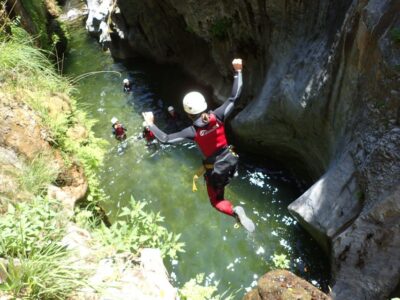
From Marbella: Guadalmina River Guided Canyoning Adventure
Read our review →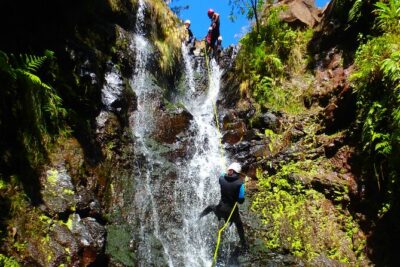
From Funchal: Intermediate (Level 2) Canyoning Adventure
Read our review →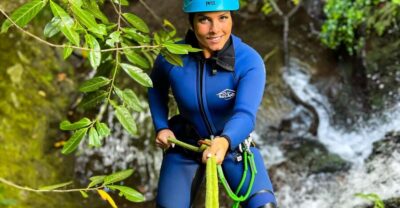
Lists this trip sits in