
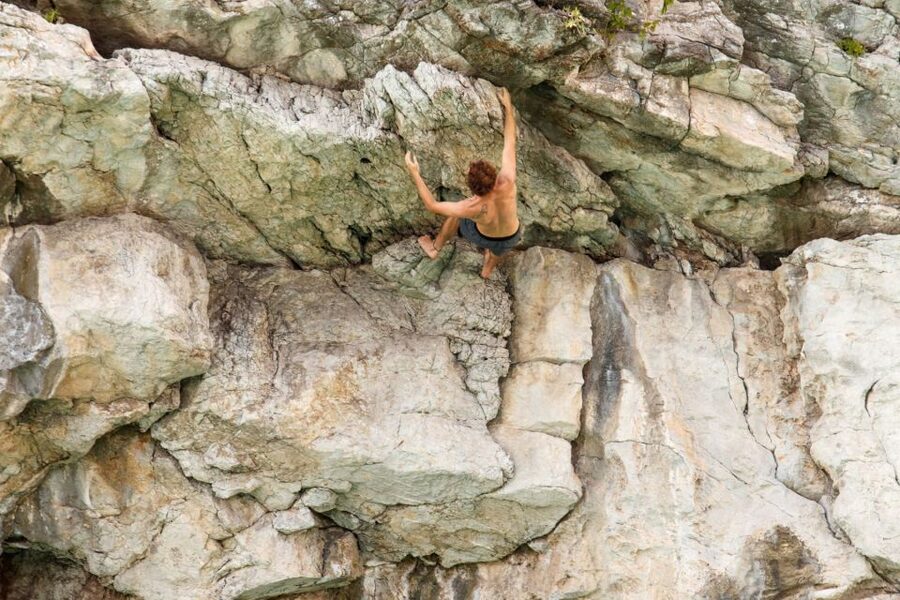
Review · VIETNAM
Cat Ba: Advanced Rock Climbing & Cliff Jumping Boat Tour
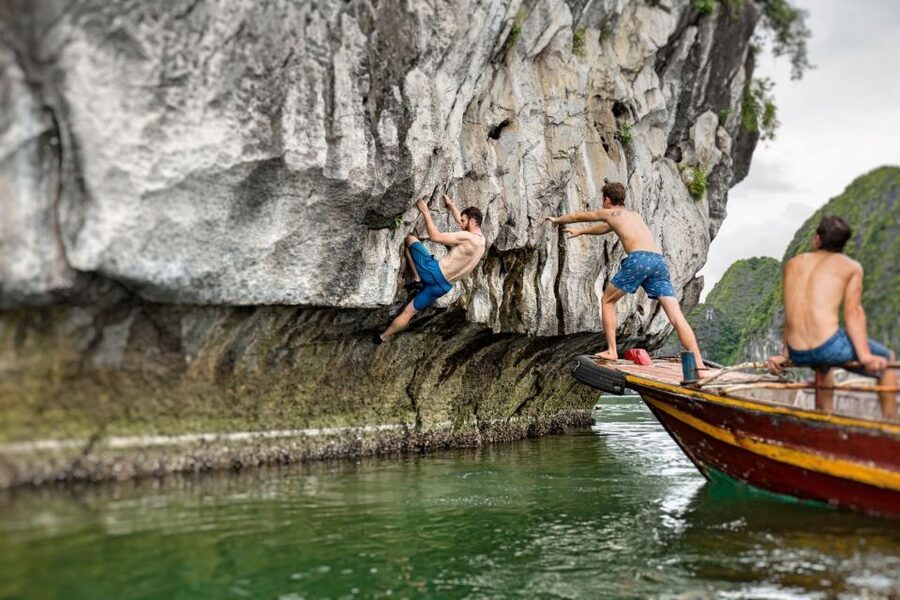
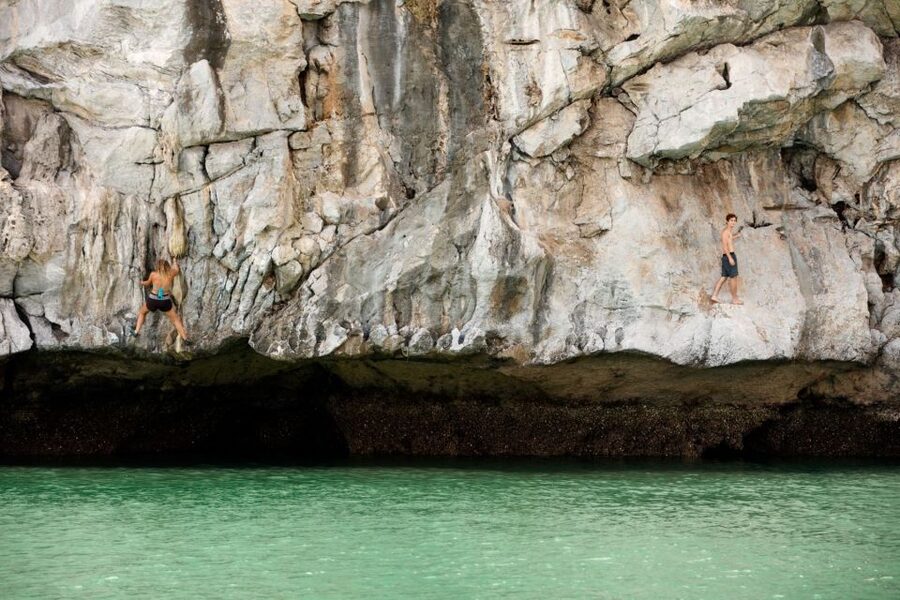
Cat Ba’s deep water soloing puts you on bare limestone above Lan Ha Bay with no rope, harness, or climbing wall between you and the sea. You start on a low, easy route, then choose taller or harder climbs before jumping into the water when your arms tire or the rock ends.
I like the careful progression from simple warm-up climbs to routes reported from 4b to 7c. I also like the small group, limited to eight, since your guide can offer useful route advice while everyone else cheers from the basket boat. The main consideration is plain but important: climbing without ropes carries real risk, and you need basic climbing skill, good swimming ability, and reasonable agility.
Key points at a glance
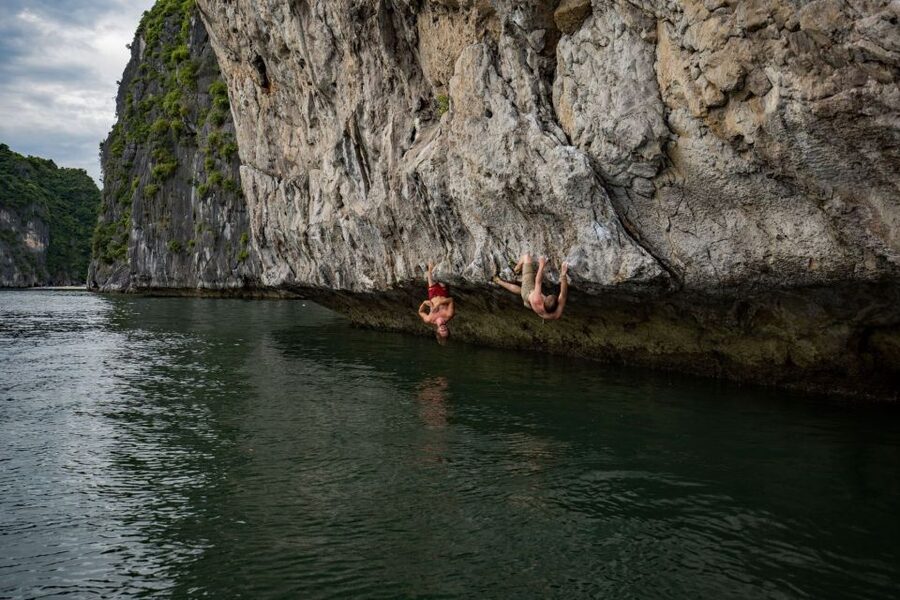
- Climb above Lan Ha Bay without ropes: You rely on your movement, route choice, and a safe jump into deep water.
- Tides set the schedule: The trip may run in the morning or afternoon, so confirm the start time before planning the rest of your day.
- Routes build in difficulty: The first wall helps you settle in, with harder and taller options offered later.
- A small group keeps it personal: The maximum group size is eight participants.
- Lunch comes on the boat: A traditional Vietnamese meal is included between the climbing sessions.
- Pack for water, not just rock: Bring swimwear, towel, sunscreen, insect repellent, dry clothes, and a dry bag.
Why deep water soloing works so well in Cat Ba
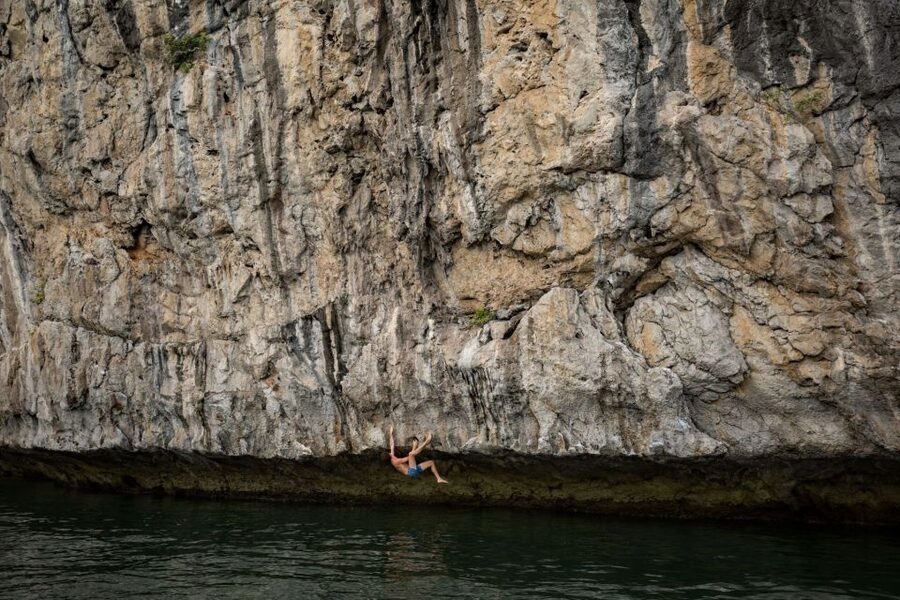
Deep water soloing is a very different form of rock climbing. Instead of clipping into protection as you climb, you move up a limestone wall above deep water. When you reach your limit, you let go and jump.
Lan Ha Bay is suited to this style because its limestone cliffs rise straight from the sea, and its large tidal changes help create different climbing conditions. The result is a climbing day with a strong sense of place. You are not repeating routes inside a gym. You are reading real rock while a boat drifts below and the bay opens around you.
That freedom is also the source of the activity’s appeal. You can climb as much as you like, stop when you need a rest, or swim from the boat between attempts. Someone in your group may be trying a hard route while you sit back with a view of the cliffs and water.
I would not treat this as a first-ever climbing lesson. The trip is intended for people with basic climbing experience, not complete beginners who have never used their feet on rock. The guides provide instruction and start gently, but they cannot remove the basic risks of an unroped climb.
More Cliff Jumping in Vietnam:
- Full Day Guided Tour to Lan Ha Bay with Kayaking, Cliff Jumping
★ 5.0 · 6 reviews - ThrillSeekers: Aruba UTV Tour & Cliff Jump at Natural Pool
★ 5.0 · 5,733 reviews - Aruba UTV Tour with Natural Cave Pool and Cliff Jumping
★ 5.0 · 4,492 reviews
The first meeting and boat ride from Cat Ba
Pickup is available from hotels and accommodations in Cat Ba Town. The morning schedule begins with check-in at the provider’s office at 8:00, followed by departure at 8:15. You reach the main boat around 9:00, then transfer to a smaller boat that can get close to the first climbing wall.
The afternoon schedule starts later, with check-in at 11:00 and departure at 11:15. In that version, lunch comes at about 12:00, followed by the smaller-boat transfer and first climb at 13:00. The return is planned for around 17:15, with the final ride back toward the office timed for sunset.
These times are not interchangeable promises. The tide in Lan Ha Bay determines which departure works best, so your exact start time can change. That matters if you are arranging another Cat Ba activity on the same day. I would leave plenty of room around this tour rather than booking a tight connection or fixed evening plan.
The larger boat provides the main ride and lunch setting. The smaller boat is the practical part of the day, taking the group close to the rock walls. A captain and crew handle the boat while an English-speaking guide manages the climbing side.
Starting low, then choosing your own challenge
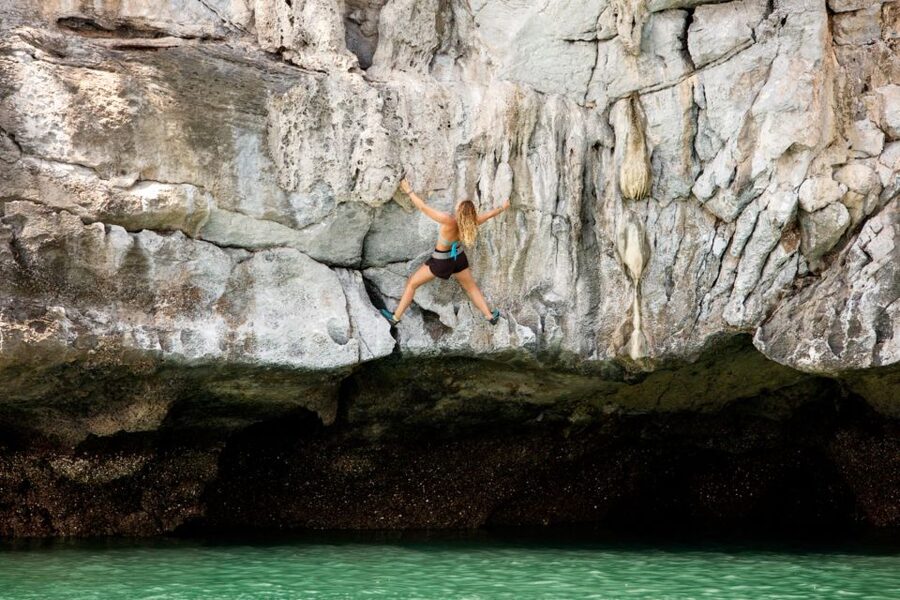
The first wall is meant to build confidence. Your guide sets you up on an easier, lower climb so you can get used to the rock, the shoes, the height, and the idea of jumping back into the bay.
This opening matters. Deep water soloing can feel very different from ordinary climbing because you are not stopping to clip a rope or check protection. Even a climber with indoor experience needs a few minutes to judge the limestone and learn how the jump feels.
After the opening route, the guide offers progressively harder and taller choices. You can decide how far to push. The group setting helps here because you do not have to climb every route. You can watch someone else attempt a more difficult line, listen to the guide, and select something that fits your ability.
The range can be broad. One experienced participant described routes from grade 4b to 7c, which gives you an idea of the spread rather than a guarantee of the exact climbs available on your day. Easier routes allow less advanced climbers to take part, while strong climbers can look for more demanding movement.
The guide’s role is advice and supervision, not a safety rope. Follow instructions about where to climb, when to jump, and how to return to the boat. If you are nervous, tell the guide early. The format allows you to push your limits in small steps, but you still need to make sensible decisions.
The limestone walls and the first climbing session
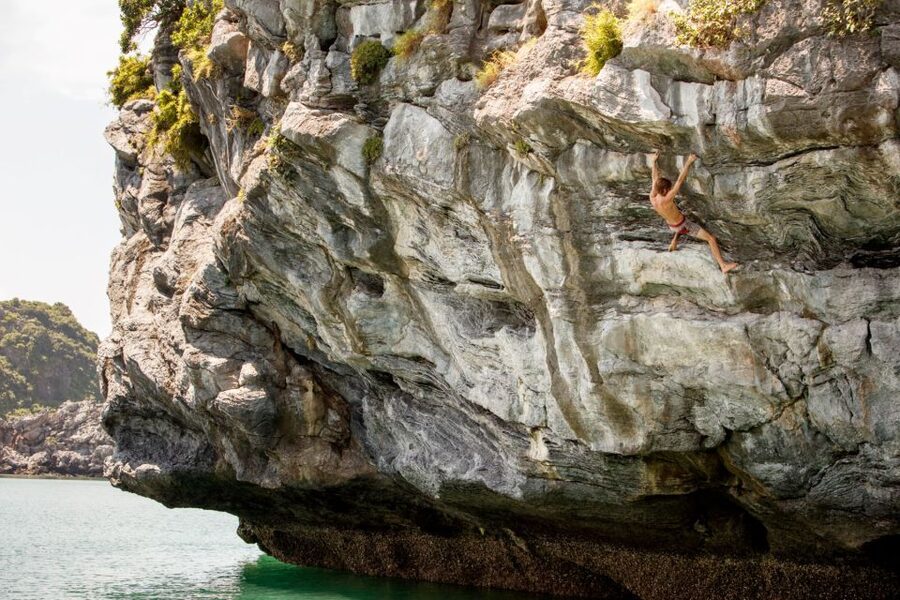
The first climbing area is reached after the transfer into the smaller boat. You may begin with a short, low line, then move to more exposed routes as your confidence grows.
The rock itself is part of the experience. Limestone cliffs rise out of the bay, and the views change as you climb. From the wall, you look down at the water and across the surrounding rock formations. From the boat, you see the route from below and can follow the movement of the people climbing.
Your supplied climbing shoes and chalk keep your kit simple. You do not need to travel with a full rack or rope system. Still, shoes and chalk are not a substitute for experience. You need to know how to place your feet, keep your balance, and conserve strength for the moment you choose to come down.
A small group of eight is a useful limit. It gives the guide fewer people to watch and keeps the boat from feeling crowded. It also means some waiting between climbs is likely, especially if several participants want to try the same wall. I see that as part of the rhythm rather than a flaw. You can use the pause to rest, watch routes, or swim from the boat.
More Rock Climbing in Vietnam:
- Nido de los Aguiluchos, Monterrey: Hiking + Rock Climbing + 3 Rappels
★ 5.0 · 713 reviews - Sagres: Coasteering – Swimming, Cliff Jump & Rock Climbing
★ 4.9 · 226 reviews - Gran Canaria: Cliff Climbing Via Ferrata Trip by Maspalomas
★ 4.9 · 177 reviews - Krabi: Ziplining with Abseiling and Rock Climbing Options
★ 4.9 · 147 reviews
Moving to the second wall after lunch
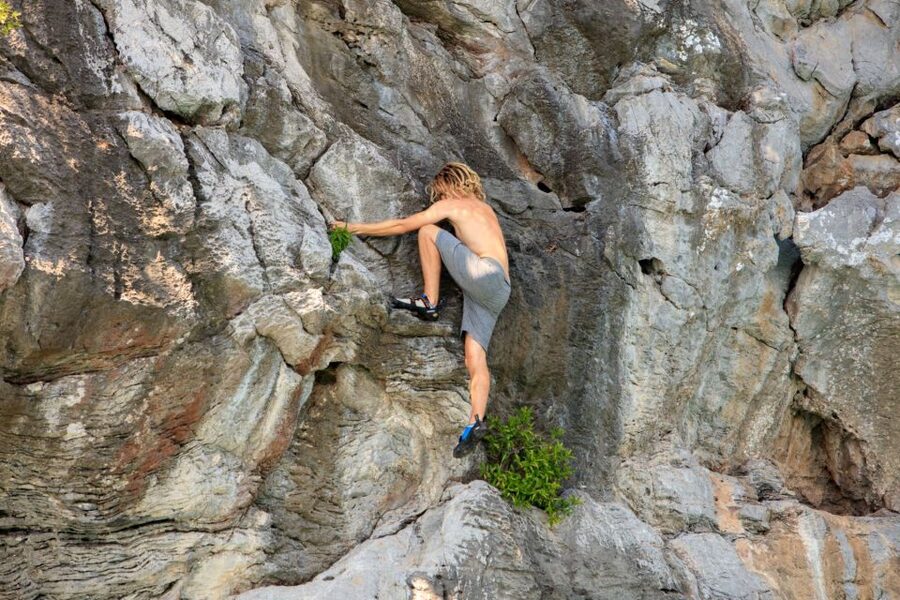
The schedule includes a second climbing area after a cruise through the bay. In the morning version, the boat reaches the second wall around 10:30, with lunch at approximately 12:00. In the afternoon version, lunch comes first, then the group reaches the first wall around 13:00 and continues to later climbing areas before the return.
The traditional Vietnamese lunch is included and served on the boat. This is useful because you do not need to interrupt the outing to find food on shore. It also gives your hands and forearms a proper break before more climbing.
I would keep your expectations practical. The supplied details identify the meal as traditional Vietnamese food but do not specify the menu, so bring any special dietary questions to the operator before booking. The same applies to drinks and extra personal expenses, which are not clearly listed as included.
The second wall gives stronger climbers another chance to work on harder routes. For less experienced climbers, it can be a good place to repeat the style at a comfortable height rather than chase the most difficult line. The best way to use the afternoon is to choose quality attempts over sheer numbers. Your arms may feel tired by this point, and fatigue affects judgment.
Jumping, swimming, and the cold-water factor
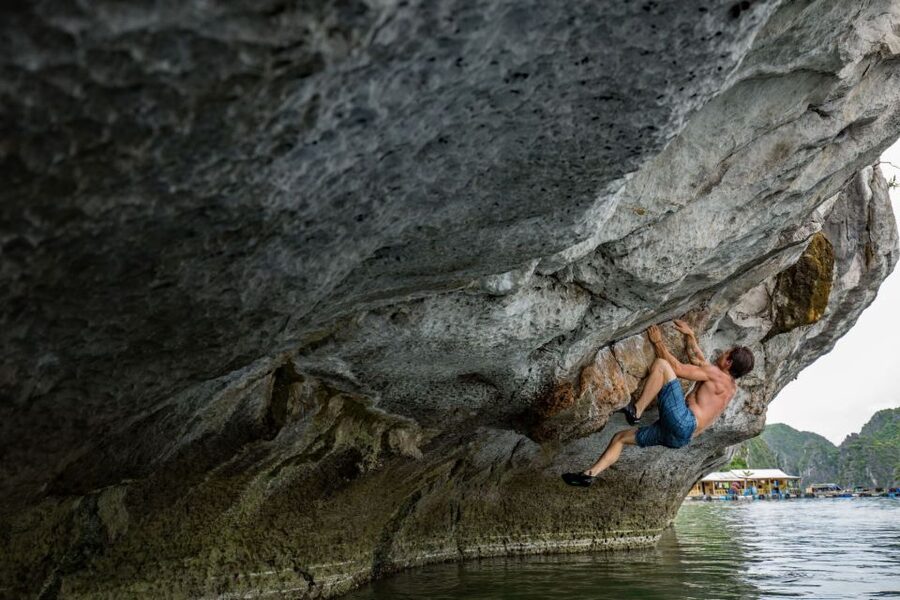
Jumping is not an optional stunt imposed on everyone. It is how you return from the wall when you do not climb to the top, and you can choose how high you go before letting go. The guides help you understand the process, but you must follow their instructions and check that the landing area is clear.
The water is part of the appeal, but it is also where the physical demands continue. You should be comfortable swimming before booking. Between climbs, you can swim from the boat or sit and take in the bay, but you still need to manage sun, fatigue, and changing water conditions.
Water temperature deserves attention. One account of the experience noted that cold plunges added a bit of type 2 fun, the kind of discomfort that becomes funny after the fact. Seasonal water temperatures may affect how much you enjoy repeated jumps, so pack a towel, dry clothes, and a way to protect your belongings.
A dry bag is especially useful. The activity takes place around boats and open water, and your phone, wallet, and spare clothing should not be left exposed. Sunscreen and insect repellent are also on the practical packing list. Put sunscreen on before the climbing begins, since applying it with wet or chalky hands is less convenient.
What the $73 price really covers
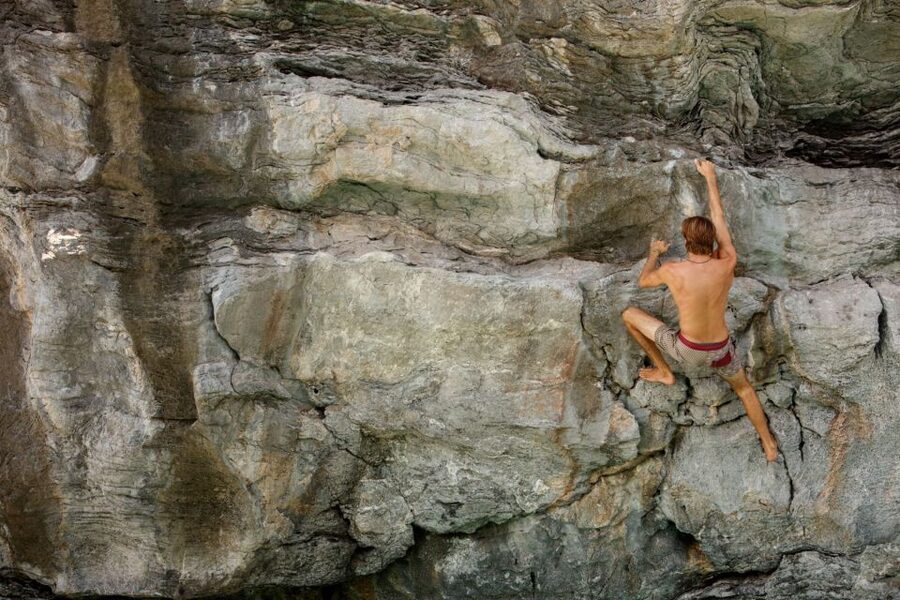
At $73 per person, this is not the cheapest way to see Lan Ha Bay. The price makes more sense when you add up the parts that would be awkward to arrange alone: transport from Cat Ba Town, access fees, the main boat, captain and crew, smaller-boat transfers, an English-speaking guide, lunch, climbing shoes, and chalk.
The included equipment is particularly useful if you are visiting Vietnam with limited luggage. You do not need to bring climbing shoes or chalk, though you still need suitable swimwear and personal items.
The small group improves the value for anyone who wants real climbing guidance rather than a general boat ride with a short activity attached. A group capped at eight gives you a better chance to ask questions, receive route suggestions, and avoid a packed boat.
The price is harder to justify if you only want to see the bay or have no interest in climbing. You are paying for a specialized activity, not simply sightseeing. It also does not include travel insurance or unspecified personal expenses, so check your coverage before committing to an unroped sport.
Fitness, age limits, and safety choices
The operator lists the activity as unsuitable for children under 15, pregnant women, and people over 70. It also calls for a moderate level of fitness and agility, basic climbing experience, and comfort in the water.
Those limits are sensible. You need enough strength to move over rock, enough coordination to select secure holds, and enough swimming ability to return to the boat after a jump. You should also be comfortable making a decision above the water rather than freezing when the route becomes harder.
The central safety point is simple: there are no ropes. The guides provide safety instructions and route guidance, but climbing without protection has inherent risks. You must pay attention at the briefing, follow directions, and stop before fatigue turns a good day into a poor decision.
Weather and tides can also affect the outing. The tour may move between morning and afternoon depending on conditions. That flexibility is useful for operating in the bay, but it means you should not assume the time shown during an initial search is final until availability is confirmed.
Who will get the most from this boat tour
I would recommend this for an experienced or moderately experienced climber who wants a natural setting and does not mind getting wet. It is also a good fit if you enjoy choosing your own level. You can attempt a low route, try a harder wall, or spend more time swimming and watching others.
Strong climbers should find enough range to stay interested, with reported grades reaching 7c. Less advanced climbers can still enjoy the day if they are comfortable with basic climbing and accept that the experience is not a formal rope-climbing course.
I would be cautious about booking this for someone who is afraid of heights, uncomfortable swimming, or hoping for a passive sightseeing cruise. The bay views are excellent, but the main event is physical. You will be climbing, jumping, waiting, swimming, and managing your own energy.
For a nervous climber, the gradual start is a genuine advantage. Tell the guide that you want an easy first route, and use the early climb to decide how much further you want to go. There is no prize for taking the highest line.
Should you book the Cat Ba climbing tour?
Book it if you already climb, swim confidently, and want a memorable way to experience Lan Ha Bay from the face of its limestone cliffs. The small group, supplied shoes and chalk, English-speaking guidance, boat transport, lunch, and choice of route make the $73 price reasonable for a specialized half-day adventure.
Skip it if you have no climbing background, dislike jumping into open water, or need a fixed schedule. The tide may change the departure time, and the activity has real exposure and physical demands.
For the right person, this is a strong Cat Ba choice. You get challenging rock, open water, a manageable group, and the freedom to set your own limit. Just bring the right attitude: the guide can help you climb safely, but only you can decide when it is time to stop.
FAQ
How long does the Cat Ba deep water soloing tour last?
The activity lasts about 6.5 hours. The exact start time depends on availability, weather, and tides in Lan Ha Bay.
Is pickup included?
Yes. Pickup is available from hotels and accommodations in Cat Ba Town.
What equipment is provided?
The tour provides climbing shoes and climbing chalk. Transportation, access fees, an English-speaking guide, the junk boat, captain and crew, and lunch are also included.
Do I need previous climbing experience?
Yes. You should have a basic level of climbing experience, moderate fitness and agility, and comfort with swimming. The guide starts with an easier climb, but this is not presented as a beginner activity for people with no climbing background.
Can I choose how difficult or high I climb?
Yes. The guide begins with an easier, low climb and then offers harder and taller options. You can climb as much or as little as you want, rest on the boat, or swim between attempts.
What should I bring?
Bring swimwear, a towel, sunscreen, insect repellent, a change of clothes, and a dry bag for personal belongings. Travel insurance and personal expenses are not included.
Fresh thrills added around Vietnam
- DaLat Canyoning & Experience 1500m Zipline★ 5.0 · 59 reviews
- VIP Adventure Tour- Dalat Canyoning/Snapling/Rappeling★ 5.0 · 5 reviews
- Canyoning & 2400m Alpine Coaster Activity in Dalat★ 5.0 · 7 reviews
- Combo Activity Trekking, Sup Paddling, Camping and Canyoning★ 5.0 · 54 reviews
- Full-Day Canyoning Tour with Datanla Falls Rappelling★ 5.0 · 54 reviews
- Cat Ba Abseiling Tour – Explore The Biggest Lagoon of Lan Ha Bay★ 5.0 · 9 reviews
- Full Day Guided Tour to Lan Ha Bay with Kayaking, Cliff Jumping★ 5.0 · 6 reviews
- Nha Trang: ATV Extreme Tour at Kong Forest★ 4.4 · 53 reviews
Cliff Jumping, side by side
ThrillSeekers: Aruba UTV Tour & Cliff Jump at Natural Pool
Read our review →
Aruba UTV Tour with Natural Cave Pool and Cliff Jumping
Read our review →
Barcelona Costa Brava Kayak, Snorkel & Cliff Jump Day Tour
Read our review →
Barcelona: Costa Brava Kayak, Snorkel & Cliff Jump & Lunch
Read our review →
Mallorca: Quad Bike Tour, Snorkeling, and Cliff Jumping
Read our review →
Mallorca: Kayaking, Sea Cave, Cliff Jumping & Snorkel Tour
Read our review →
Split/Omiš: Cetina River Rafting with Cliff Jump & Swimming
Read our review →Lists this trip sits in