
Review · THE UK
Coasteering
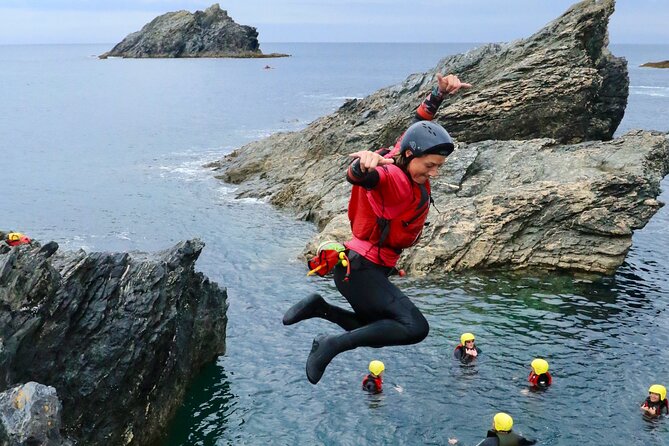
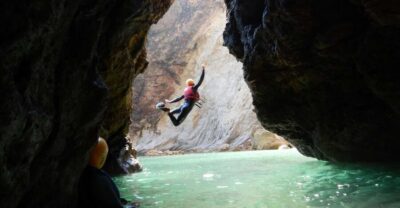
Devon’s coast is best seen from the waterline, where you can scramble across cliff bases, swim through gullies, explore caves, and jump from rocks into the sea. This 2.5-hour coasteering trip gives you a changing route rather than a fixed walk, with guides adjusting the outing to conditions and the confidence of your group.
I like the private format, since your group can set its own pace instead of being lost in a large crowd. I also like the careful build-up from smaller jumps to bigger ones, a useful way to help first-timers find their nerve. The main consideration is physical effort: you need moderate fitness, and rough weather can cancel the session.
Key points to know before you book
- A route shaped around the day: The exact coast section can vary, with Croyde and Hele Bay among the areas used around North Devon.
- A proper mix of activity: Expect swimming, rock scrambling, cave exploration, gullies, and jumps rather than one repeated stunt.
- A gradual confidence test: Guides can begin with easier sections before offering higher jumps, with participation at your own pace.
- All the main safety kit is supplied: You receive a wetsuit, helmet, footwear, and buoyancy aid.
- Small enough to feel personal: The maximum listed group size is 16, and the experience is presented as a private outing.
- A good family adventure with limits: Past groups have included children, teenagers, adults, and older family members, but everyone still needs moderate fitness.
Seeing Devon from the cliff base
Coasteering is part swim, part scramble, and part controlled leap. You do not simply walk beside the sea and admire it from a path. You move along the edge itself, using rocks, narrow gullies, rock pools, and waves as the route.
That change in viewpoint is the real reason to book. From the waterline, the North Devon coast feels more immediate. You notice the shape of the cliff base, the movement of the swell, and the small routes between rocks that are invisible from above.
The activity begins at 23 Beach Road in Ilfracombe, EX34 9QZ. The session ends back at the meeting point, which is helpful if you are planning the outing around a wider day in Ilfracombe. The supplied itinerary also lists the Verity Statue and Croyde. Treat those as route or area markers rather than assuming a sightseeing stop with a set amount of time.
The Verity Statue is a well-known Ilfracombe landmark, while Croyde offers a different North Devon setting. Since coasteering routes depend on sea conditions, the exact order and section of coast may change. That is a good thing here. A bespoke route is more useful than a rigid promise to visit one particular rock if the tide or weather makes another stretch safer.
More Coasteering Tours in the UK
- Coasteering Experience in Newquay
★ 5.0 · 465 reviews - Newquay Coasteering x Cornish Wave | Original Since 2012
★ 5.0 · 342 reviews - Half-Day Coasteering in Newquay Cornwall
★ 5.0 · 239 reviews
What the 2.5-hour session feels like
Your outing follows a clear pattern. You meet the guides, receive the equipment, listen to the safety briefing, and then head toward the water. The session is short enough to fit into a busy holiday schedule, but long enough to feel like a real outdoor activity rather than a quick taster.
The equipment supplied includes a wetsuit, helmet, footwear, and buoyancy aid. That matters because coasteering combines cold water, slippery rocks, and contact with the cliff base. You do not need to arrive with specialist gear, though you should expect to get wet and to use your arms and legs throughout.
The safety briefing is an important part of the experience, not paperwork to rush through. Guides explain how to approach the rocks, how to enter the water, and how to handle the jumps. Past sessions have been led by Zac, Eli, Alex, Matt, Jess, and Andy, and the guide team has been praised for clear instruction, encouragement, and regular checks on confidence.
Once you enter the water, the pace changes. You may swim from one group of rocks to another, pass through a gully, climb across uneven surfaces, and pause before a jump. The route is broken into manageable pieces, so you are not expected to make one huge leap of faith at the start.
Jumps that build confidence instead of forcing it
The jumps are the part most people picture first, but they are only one piece of the outing. The useful detail is that the heights can build gradually. Some sessions begin with smaller jumps and work toward larger ones, giving you a chance to learn how the water feels and how to follow the guide’s instructions.
That progression helped children and teenagers in past groups settle into the activity. One family session included two boys aged 10 and 12, who moved from early hesitation to tackling a final jump of roughly 4.5 metres. Another 13-year-old completed a jump of about 9 metres at Hele Bay. Those heights show what may be possible on certain routes, not what you must do.
You can choose your comfort level. The guides encourage you, but the activity should not become a contest. A good coasteering session lets you take a smaller jump, use another entry point, or watch first if a particular ledge feels wrong.
That is also why the private setup is valuable. A group of family members or friends can support one another without feeling pressured by strangers. The outing can still include different confidence levels, but the pace is easier to manage when the group knows each other.
Swimming, gullies, caves, and rock routes
The swimming sections are active but varied. You may cross short stretches between rocks, move through gullies, or let the water carry you toward a safer exit. One group used a current to ride back toward shore, which gives you a sense of how the coast can provide part of the movement.
You also spend time above the water. Traversing the cliff base means using handholds, balancing over uneven rock, and choosing a route under guidance. This is not a technical climbing trip, but it does require body control and comfort on rough ground.
Caves add another layer to the experience. They are not presented as a separate sightseeing tour, so do not expect a long underground visit. Instead, they form part of the route, giving you a close view of the coast’s openings and channels before you return to open water.
The scenery is strongest when you stop thinking about the next jump. Look back toward the shore, watch the waves move around the rocks, and take in the coastline from below. The setting changes every few minutes, which keeps the activity from feeling repetitive.
Same nerve, a different drop:
- Extreme Paranormal Underground Ghost Tour in Edinburgh
★ 4.5 · 1,587 reviews - Edinburgh: Extreme Paranormal Underground Ghost Tour
★ 4.2 · 850 reviews - Bungee jump from 40 meters in the stunning valley of Killiecrankie, Scotland
★ 5.0 · 500 reviews - Discover Canyoning at Bruar Falls
★ 5.0 · 409 reviews
Why the guides matter so much
The guide is the difference between a frightening swim and a good adventure. You need clear calls, calm decisions, and practical tips at the right moment. The team’s approach appears to focus on preparation first, then steady encouragement once the group is moving.
Zac has led sessions for first-timers and families, including a 13-year-old completing his first coasteering outing. Alex and Matt guided a family through a gradual sequence of jumps, while Zac and Jess helped a mixed-age group manage swimming, traversing, and jumps. Andy also led a session where the final small jump became a test of trust and nerve for two adults.
Those examples point to a useful quality: the guides do not treat the activity as a race. They explain what is coming, give technique tips, and help you decide how far to go. They have also been praised for remembering names, which sounds minor but makes a real difference when you are in cold water wearing a helmet and trying to listen over the waves.
The company has worked with family groups and a scout group of nine young people plus three leaders. That suggests the format can suit organized groups as well as holiday families. Still, the listed maximum is 16 people, so you should not expect a completely one-to-one session.
The private format and group size
The private arrangement is one of the strongest selling points. A private route means you can make the day about your own group, with less concern about keeping up with unrelated people. It also gives the guides a better chance to see who is confident, who needs more time, and who may prefer to skip a jump.
The maximum listed group size is 16. That is not tiny, but it is manageable for a guided outdoor activity, especially when the route naturally breaks into short sections. If your group includes several children or people with very different fitness levels, ask how the private booking is organized before paying.
The experience is available in English and includes a mobile ticket. Confirmation is received at booking. Since the activity depends on sea and weather conditions, keep your schedule flexible around the session rather than placing an important timed attraction immediately afterward.
Is $83.34 good value?
At $83.34 per person, this is not a cheap beach activity. It is fair value if you want a guided, equipment-provided adventure rather than a simple swim or coastal walk.
The price includes the main safety equipment and guide support. You are paying for wetsuit use, helmet, footwear, buoyancy aid, route planning, a safety briefing, and supervision across a changing coastal environment. You also get an experience that would be difficult to arrange safely on your own.
Value depends on how much of the session you use. If you only want to watch others jump, the price will feel high. If you are keen to swim, scramble, explore caves, and try several jumps, the 2.5-hour duration gives you a fuller outing.
The group discount option may help larger parties. For families, friends, school groups, and scouts, the private format can make the cost easier to justify because the session is built around your own people rather than a generic public group.
Fitness, age, and comfort in the water
You should have a moderate level of physical fitness. The activity involves swimming, climbing over rocks, balancing, and repeated movement in and out of the water. It is not suitable as a passive sightseeing trip.
The past groups show a wide age range, including children around 8, teenagers, adults, and a 76-year-old. That does not guarantee that every age is accepted on every session, and the official information only confirms a moderate fitness requirement. If you are booking for a child or an older family member, contact Coastal Adventures Ltd before committing.
You also need to be comfortable with cold water, waves, and heights. The wetsuit helps with the water temperature, while the buoyancy aid provides support, but neither removes the basic demands of the activity. If you are unsure about a jump, say so early. The gradual format works best when the guide knows your comfort level.
Croyde, Ilfracombe, and the route choices
Croyde is listed as one of the itinerary points, while the meeting point is in Ilfracombe. The supplied information does not give a fixed transfer arrangement or a guaranteed sequence between the two places, so check the precise plan at booking.
This matters because coasteering depends on finding the safest and most enjoyable section of coast on the day. A route around Croyde may feel different from one around Hele Bay or Ilfracombe, with changes in rock shape, wave movement, and jump options.
The Verity Statue is also listed in the itinerary. It gives you a clear Ilfracombe landmark for orientation, but the experience is about the coast rather than a conventional statue visit. If you are hoping for a long stop on land, this is not the right tour. The statue and coastal areas are best understood as location markers within a wider North Devon outing.
Weather and cancellation planning
Good weather is required. If poor weather causes cancellation, you are offered another date or a full refund. The same applies if the minimum number of people is not reached.
You can cancel for a full refund up to 24 hours before the start time. Cancellations or changes made less than 24 hours before the session are not refunded or accepted, so check your holiday plans carefully.
The sea is part of the appeal, but it is also the reason conditions matter. Keep a spare indoor plan for the day in case the weather changes. Do not read a weather cancellation as a failure of the experience. A safer route on a different day is preferable to forcing an unsuitable session.
Who will enjoy this most?
I would choose this for a family with adventurous children, a group of friends, a youth organization, or anyone who wants an active way to see North Devon. It suits beginners particularly well because the session can build from simple sections to more demanding jumps.
It is also a good choice if you want a shared achievement. The best moments are not only the largest jumps. They include helping someone get across a rock, watching a nervous child gain confidence, or reaching the next ledge as a group.
I would think twice if you dislike open water, have limited mobility, or want a quiet coastal walk. The route involves effort, wet clothing, uneven rock, and a certain amount of uncertainty. Even with good instruction, you remain exposed to the natural conditions of the coast.
Should you book this Devon coasteering trip?
Book it if you want more than a view from the beach. The combination of swimming, caves, gullies, scrambling, and optional jumps gives you a proper North Devon adventure in a compact session.
The strongest reasons to choose this experience are the private format, the supplied equipment, and the guides’ gradual approach to confidence. The main cautions are the moderate fitness requirement, weather dependence, and price if you are not likely to take part fully.
For a first coasteering session, this is a sensible choice. Tell the guide your limits, take the smaller jumps first, and let the route develop at its own pace. You may finish with wet hair, tired legs, and a much stronger feeling for Devon’s coast than any viewpoint could provide.
FAQ
Where does the coasteering experience start?
It starts at 23 Beach Road, Ilfracombe, Devon, EX34 9QZ, United Kingdom.
Where does the activity finish?
The experience ends back at the meeting point.
How long does the coasteering session last?
The activity lasts approximately 2 hours and 30 minutes.
What equipment is provided?
A wetsuit, helmet, footwear, and buoyancy aid are provided.
How many people can join?
The listed maximum is 16 people. The experience is presented as a private outing.
What happens if bad weather cancels the session?
You will be offered a different date or a full refund if poor weather causes the experience to be canceled.
Fresh thrills added around the UK
- Coasteering★ 5.0 · 24 reviews
- 3-Hours Via Ferrata Experience in Keswick★ 5.0 · 33 reviews
- Coasteering Day Trips from Edinburgh★ 5.0 · 51 reviews
- Abseil Experience – Millersdale Derbyshire Peak District★ 5.0 · 24 reviews
- 2-Hour Coasteering Adventure Near Bude★ 5.0 · 68 reviews
- Coasteering Adventures in Bossiney Cove, Bude, and Cornwall★ 5.0 · 19 reviews
- Discover Canyoning in Dollar Glen★ 5.0 · 16 reviews
- Adrenaline Comedy Bike Tour Experience at B3335★ 5.0 · 8 reviews
Coasteering Tours, side by side
Award Winner Premium Kayak and Coasteering Adventure with Lunch
Read our review →
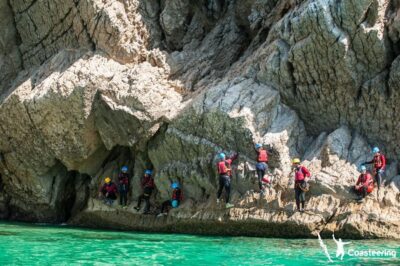
Lisbon: Sesimbra/Arrábida Natural Park Coasteering Adventure
Read our review →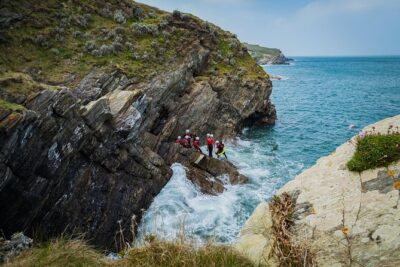
Newquay Coasteering x Cornish Wave | Original Since 2012
Read our review →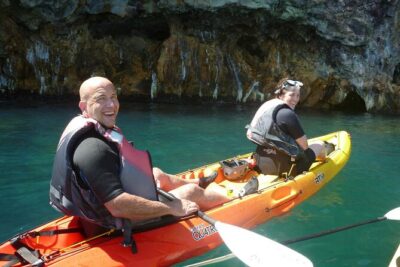
Private Tour explore Vulcano Island by Kayak & Coasteering
Read our review →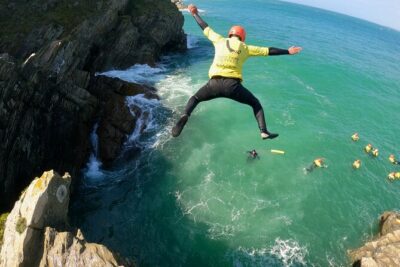
Sagres: Coasteering – Swimming, Cliff Jump & Rock Climbing
Read our review →Lists this trip sits in