Review · GRAN CANARIA
Gran Canaria: Guided Via Ferrata Excursion
Gran Canaria’s via ferrata turns a mountain outing into a hands-on adventure. You hike toward the cliffs, clip into fixed safety cables, climb iron steps and chains, cross a suspension bridge, and finish with the unusual treat of a swing inside a cave. It is part hike, part climbing lesson, and part nerves-of-steel challenge.
I like two things right away: beginners can take part, and the guides adjust the route when a section feels too hard. I also like that the outing shows you a rougher side of Gran Canaria, far from the resort pool and beach. The main caution is simple: this is not a gentle sightseeing walk. You need reasonable fitness, upper-body strength, and a calm head on exposed rock.
Key points to know before you book
- A 25-minute approach walk: The adventure begins from a large open parking area near Bahía Feliz, followed by a walk toward the cliffs.
- A real physical challenge: You will use your arms, legs, and concentration on chains, steps, rock, and cables.
- A cave swing and suspension bridge: These give the four-hour outing its playful side, beyond ordinary climbing.
- Guides who focus on safety: José, Jorge, Javier, Juan, and Dani are among the guides named for this activity.
- Small groups of up to eight: This allows more personal help, especially if you are new to climbing.
- Photos and videos are included: Guides take a professional photographic record during the activity.
What the Gran Canaria via ferrata actually involves
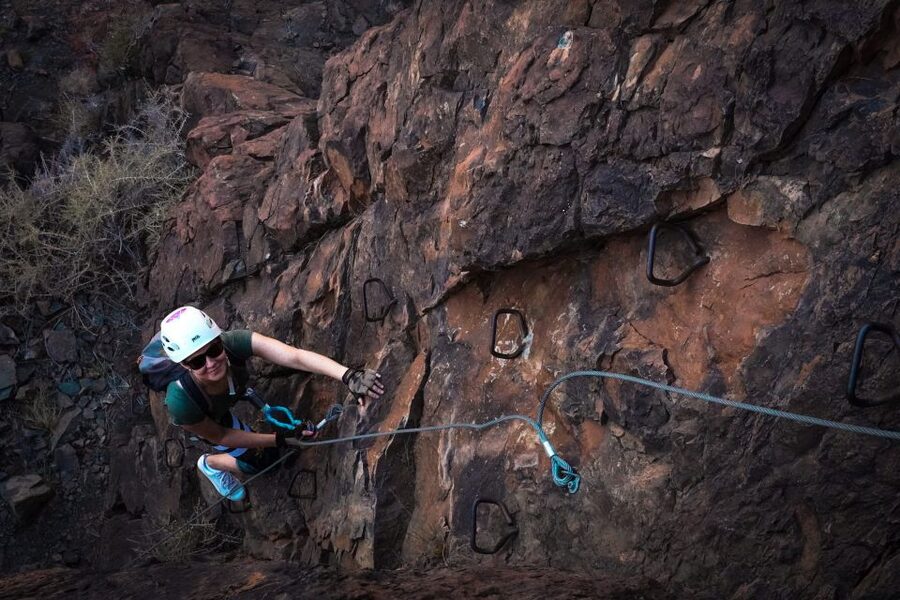
A via ferrata is a climbing route fitted with permanent cables, metal steps, chains, and other aids. You wear a harness with safety attachments and stay connected to the route as you move. It is not the same as free climbing, but it still asks you to climb vertically and move across exposed rock.
That distinction matters. You do not need previous climbing experience, and the guide explains how to use the equipment. Still, you will need to pull yourself upward, place your feet carefully, and keep moving when the rock feels steep. Several people have found the mental side as demanding as the physical work.
I would compare it to a mountain obstacle course with views. Some sections are straightforward. Others may make you pause before taking the next step. The guides can offer easier route choices when needed, but you should arrive expecting a workout rather than a casual walk.
More Via Ferrata Routes in Spain
- Via Ferrata in Gran Canaria. Vertical adventure park. Small groups
★ 5.0 · 183 reviews - Gran Canaria: Cliff Climbing Via Ferrata Trip by Maspalomas
★ 4.9 · 177 reviews - Climbing + Zipline + Via Ferrata + Cave. Adventure route in Gran Canaria
★ 5.0 · 149 reviews
Starting near Bahía Feliz
The meeting point is behind the Bahía Feliz bus stop, on a fairly large open area used for parking. It may not look like a traditional car park, which can cause a moment of doubt when you arrive. Follow the directions carefully and walk along the main road toward the open ground rather than stopping at the first area that appears to be a parking lot.
This is a useful place to arrive early. The area can look quiet before the guides appear, but that does not mean you are in the wrong place if you have followed the directions. The activity returns to this same parking area after roughly four hours.
The meeting point does not appear designed as a polished tourist facility, so set your expectations accordingly. You are starting an outdoor excursion, not checking into a visitor center. Wear your sports clothes from the beginning and keep your belongings in a small daypack.
The approach walk to the cliffs
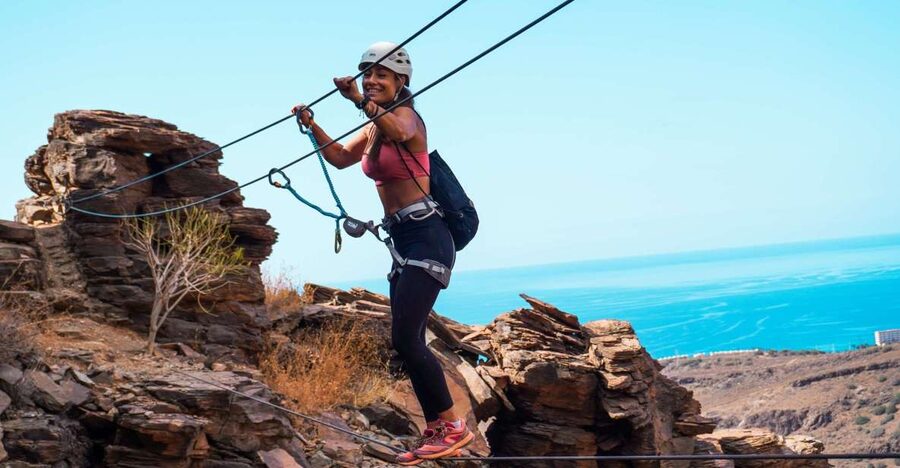
After meeting the guide, you hike for about 25 minutes each way to reach the via ferrata. This walk is part of the outing, not a transfer by vehicle. It gives you time to get used to the heat, footwear, and group before the climbing begins.
The route toward the mountain may feel unremarkable at first. Then the rock formations come into view, and the purpose of the walk becomes clear. This gradual arrival is one of the better parts of the experience because you do not simply step out of a van beside the climbing route.
The approach also adds to the physical demand. If you already feel tired after a short uphill walk, the climbing sections will feel harder. I would treat the walk as your first fitness check. It is not described as an extreme trek, but it is long enough to matter when judging the total effort.
Safety briefing and equipment
At the climbing area, the guide explains the route, the safety cables, and the equipment. The provider supplies the activity gear, along with civil liability and accident insurance and a group first-aid kit. You receive an individual bottle of water and a snack as well.
The safety system is the reason this activity works for first-timers. You are not expected to know how to clip and move along a via ferrata before you arrive. The guide demonstrates the process and stays close enough to help when a step feels awkward or a participant becomes nervous.
Safety is taken seriously throughout the outing. José is often singled out for calm explanations and encouragement, while Jorge, Javier, Juan, and Dani have also guided groups on the route. The exact guide depends on the date, but the format remains focused on clear instructions and support.
That support does not remove every risk or challenge. You are still on cliffs and uneven rock. Listen carefully, keep your equipment attached as instructed, and tell the guide early if you are struggling. Waiting until you are exhausted makes every obstacle harder.
More Via Ferrata Routes in Gran Canaria:
- Via Ferrata Gran Canaria: Adventure Route for First Time Climbers
★ 5.0 · 66 reviews - Las Palmas: Coastering, Via Ferrata, Water Jumping & Snorkel
★ 4.9 · 40 reviews - Agaete: Gran Canaria Coasteering. Marine Ferrata and Zipline
★ 5.0 · 38 reviews - Gran Canaria: Guided Via Ferrata and Zipline Adventure
★ 4.1 · 36 reviews
Climbing the route, one obstacle at a time
The climbing combines vertical and horizontal movement. You may use metal rungs, chains, fixed cables, and natural rock as you work along the route. The result feels more varied than climbing a single wall.
The first sections give you time to learn the rhythm: clip, move, find a stable foot placement, and continue. As the route rises, the views open up and the drop below becomes more noticeable. That is when the mental challenge begins. You may be physically able to make the next move but still need a moment to commit to it.
The route reaches about 300 metres in height according to one detailed account of the outing. Exact difficulty can vary, and the guides may use less demanding options for the group. Some people describe the climbing as manageable for beginners, while others find it intense and physically demanding. Both descriptions make sense. Your experience will depend on fitness, comfort with heights, and how much upper-body strength you have.
This is where a small group helps. With no more than eight participants, the guide can spend time assisting someone who is hesitant without rushing the entire group. If you are climbing with a partner, you can enjoy the challenge together, but you should not assume that a stronger companion can replace the guide’s safety instructions.
The suspension bridge and cave swing
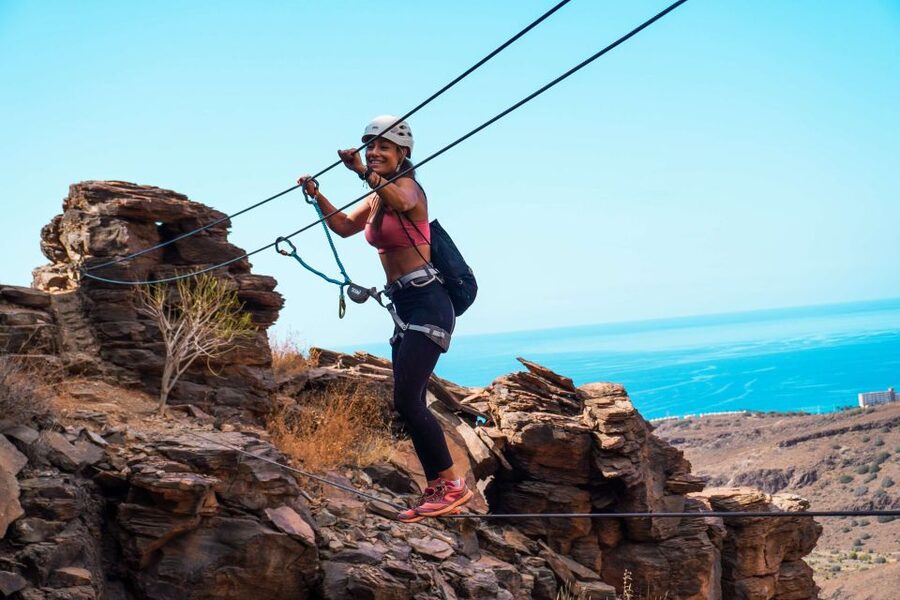
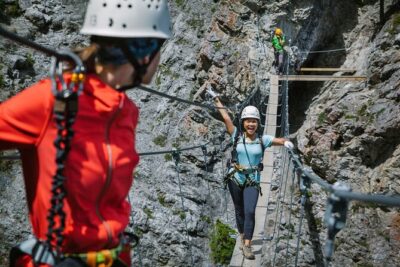
The suspension bridge, sometimes called the monkey bridge, adds a playful break from the more serious climbing. It tests your balance and gives you a memorable crossing without requiring complicated technique. You may still feel a flutter in your stomach, especially if the bridge moves beneath you.
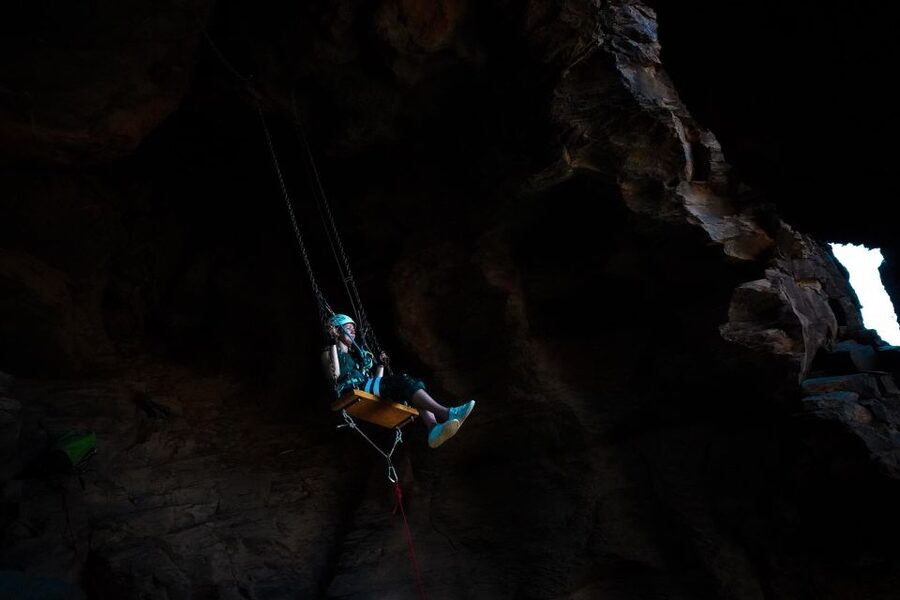
The swing inside a cave is the most unusual feature. It changes the mood from careful climbing to pure fun, though you still need to follow the guide’s instructions. This is the kind of detail that gives the excursion a personality of its own.
A zipline has also been part of at least one route configuration, but you should not assume it is included every time. The confirmed features are the via ferrata, suspension bridge, and cave swing. Ask the guide about the exact route on your day if the zipline matters to you.
These obstacles are not just photo opportunities. They break up the climbing and give you different ways to use your body. The cave also adds a welcome change from exposed rock and open views.
Views, plants, wildlife, and island history
The setting offers more than a climbing challenge. Guides talk about local plants, wildlife, and the history of Gran Canaria along the way. That extra context helps you understand the place as more than a backdrop for adventure photos.
The views become more impressive as you gain height. You get a sense of the island’s dry rock and steep terrain from the cliffsides, rather than seeing Gran Canaria only from the coastal resorts. The route is a good choice if you want a physical activity with some local interpretation built in.
Do not expect a long historical walking tour. The main event is the climbing, and the guide’s explanations fit around the route and safety work. Still, the nature and island information gives you something to notice while waiting for the next person to cross an obstacle.
The guides also make time for photos. A professional photographic report is included, and photos and videos are normally sent afterward. This is valuable because you may not want to handle your own phone while clipped to a cable on a cliff.
How hard is it for a first-timer?
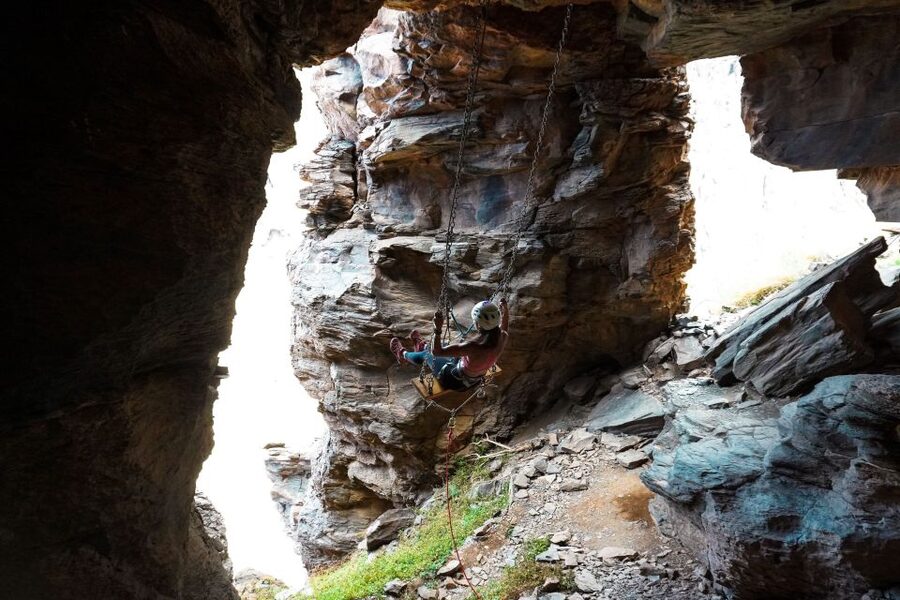
You do not need previous climbing experience, but you should not confuse beginner-friendly with effortless. The activity is suitable for first-timers who are reasonably fit and willing to accept a little discomfort.
The main physical demands are:
- Walking for about 25 minutes to the route and back
- Pulling and stabilizing yourself on climbing sections
- Standing and moving on uneven rock
- Managing nerves at height
- Staying focused for several hours
Upper-body strength helps, especially on steep or vertically awkward sections. One smaller participant found some parts difficult because of the height of the steps, while another first-time climber felt comfortable after the guide’s instructions. The practical lesson is to bring confidence, but not pride. Ask for help and use the easier option if one is offered.
You should not book this activity if you have low fitness, back or heart problems, a recent surgery, or are pregnant. It is not suitable for wheelchair users, children under 12, people over 70, or anyone weighing more than 140 kilograms. These restrictions are important because the route requires climbing and controlled movement on rock.
What to wear and carry
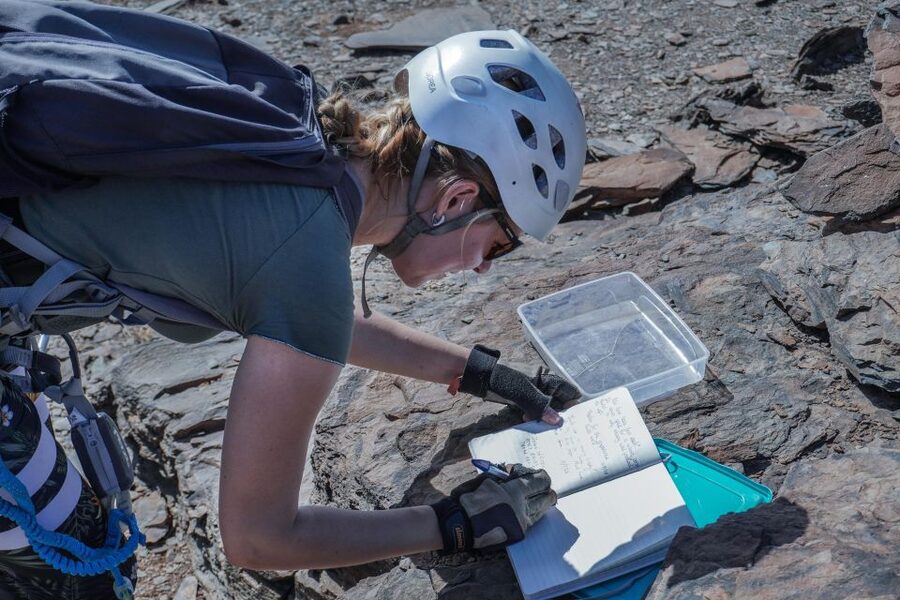
Wear proper sports clothing and closed-toe sports shoes with a secure grip. Long shorts or trousers are a sensible choice because you will move against rock, chains, and metal equipment. Avoid loose clothing that could catch on the route.
Bring:
- Passport or identification card
- Windbreaker
- Sunglasses
- Sunscreen
- Small daypack
- Sportswear
- Closed-toe shoes
The windbreaker is worth packing even on a warm island day. You may feel different temperatures as the route rises, and wind can make a cliffside feel cooler than the car park. Sunscreen and water also matter, since the activity takes four hours and includes an approach walk.
The provider supplies water and a snack, but do not treat that as a replacement for sensible preparation. Have a meal before the activity and bring only what you can carry comfortably.
Is $82 a fair price?
At $82 per person, this is not the cheapest way to spend a morning in Gran Canaria. The price makes more sense when you count what is included: specialist activity equipment, professional guiding, accident and liability insurance, first-aid supplies, water, a snack, and a photographic record.
You are also paying for route management. A self-guided walk cannot give you the same equipment briefing, technical support, or help when a section feels intimidating. For a first-time climber, that guidance is the main value.
The small group limit of eight improves the deal. You are less likely to feel lost in a crowd, and the guide can adapt the pace and route. If you already climb outdoors, you may see the price differently because you are paying mainly for access, supervision, and a new setting rather than basic instruction.
I consider it good value for an active half-day, especially if you want one memorable activity rather than several passive sightseeing stops. It is poor value if you are hoping for a relaxed scenic walk with only a little climbing.
Timing, languages, and flexibility
The experience lasts four hours, including the approach and return walk. Starting times vary, so check availability for your date. Guides operate in English, Spanish, and Italian.
The small-group setup is useful for mixed abilities. Easier route choices can be offered, and the guide can give extra encouragement when someone is nervous. That does not mean every group moves at the same speed, so allow the full four hours rather than planning a tight appointment immediately afterward.
You can cancel up to 24 hours in advance for a full refund, and the reserve-now, pay-later option keeps your plans flexible. These booking terms are helpful if your holiday schedule is still shifting, but the physical requirements are not flexible. Read those carefully before paying.
Who should book this Gran Canaria adventure?
I would recommend it to adults and teenagers aged 12 or older who enjoy active outings, want to try climbing without committing to a full climbing course, or need a break from beaches and resort streets. It is especially good for beginners who appreciate patient instruction and for couples or friends who want a shared challenge.
It also suits people who care about photos. The guide takes pictures and videos during the route, so you can focus on the experience instead of trying to document every obstacle yourself.
I would not choose it for a slow-paced holiday morning, anyone uncomfortable with heights, or anyone with the listed health restrictions. If you are unsure about your fitness, remember that the route combines a walk, climbing, balance work, and sustained concentration. The guide can help, but cannot make a demanding activity passive.
Should you book it?
Book this Gran Canaria via ferrata if you want a safe, guided introduction to climbing with a cave swing, suspension bridge, high views, and a real sense of achievement. The strongest reasons to go are the careful safety approach, small groups, flexible route choices, and guides such as José and Jorge who add local information to the technical instruction.
Think twice if you dislike heights or want an easy outing. For the right person, $82 buys far more than a view: it buys a four-hour challenge, proper equipment, professional support, water, snacks, and photos to remember the day.
FAQ
Is previous climbing experience required?
No. The activity is designed to be accessible without previous via ferrata experience. The professional guide explains the equipment and safety system before you begin.
How long does the activity last?
The full experience lasts four hours. This includes the walk to the climbing area, the via ferrata route, the obstacles, and the return to the parking area.
Where is the meeting point?
Meet at the Parking actividad YUKAN, behind the Bahía Feliz bus stop. It is a large open area used for parking. Follow the directions carefully because it may not look like a standard car park.
What languages are available?
Guides are available in English, Spanish, and Italian.
What is included in the price?
The price includes the activity equipment, professional guides, civil liability and accident insurance, a collective first-aid kit, an individual bottle of water, a snack, and a professional photographic report.
Is the activity suitable for children?
It is not suitable for children under 12 years old. Participants should also have a reasonable level of fitness and be able to manage climbing and walking on uneven terrain.
Can I cancel my booking?
You can cancel up to 24 hours before the activity for a full refund. A reserve-now, pay-later option is also available.
Fresh thrills added around Gran Canaria
- Via Ferrata Gran Canaria: Adventure Route for First Time Climbers★ 5.0 · 66 reviews
- Half-Day Adventure and Climbing Via Ferrata in Gran Canaria★ 5.0 · 25 reviews
- Coasteering experience in Gran Canaria★ 5.0 · 112 reviews
- Cliff Jumping Canyoning in The Rainbow Rocks Ravine★ 5.0 · 12 reviews
- Coasteering Gran Canaria: The Atlantic Mountains Adventure Route★ 5.0 · 91 reviews
- Dry Canyoning Half Day Trip★ 5.0 · 5 reviews
- Canyoning in Gran Canaria: The Hidden Waterfalls and Magic Pools★ 5.0 · 92 reviews
- Las Palmas: Coastering, Via Ferrata, Water Jumping & Snorkel★ 4.9 · 40 reviews
Via Ferrata Climbing, side by side
Banff: Mount Norquay 2.5 or 4-Hour Guided Via Ferrata Climb
Read our review →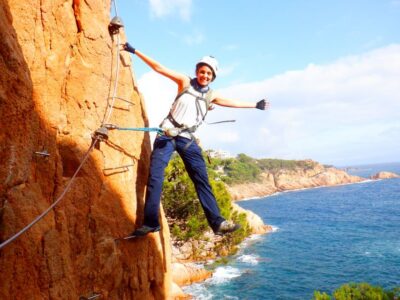
Sant Feliu de Guixols: Climb Via Ferrata Cala del Molí
Read our review →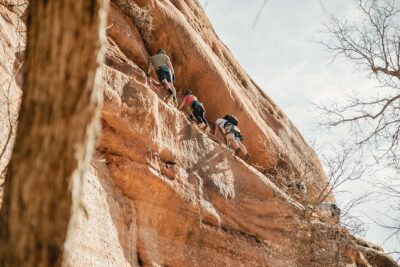
Small-Group Guided Via Ferrata Climbing with Banff’s Best Views
Read our review →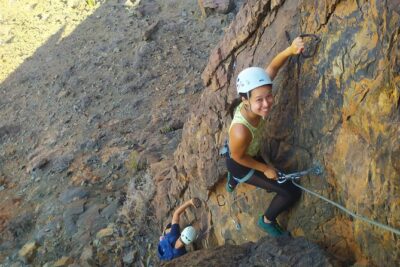
Via Ferrata in Gran Canaria. Vertical adventure park. Small groups
Read our review →