
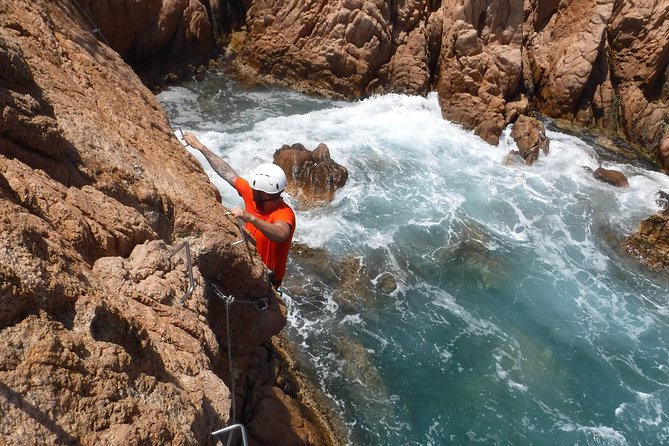
Review · SPAIN
Costa Brava: Via Ferrata Cala del Molí
The best thing about the Cala del Molí via ferrata is its setting. You are not climbing in an inland canyon or a mountain forest. You move along the Costa Brava above the Mediterranean, using metal steps, cables, bridges, and cliffside routes to reach corners that would be hard to access on foot. I especially like the two-part design and the included photo report, since you can test the route before deciding how far to go and keep your hands free for climbing.
I also like the small-group format, with a maximum of six people listed for the activity, and the practical package: guide, technical gear, snack, photos, liability insurance, and accident insurance. The main consideration is physical effort. The second section needs real upper-body stamina, and the experience can feel less like traditional rock climbing and more like moving along a fixed course of metal footholds, rings, chains, and cable.
Key points to know before you book
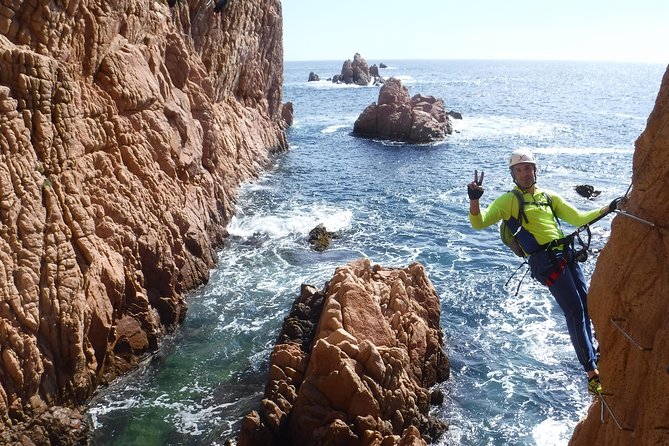
- Sea-cliff setting: The route runs along the Mediterranean at Cala del Molí near Sant Feliu de Guíxols.
- Two sections: The first is the easier introduction. The second is more demanding, with an exit available before continuing.
- Three to four hours: Plan for the full activity, though the exact length can vary with group pace and conditions.
- Guided safety system: You use technical equipment and remain secured to a fixed cable under guide supervision.
- Useful extras included: A qualified guide, equipment, photographic report, mini picnic, and insurance are included.
- Moderate fitness required: You do not need to be an expert climber, but strength, comfort with heights, and stamina matter.
Cala del Molí puts you above the Mediterranean
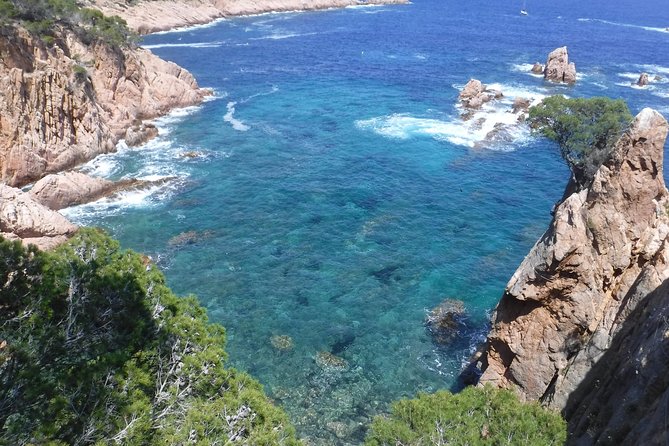
This is one of the Costa Brava’s more unusual outdoor outings because the sea is part of the route, not just scenery seen from a distant lookout. The Cala del Molí course uses the rocky coast near Sant Feliu de Guíxols, in Baix Empordà, to create a horizontal and vertical route above the water.
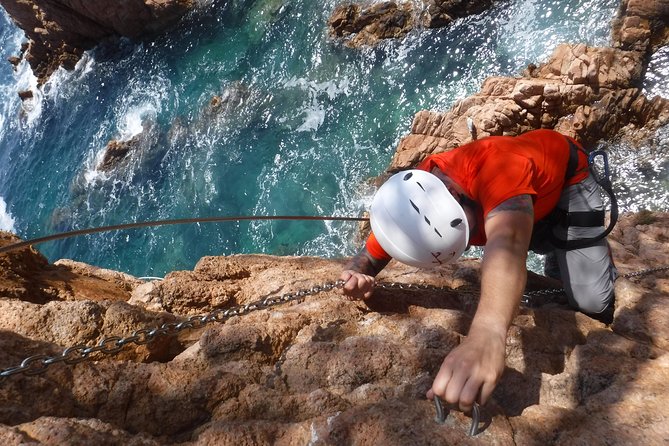
A via ferrata is a protected climbing path. You wear a harness and attach yourself to a fixed cable, then progress with metal steps, footholds, rings, chains, and bridges. The equipment takes away much of the technical problem-solving found in free climbing, but it does not remove the need to pull, balance, step carefully, and manage your energy.
That distinction matters. If you have climbed before, you may find the route straightforward in places because the handholds and footholds are built into the course. If you expect continuous rock climbing, you may find it more mechanical. One detailed account described the route as relying heavily on metal steps, D-rings, chain ropes, and the safety cable rather than natural holds in the rock.
I would choose this experience for the combination of movement and setting. You get the physical challenge of a climbing route, but also the changing views of the coast and the satisfaction of reaching places that a normal seaside walk cannot reach.
More Via Ferrata Routes in Spain
- Sant Feliu de Guixols: Climb Via Ferrata Cala del Molí
★ 5.0 · 253 reviews - Gran Canaria: Guided Via Ferrata Excursion
★ 4.9 · 198 reviews - Via Ferrata in Gran Canaria. Vertical adventure park. Small groups
★ 5.0 · 183 reviews
The short approach gets you climbing quickly
The approach is listed at just two minutes. That is a useful detail if you dislike long walks in climbing gear before the activity starts. The meeting point is at Carretera de Sant Pol, 200, in Sant Feliu de Guíxols, Girona, and the activity ends back there.
The wider tour listing uses Figueres as the location label, but the actual meeting point is in Sant Feliu de Guíxols on the Costa Brava. Check the address carefully before setting out. One detailed account described driving from Barcelona in a little less than an hour and a half, but your travel time will depend on traffic and your starting point.
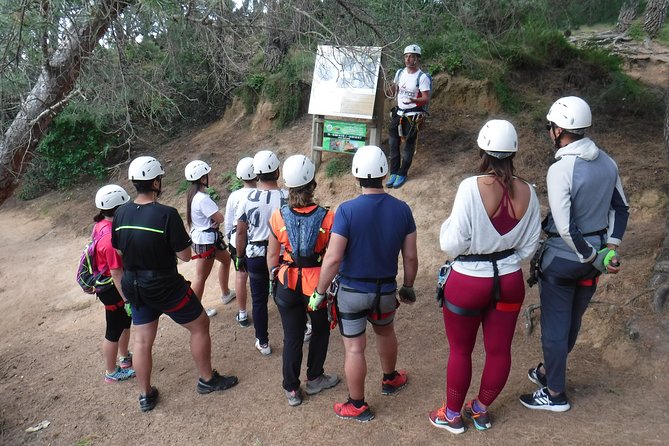
At the start, the guide provides the technical equipment and explains how to use it. Miguel is frequently praised for patient instruction, especially when showing first-timers how to clip and unclip safely. Matías is also described as clear and encouraging, while Lorenzo received both strong praise for safety and one serious complaint about how he judged ability and handled a family group.
That mixed feedback is worth taking seriously without letting it obscure the main point. The guides are expected to make real-time decisions about who should continue. Ask questions early, explain your experience honestly, and tell the guide if you need instructions repeated in English.
The first section is the right test for beginners
The opening section is designed as the introduction. You learn the basic rhythm: move to the next foothold, transfer your safety connection as instructed, keep three points of contact when possible, and avoid rushing the person ahead.
This part is described as easy to moderate. It still involves heights and exposure, but it gives you a chance to see how your arms and legs respond before the harder section begins. A reasonably fit beginner should find it manageable with a guide, though that does not mean it is effortless.
The first section also acts as an assessment. Guides watch how you use the equipment, how you handle the height, and how quickly you tire. At the midpoint, you can stop rather than continue to the second part. That exit option is one of the best features for mixed-ability groups.
It is also useful for families. A parent who is comfortable continuing can make an informed choice after the first section, while someone who is tired or anxious does not have to commit to the more demanding route. The downside is that the decision may feel disappointing if the guide advises you to stop. The course provider says these calls are made for safety and group management, but the final decision can still be emotionally difficult if you feel capable of going on.
The second section asks more from your arms
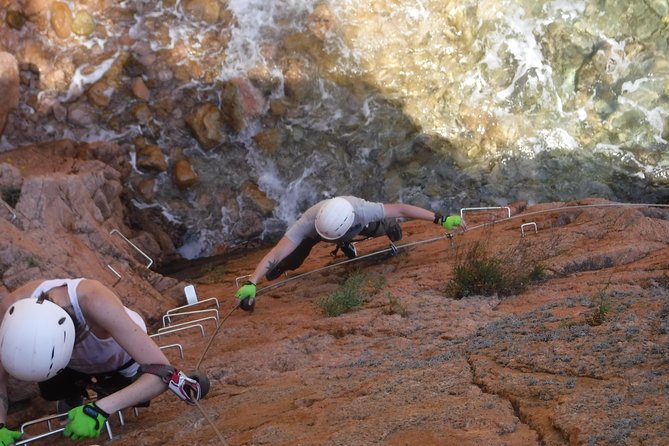
The second part is where the activity changes from a scenic introduction into a proper physical challenge. Several accounts describe it as harder but rewarding, with one experienced climber comparing it favorably with via ferratas in Colorado and saying it felt a little more difficult.
You should expect more sustained effort here. The route uses fixed hardware, but you still need to lift and steady your body repeatedly. Upper-arm strength matters, particularly if you pause often or rely heavily on your arms instead of placing your feet carefully.
Hot weather can make this section feel longer. One account specifically described the second part as hard on a hot day. Bring water unless the operator gives you different instructions, and do not treat the included mini picnic as a replacement for proper hydration.
The course is not a race. If you need to pause, do so safely and follow the guide’s directions about the rest carabiner. A complaint about one guide suggested that use of the rest system was interpreted too quickly as a lack of ability, while other accounts describe guides as patient and supportive. Clear communication at the start can help: ask exactly when and how you should use the resting equipment.
Same nerve, a different drop:
- Barcelona Costa Brava Kayak, Snorkel & Cliff Jump Day Tour
★ 5.0 · 3,872 reviews - Barcelona: Costa Brava Kayak, Snorkel & Cliff Jump & Lunch
★ 4.9 · 2,391 reviews - Mallorca: Quad Bike Tour, Snorkeling, and Cliff Jumping
★ 4.8 · 2,294 reviews - From Marbella: Guadalmina River Guided Canyoning Adventure
★ 4.9 · 1,486 reviews
Bridges and exposed steps provide the memorable moments
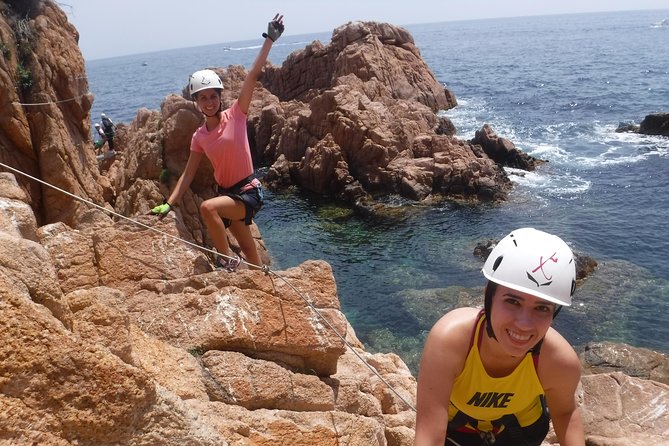
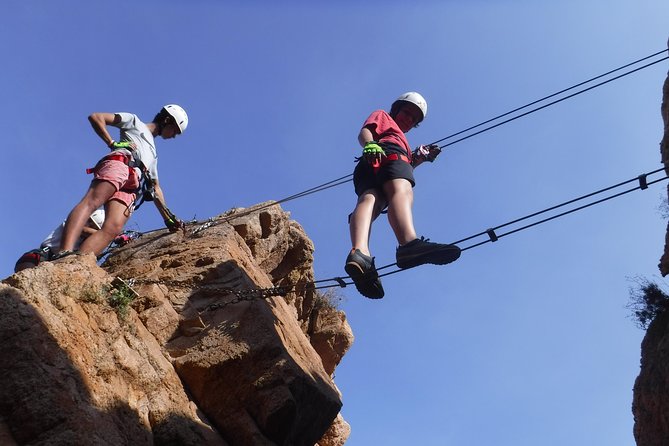
The route’s special features are not only the height. You cross Tibetan bridges and move across metal sections attached to the cliff. These elements create the feeling of a three-dimensional coastal route rather than an ordinary hike.
The bridges can be visually dramatic, especially with open sea around you. They may also be the moments that challenge anyone uneasy with heights. The safety cable and harness provide protection, but they do not make the exposure disappear. If you dislike looking down, focus on the next foothold and let the guide set the pace.
The fixed cable is central to the system. You remain attached while moving along the route, transferring your connection as the course requires. The guide’s role is not simply to lead from the front. Guides such as Miguel are praised for moving around the course, checking positions, helping with foot placement, and taking photographs.
That support is valuable because taking your own pictures while managing a harness and cable is awkward. The included photographic report means you can concentrate on the activity instead of trying to protect a phone at every step.
The guides shape the experience
The strongest positive pattern is the praise for individual guides, particularly Miguel. He is described as patient with beginners, careful with equipment instruction, attentive to safety, and good at taking photos. Some people who began nervous about heights ended up enjoying the route far more than expected.
Matías is also praised for making the experience fun and helping participants through the course. Lorenzo receives a more mixed picture. One account calls him outstanding and credits him with helping after a fall, while another describes his manner as dismissive and overly quick to judge who should continue.
This is a useful reminder that guided adventure activities depend heavily on communication style. A guide must balance the ability of the whole group, and a safety decision may not always match your own view of your strength. Still, you should feel able to ask for an explanation and express concerns politely.
The advertised language is English. One French-speaking participant received an English-speaking guide instead, but was still able to manage the activity. If language is important to your safety or comfort, confirm what language will be available before booking.
What the $48 price includes
At about $48.31 per person, the price is reasonable if you would otherwise need to rent gear, arrange insurance, and pay for a separate guide. You receive the guide, technical material, photo report, mini picnic, liability insurance, and accident insurance.
The value is strongest for first-timers. You are paying for instruction and supervision as much as for access to the route. The photo report adds another practical benefit because your hands remain free and you are not forced to choose between taking pictures and staying focused.
The price is less attractive if you already own suitable equipment and have the skills to manage a protected route independently, though this is still a guided activity rather than an unguided public trail. The small maximum group size is another positive. A group of up to six should allow more direct help than a large commercial outing, although the exact group size should be confirmed when booking.
Timing, fitness, and what to bring
The activity is listed at three to four hours. Allow the full four hours in your day rather than planning a tight lunch or transport connection afterward. Some outings have finished closer to two hours, but that may reflect group pace, conditions, or a participant stopping before the second section.
You need moderate physical fitness. You do not have to be an experienced climber, and the route has a beginner section, but you should be comfortable with sustained movement, heights, and some upper-body work. People who regularly walk, do Pilates, climb, or take part in other outdoor sports may find the course approachable, but the second part can still be tiring.
Wear practical clothing and shoes suited to movement on rock and metal steps. The supplied information does not specify a clothing list, so follow the operator’s current instructions. Bring water and protect yourself from sun if conditions call for it. The mini picnic is included, but it is a small extra rather than a full meal.
The minimum height is listed as 1.50 cm, which appears to be a measurement error in the published details. Confirm the actual minimum height directly before booking, particularly for a child or shorter participant.
Weather and cancellation details matter here
This is an outdoor route on exposed coastal rock, so weather can stop the activity. If poor weather causes cancellation, you are offered another date or a full refund. The same applies if the minimum number of participants is not reached.
You can cancel for a full refund up to 24 hours before the start time. Changes or cancellations inside that 24-hour window are not accepted for a refund under the stated policy.
There have also been reports of last-minute cancellations and one booking-time problem involving an unavailable slot. The provider disputed the suggestion of a no-show setup and stated that refunds are processed through the booking platform. To protect your day, keep booking messages, confirm the meeting time and address, and do not rely on an informal message alone if a change is proposed.
Who should book Cala del Molí
I would recommend this for an active first-timer who wants more than a coastal walk but does not want to commit to full technical climbing. The first section gives you a sensible introduction, and the optional second section lets you decide how much effort suits you.
It is also a good fit for couples and small groups with different experience levels. One person can stop at the midpoint while others continue, subject to the guide’s safety decision. Families should discuss height, fitness, fear of heights, and language before booking.
Experienced via ferrata participants may still enjoy it because the sea setting is unusual and the second section provides a worthwhile test. If you are looking for natural rock climbing with lots of route-finding, this may not be your ideal choice. The fixed steps and hardware make it accessible, but they also make the experience less like traditional climbing.
Should you book this Costa Brava adventure?
Book it if you want coastal scenery, controlled exposure, and a clear beginner-to-intermediate progression in one outing. The best reasons are the Mediterranean setting, the option to stop after the first section, the included equipment and photos, and the strong record of positive experiences with guides such as Miguel and Matías.
Think twice if you have poor upper-body stamina, dislike heights, need a specific language, or prefer a relaxed activity with no physical pressure. Confirm the exact meeting time, minimum height, group size, and available guide language before paying.
For an active day near Sant Feliu de Guíxols, this offers more excitement than a standard viewpoint and less technical commitment than a full climbing course. At the stated price, it is a fair buy for beginners who want a safe introduction and for fit visitors who are ready to work for those sea views.
FAQ
Where does the Cala del Molí via ferrata meet?
The meeting point is Carretera de Sant Pol, 200, 17220 Sant Feliu de Guíxols, Girona, Spain.
Where does the activity finish?
The experience ends back at the meeting point.
How long does the activity take?
The listed duration is approximately three to four hours. The actual length can vary with group pace, conditions, and whether participants complete the second section.
Is the via ferrata suitable for beginners?
Yes. The route includes an introductory first section intended for beginners, but you still need moderate physical fitness and must be comfortable with heights.
Is there a harder section?
Yes. The route has two sections. The second requires more effort and is more demanding than the first.
Can I stop before the second section?
Yes. The route provides an exit before the harder section, although the guide makes the final decision about what is safe for each person.
What is included in the price?
The price includes a qualified guide, technical equipment, a photographic report, a mini picnic, liability insurance, and accident insurance.
Is the activity offered in English?
Yes. English is listed as an available language.
How many people can join the group?
The stated maximum is six participants.
What happens if the weather is poor?
If poor weather causes cancellation, you are offered another date or a full refund.
What is the cancellation policy?
You can cancel up to 24 hours before the scheduled start for a full refund. Cancellations or changes made less than 24 hours before the start are not accepted under the stated policy.
Fresh thrills added around Spain
- Mallorca Coasteering Adventure★ 3.0 · 2 reviews
- From Estepona: Guided Via Ferrata Adventure in Benalauría★ 5.0 · 8 reviews
- From Marbella: Guided Canyoning Tour in Sima del Diablo★ 5.0 · 2 reviews
- From Estepona: Guided Canyoning Tour on the Guadalmina River★ 5.0 · 51 reviews
- Private canyoning adventure in the Buitreras Canyon★ 5.0 · 23 reviews
- Guided Canyoning Adventure Near Marbella (Benahavís River Walk)★ 5.0 · 116 reviews
- Try adventure, try coasteering – North coast★ 5.0 · 7 reviews
- Coasteering Cliff jumping★ 5.0 · 27 reviews
Via Ferrata Climbing, side by side
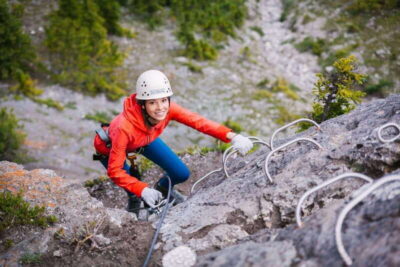
Banff: Mount Norquay 2.5 or 4-Hour Guided Via Ferrata Climb
Read our review →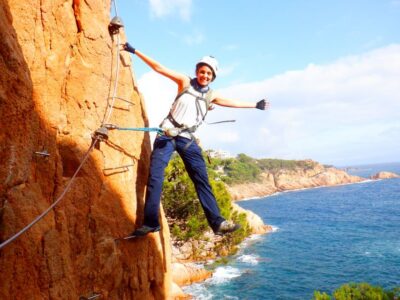
Sant Feliu de Guixols: Climb Via Ferrata Cala del Molí
Read our review →
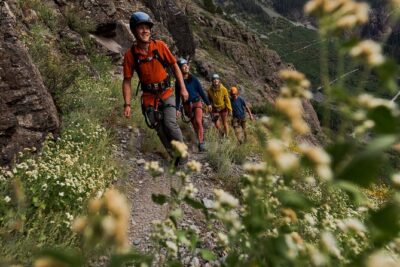
Small-Group Guided Via Ferrata Climbing with Banff’s Best Views
Read our review →
Via Ferrata in Gran Canaria. Vertical adventure park. Small groups
Read our review →Lists this trip sits in