
Review · CANADA
Whistler Via Ferrata Tour
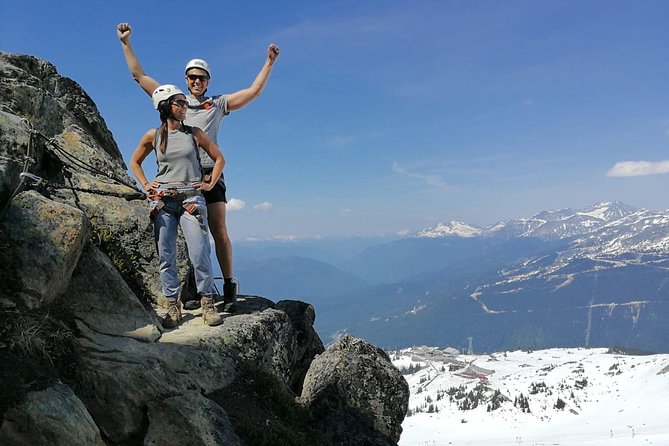
The unusual part of this Whistler outing is that you climb a mountain without needing traditional rock-climbing skills. After riding the gondola, you cross the base of a glacier, scramble over a short section, then clip your harness into fixed cables and climb using steel rungs and handholds. It is an alpine route, not a theme-park wall.
I like the small groups of up to six, which gives your guide time to explain each move and help when a reach feels awkward. I also like the mix of glacier walking, mountain geology, and hands-on climbing. Guides including Maya, Jeremy, Victor, Rob, and Emile have been praised for patience, encouragement, and clear explanations.
The main caution is simple: the route is described as moderate, but it is still a real physical outing at altitude. One fit 57-year-old participant found it much harder than expected, and even an athletic companion found it demanding. Bring gloves, water, snacks, and enough confidence to keep moving when your arms and legs tire.
Quick points to know before you book
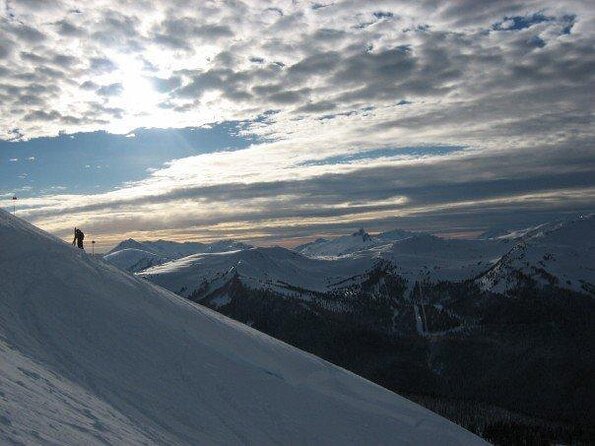
- You climb beside Whistler Mountain’s glacier, beginning with a 30 to 45-minute hike before reaching the cables.
- No climbing background is required, but you need moderate fitness, mobility, and comfort with height.
- The fixed cable keeps you attached, while steel rungs provide the main climbing holds.
- A guide-led group of no more than six means plenty of help with technique, pacing, and nerves.
- The Peak 2 Peak Gondola ticket is extra, so arrange that with Mountain Skills Academy & Adventures before arrival.
- Morning and afternoon departures are available, and the sun can make the morning route feel warmer in some conditions.
What the Whistler Via Ferrata really is
Via Ferrata means iron way. In practical terms, you wear a climbing harness fitted with safety clips and stay attached to a steel cable fixed to the mountain. You climb with metal rungs, steps, and handholds rather than relying on ropes in the traditional climbing style.
That setup makes this a good introduction to mountain climbing. You do not need to know how to belay, place protection, or lead a route. Your guide handles the equipment and explains how to move between sections. You still do the work, though. The cable makes the route safer, not effortless.
The tour runs for about four hours. That time includes the gondola ride, the hike across the glacier base, the scramble, the climb, short breaks, and the return to the meeting point. The advertised start is 9:00 a.m. at Garbo’s Cap Bar, 4804 Glacier Lane in Whistler.
The group limit matters here. A six-person maximum is small enough for the guide to watch everyone closely. If you are nervous about heights or unsure how your body will handle the route, that personal attention is one of the strongest reasons to choose this outing over a large commercial activity.
More Via Ferrata Routes in Canada
- Banff: Mount Norquay 2.5 or 4-Hour Guided Via Ferrata Climb
★ 4.9 · 305 reviews - Small-Group Guided Via Ferrata Climbing with Banff’s Best Views
★ 5.0 · 195 reviews - Squamish Via Ferrata Adventure
★ 5.0 · 71 reviews
From Garbo’s Cap Bar to the glacier base
You meet at Garbo’s Cap Bar, then head toward Whistler Blackcomb and ride up the mountain by gondola. The necessary Peak 2 Peak Gondola ticket is not included in the tour price. You are instructed to contact Mountain Skills Academy & Adventures to arrange the lift ticket, and it is wise to handle that ahead of time so your group is not delayed.
At the top, your guide fits you with a helmet and harness. Hiking boots are available if needed, while the climbing and glacier equipment is included. You should still arrive in proper hiking shoes if you have them. The route includes uneven ground before the actual climb, and ordinary casual footwear would be a poor match.
The first walking section takes roughly 30 to 45 minutes across the base of the glacier. This is not just filler before the exciting part. It gives you time to get used to the altitude, the cold or sun, and the pace of the group. It also lets your guide point out glaciers, rock formations, and other features around Whistler Mountain.
The exact feel of this approach depends on the day. In July, snow has been present. In August, clear skies can bring strong sun, while another day may be cloudy enough to hide the valleys. The activity operates in all weather, so your clothing matters more than the calendar.
The scramble and first steel rungs
Before clipping into the main cable, you tackle a short scrambling section. Scrambling sits between hiking and climbing. You use your hands for balance and step over uneven rock, but this is not presented as a technical climbing pitch.
Then the guide explains how to clip into the safety cable. You move upward by stepping on metal rungs and reaching for fixed handholds. This is where the activity becomes both thrilling and personal. The route may look straightforward from below, but height, snow, short reaches, and tired muscles can change how each move feels.
If you are shorter or not very flexible, pay attention to this point. One participant found some transitions hard because the next handhold or foothold felt far away. That does not mean the route is unsuitable, but it does mean the description should not be read as a gentle walk with a little climbing added.
The guide can set the pace and talk you through the movements. Victor was singled out for patience with a participant who had a strong fear of heights, while Jeremy was praised for helping a group stay calm when anxiety appeared. Those details tell you what good guiding matters most here: clear instructions, steady pacing, and no pressure to rush.
The halfway break on Whistler Mountain
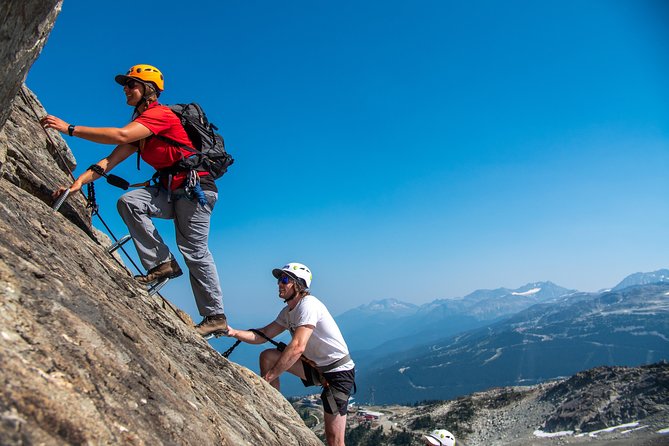
About halfway up, the group stops for water, snacks, and photos. Use this break well. The climbing uses your arms as much as your legs, and the combination of altitude, sun, and effort can catch you off guard.
Water and snacks are not supplied, so pack them in a small backpack. The list of recommended items also includes gloves and a rain jacket. Gloves are especially useful because repeated contact with metal rungs and cables can leave your hands sore. One participant specifically suggested gloves to prevent calluses.
This is also a good photo stop, but keep your camera use practical. You need both hands for much of the route, and a small backpack is easier to manage than loose gear. Your guide will be in the best position to help with pictures during safe pauses.
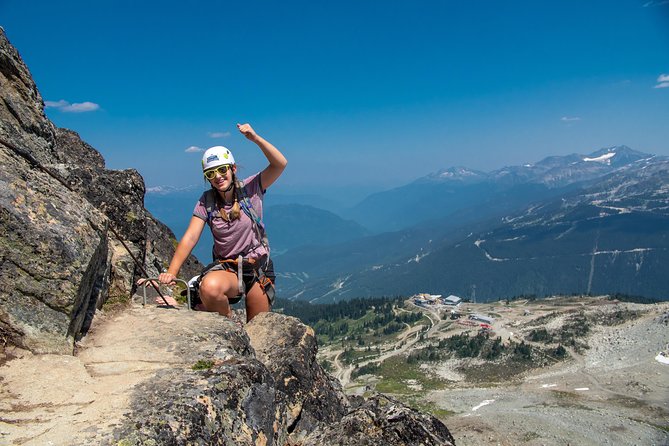
The views are a major part of the payoff. You look over Whistler’s mountains and valleys, with snow and glacial features still possible in midsummer. On a clear day, the scenery should be broad and dramatic. On a cloudy day, you may see less below you, but the climb can still be rewarding because the fixed route, snow, and rock create their own sense of place.
Same nerve, a different drop:
- Niagara Falls, ON: Jet Boat Tour on Niagara River
★ 4.8 · 1,128 reviews - Niagara Falls Canada Open-Top (Wet) Jet Boat Tour
★ 5.0 · 1,000 reviews - Montreal: Jet Boating on the Lachine Rapids
★ 4.9 · 360 reviews - Canmore Caving Adventure Tour
★ 5.0 · 356 reviews
Reaching the upper mountain
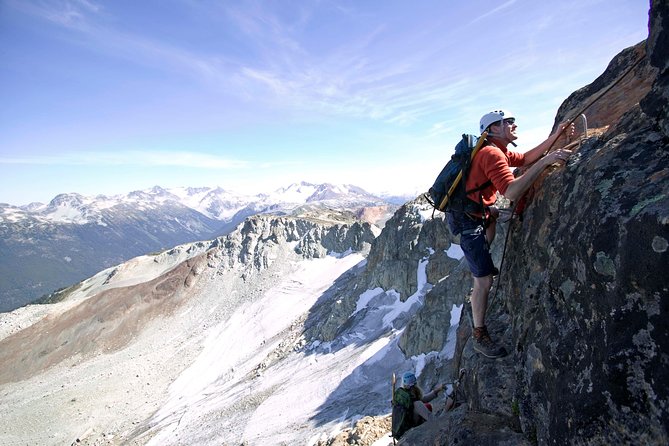
After the break, you continue up toward the peak of Whistler Mountain. The route stays physically active until the end, so do not spend all your energy on the first section. A steady pace is better than trying to impress the group early.
At the top, the sense of accomplishment is part of the attraction. You have not merely ridden a gondola to a viewpoint. You have crossed snow or glacier-side ground, scrambled, clipped into a cable, and climbed a mountain face with your own legs and hands.
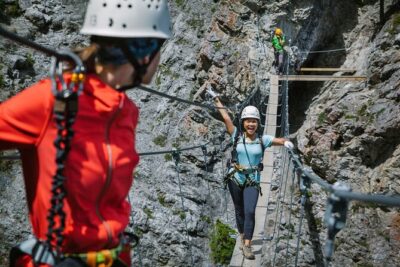
A bridge near the top has also been praised as a memorable feature. The upper mountain offers more room to enjoy the views after the main effort. Depending on your lift plans and the day’s schedule, you may have time for additional trails at the top of Whistler or a trip across to Blackcomb on the Peak 2 Peak Gondola.
An early departure may be the better choice if you want to explore afterward. Starting in the morning leaves more of the afternoon for the upper mountain. That said, one recent participant noted that the morning route can feel hotter than the afternoon route because of the sun’s position. Check the forecast and think about your own heat tolerance rather than assuming morning is automatically best.
How hard is the climb?
The tour is suitable for beginners in terms of climbing experience, but not for every fitness level. You should have moderate physical fitness and be comfortable walking, scrambling, reaching, and climbing for several hours.
The hardest part may not be fear. It may be the repeated effort of lifting your body onto the next rung. One participant described the activity as a serious challenge despite being determined and active. Another said the route was just the right level for people who walk regularly but do not climb.
I would use this guide:
- Choose it if you can handle a sustained mountain outing and want a new physical challenge.
- Think carefully if you have limited mobility, poor balance, or trouble with high steps and long reaches.
- Prepare more seriously if you are short, not flexible, or unused to exercise at altitude.
- Do not treat the beginner label as a promise that the climb will feel easy.
- If you have a strong fear of heights, know that the secure cable may help, but you will still be climbing above open mountain views.
The harness and cable provide an important feeling of security, and several guides have helped nervous climbers stay calm. Still, the route exposes you to height. You should be willing to look at the mountain and continue one movement at a time.
Weather, clothing, and what to pack
The tour operates in all weather, so dress for conditions that may change quickly on the upper mountain. Bring hiking shoes, gloves, a small backpack, water, snacks, and a rain jacket. Sunscreen is also a smart addition, especially when snow and open mountain terrain reflect sunlight.
Warm socks can make a real difference. One participant recommended wool socks, and that is useful advice for a route involving snow, glacier ground, and long periods outdoors. Wear layers rather than relying on one bulky jacket. You may start cool, work up heat during the climb, and then want extra coverage when the wind or cloud arrives.
Do not count on buying water or food as part of the tour. Snacks and water are not included. The guide supplies the helmet, harness, and climbing and glacier equipment, but your personal comfort items remain your responsibility.
Weather can alter the views without ruining the activity. A cloudy day may hide the valleys, yet the climbing can still be enjoyable. Heavy snow has occasionally made the planned Via Ferrata unavailable, in which case the company has offered an alternative outing, such as a cliff walk and glissading combination, or another date.
Guide quality and group size
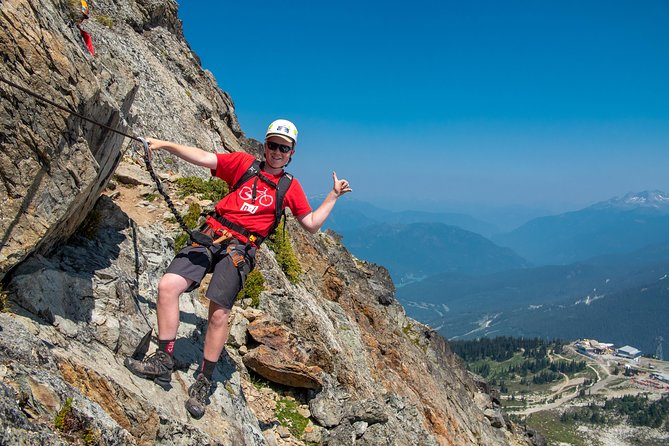
The guide is central to this outing. You are not simply being led from one viewpoint to another. You need instruction on the cable system, help with route movement, and good judgment about pacing and conditions.
Maya has been praised for leading a top-notch climb and encouraging participants through the four-hour effort. Jeremy has been noted for handling family groups smoothly. Victor has helped people with height fears and added explanations about local geological features and glaciers.
Rob has been praised for sharing his enthusiasm for nature while interpreting the mountain along the approach. Emile kept a cloudy-day group moving with humor and support, while Erica was singled out for helping someone with a fear of heights feel comfortable on an alternative cliff walk.
The range of guide names matters less than the pattern: the company has several guides who are comfortable teaching first-timers. The maximum of six gives them room to provide that help. If you are comparing this with a larger group activity, this is where the extra value is easiest to see.
Is the $149.46 price fair?
The listed price is $149.46 per person. That covers a local professional guide, helmet, harness, and the climbing and glacier equipment. It does not cover the Peak 2 Peak Gondola ticket, snacks, water, transportation, or a suggested gratuity.
The price is fair if you want a guided alpine activity rather than a standard sightseeing ride. You are paying for instruction, safety management, equipment, and access to a route that would not be sensible to attempt alone. The small group also adds practical value.
The separate gondola cost changes the total budget, so calculate that before booking. If you only want mountain views, riding the lifts and walking at the top will cost less effort and may cost less overall. If you want a hands-on challenge with a guide, the Via Ferrata gives you much more than a viewpoint.
Free cancellation is available when you cancel at least 24 hours before the start time. Cancellations made within 24 hours are not refunded, and changes inside that period are not accepted. The company may cancel if the minimum number of people is not met, in which case you are offered another date or activity, or a full refund.
Who should book this climb?
I would recommend it to active couples, families with children aged 12 or older, solo participants who enjoy a challenge, and friends looking for something more memorable than a standard gondola ride. Children must be accompanied by an adult.
It suits people who like learning while moving. The guide may explain glaciers, rock formations, and the mountain’s geology as you walk. You get scenery, but you also get a reason to pay attention to the ground and rock around you.
It is less suitable if you want a relaxed sightseeing trip, dislike heights, or are not prepared for several hours of physical effort. The route is beginner-friendly in technique, not necessarily easy in stamina.
Should you book the Whistler Via Ferrata?
Book it if you want a safe, guided introduction to alpine climbing and are ready for a genuine workout. The fixed cable lowers the technical barrier, while the small group and patient guides make the route approachable for first-timers.
Before booking, arrange the required gondola ticket, check the weather, and be honest about your mobility and fitness. Pack gloves, water, snacks, sunscreen, wool socks, and a rain jacket. Choose an early start if you want time to explore the mountain afterward, or consider the afternoon if you prefer less direct sun.
This is not the cheapest way to see Whistler from above, and it is not an easy walk. But for the right person, it combines snow, geology, open views, and a real sense of achievement in one compact mountain outing.
FAQ
Do I need climbing experience?
No. The tour is suitable for beginners and includes all climbing equipment, with a professional guide explaining the route and cable system.
How long does the tour last?
The activity lasts approximately four hours. This includes the gondola access, the 30 to 45-minute walk across the glacier base, the climb, breaks, and the return to the meeting point.
What is the minimum age?
The minimum age is 12. Children must be accompanied by an adult.
How many people are in each group?
The maximum group size is six people.
Is the Peak 2 Peak Gondola ticket included?
No. A Peak 2 Peak Gondola ticket is required and is not included in the tour price. You should contact Mountain Skills Academy & Adventures to purchase the lift ticket.
What equipment is provided?
The tour provides a helmet, harness, and all climbing and glacier equipment. Hiking boots are available if required.
What should I bring?
Bring hiking shoes, gloves, a small backpack, water, snacks, and a rain jacket. Sunscreen and warm socks are also useful based on the mountain conditions described for the activity.
Can I cancel for a refund?
Yes, if you cancel at least 24 hours before the experience start time. Cancellations made less than 24 hours in advance are not refunded.
Fresh thrills added around Canada
- Extreme Whitewater Rafting on Kicking Horse River★ 5.0 · 77 reviews
- Beartooth Canyon- Half Day Canyoning Tour – Golden, BC★ 5.0 · 11 reviews
- Adventure Canyoning Kelowna★ 5.0 · 18 reviews
- Half-Day Guided Via Ferrata Climbing Tour in Banff★ 5.0 · 30 reviews
- Small Group Banff Skyline Via Ferrata 5-hour Tour★ 5.0 · 15 reviews
- Banff Canyoning – Ghost Canyon (Intermediate Level)★ 5.0 · 31 reviews
- Heli Adrenaline Canyoning Tours★ 5.0 · 10 reviews
- Adrenaline Aquatic Tour★ 5.0 · 11 reviews
Via Ferrata Climbing, side by side
Banff: Mount Norquay 2.5 or 4-Hour Guided Via Ferrata Climb
Read our review →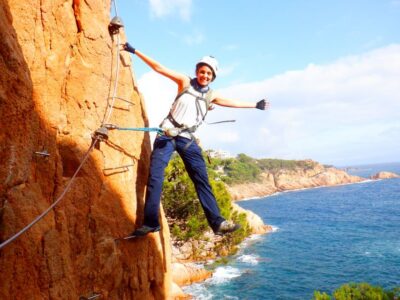
Sant Feliu de Guixols: Climb Via Ferrata Cala del Molí
Read our review →
Small-Group Guided Via Ferrata Climbing with Banff’s Best Views
Read our review →
Via Ferrata in Gran Canaria. Vertical adventure park. Small groups
Read our review →Lists this trip sits in