Review · SPAIN
Callosa del Segura: Guided Via Ferrata in Callosa K3 with abseiling
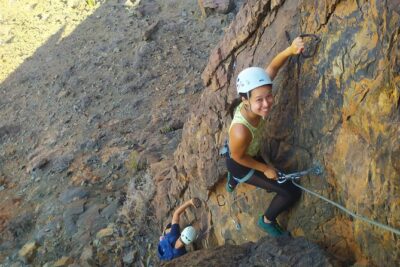
Callosa de Segura gives you the real thing: a vertical route on a rocky wall above Alicante, with cables, ladders, bridges, exposed crossings, and an abseil to add a final jolt of excitement. This is not a gentle scenic walk. It is a physical challenge with views over Vega Baja and toward the Mediterranean.
I like the choice of difficulty, since the route includes easier and harder sections rather than forcing everyone into one fixed test. I also like the small group of up to 10, plus certified guides such as Tomas, also referred to as Tomy, who can keep the pace safe and cheerful. The main caution is simple: this is best for people ready for height and exertion, and the hottest summer months are a poor time to attempt it.
Key points at a glance
- Three levels on one mountain: Sections range from K2 and K3 to a harder K5 option, so the guide can match the route to your ability.
- A genuine height experience: The climb follows a vertical wall with wide views across Vega Baja and toward the Mediterranean.
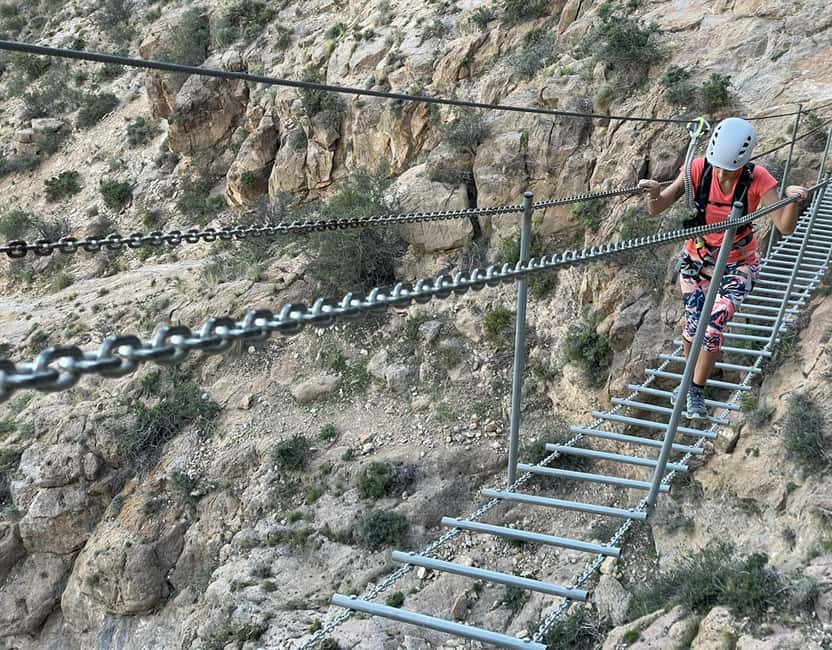
- Bridges are part of the challenge: Tibetan and Nepalese bridges turn the route into more than a series of ladders.
- Abseiling adds variety: You are not only climbing upward. The experience also includes a descent by rope.
- Certified support: A TD1 or TD2 climbing or mountain guide provides instruction, technical equipment, and safety management.
- Useful extras included: Helmet, harness, energy absorber, insurance, and photos and videos are included in the $59 price.
What the Callosa route feels like
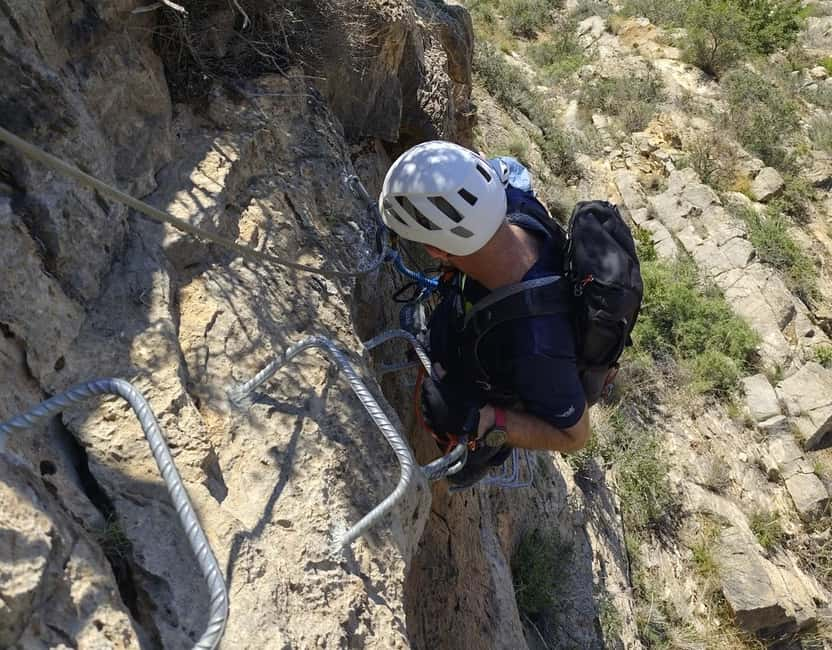
A via ferrata is a mountain route protected by fixed cables, anchors, steps, and other metal features. You attach yourself to the safety cable with an energy absorber, then move from point to point using your hands, feet, and judgment.
At Callosa de Segura, the route has a more athletic feel than a simple introductory outing. You climb real rock, face exposed sections, cross suspended bridges, and work through problems that require balance and steady movement. The route is close to the town, but once you are on the Sierra de Callosa, the setting feels much wilder, with pine scent and open views.
The activity is promoted as a K3 experience, but the mountain has several grades. The available sections range from K2 to K5, with route segments of roughly 150 to 300 meters. That range matters. If K3 feels right, you can focus on that level. If you need a gentler start, the lower section offers a better introduction. If you are strong and confident, the guide may let you try part of the K5 route.
This flexibility is one of the best reasons to book with a guide. Difficulty grades can feel abstract before you are standing on a rock face. A guide can explain the next move, watch your technique, and help you decide how far to go.
More Via Ferrata Routes in Spain
- Sant Feliu de Guixols: Climb Via Ferrata Cala del Molí
★ 5.0 · 253 reviews - Gran Canaria: Guided Via Ferrata Excursion
★ 4.9 · 198 reviews - Via Ferrata in Gran Canaria. Vertical adventure park. Small groups
★ 5.0 · 183 reviews
The 10 to 15 minute approach
The activity begins with a short approach of about 10 to 15 minutes. That walk is useful preparation rather than wasted time. You get to leave the ordinary town setting behind, reach the base of the route, and get your equipment checked before the serious climbing begins.
Meet the guide wearing a green company shirt marked masaventura.es. That makes the meeting point easier to identify, especially if several outdoor groups are gathering nearby.
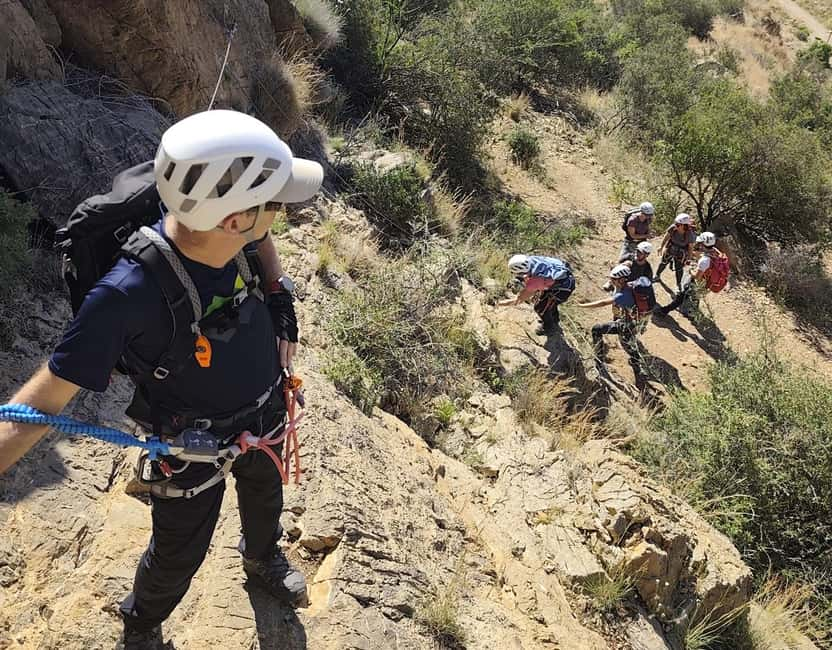
You will be fitted with a helmet, harness, energy absorber, anchor ropes, and carabiners. The activity includes approved technical equipment, so you do not need to bring your own climbing kit. You should still arrive in comfortable sports clothing and shoes with a good sole.
Use the approach to ask questions. If you are nervous about exposure, tell the guide early. If you have already done a beginner route, explain what felt easy or difficult. A good pace begins with clear information.
Starting on the easier K2 and K3 sections
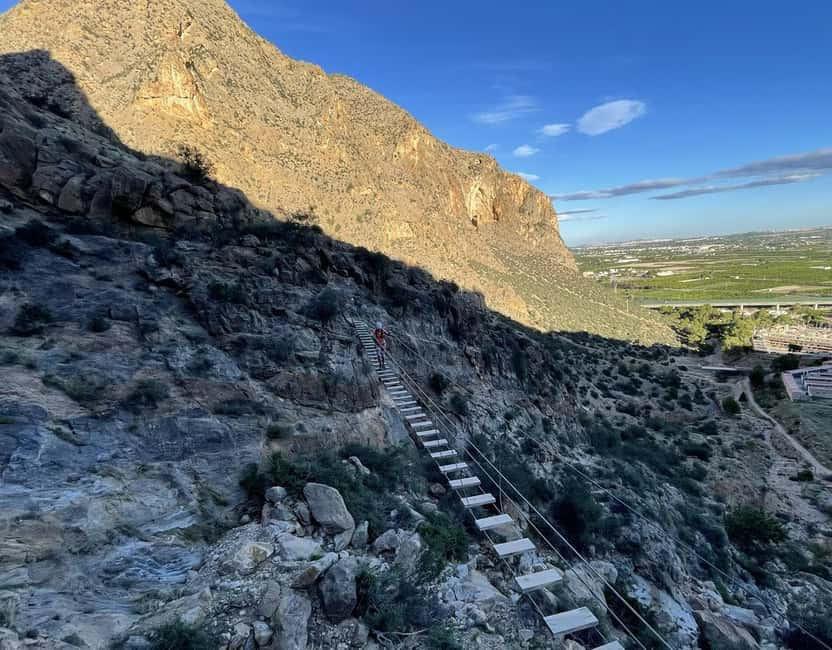
The first part lets you get used to the system. You will learn how to move your carabiners along the safety cable, how to place your feet, and how to use your arms without tiring them too quickly.
That last point matters. New climbers often pull themselves upward with their arms and run out of strength before the route is over. Via ferrata movement works better when you use your legs, keep three points of contact when possible, and pause on stable footholds.
The K2 and K3 sections offer different levels of challenge. K2 is the more approachable end of the route. K3 brings more exposure and requires more confidence, strength, and balance. You may find that the technical moves are manageable but the height is the real test.
The route is not only about reaching the top quickly. The guide can help you read the rock and choose an efficient line. Tomas, who guided one recent group, was praised for showing people what to do patiently and keeping the atmosphere light. That combination is useful here. You need clear instructions, but you also need enough calm and humor to keep nerves from taking over.
Tibetan and Nepalese bridges above Vega Baja
The bridges are some of the most memorable features of the route. Tibetan and Nepalese bridges use suspended cables and moving foot placements, so they test balance more than raw climbing power.
A Nepalese bridge usually has a main hand cable and a separate foot cable, while a Tibetan bridge commonly gives you side cables and a lower walking line. The exact feel changes from one crossing to another, but both demand slow steps and controlled breathing.
These crossings also deliver the best sense of height. You are no longer simply looking up at the rock. You are standing away from it, with open air beneath and wide views across the Vega Baja. On a clear day, the Mediterranean forms part of the background.
If you dislike swinging structures, the bridges may be the hardest part mentally. The fixed safety system is there to protect you, but it does not remove the sensation of exposure. Listen closely to the guide, move one step at a time, and avoid rushing because someone behind you is waiting.
Same nerve, a different drop:
- Barcelona Costa Brava Kayak, Snorkel & Cliff Jump Day Tour
★ 5.0 · 3,872 reviews - Barcelona: Costa Brava Kayak, Snorkel & Cliff Jump & Lunch
★ 4.9 · 2,391 reviews - Mallorca: Quad Bike Tour, Snorkeling, and Cliff Jumping
★ 4.8 · 2,294 reviews - From Marbella: Guadalmina River Guided Canyoning Adventure
★ 4.9 · 1,486 reviews
The optional K5 challenge
The K5 section is for people with more experience, strength, and comfort on exposed rock. It is not a badge you need to earn. The route already offers a worthwhile climb at the lower grades.
One participant completed the K2 and K3 course in less than two hours and then used the extra time to try part of K5 with Tomas. That is a useful clue about how the outing can work. Your day may last around three hours or the advertised 3.5 hours, depending on the level selected, the group pace, and how much of the harder section you attempt.
K5 should be treated as a genuine step up, not a small extension. If you find the K3 section tiring, stop there and enjoy the achievement. If the guide believes you are ready and you still have energy, a short taste of K5 may be possible.
The guide’s rope work is especially important on a harder section. Tomas was specifically praised for helping the group get up and down safely after trying part of K5. That does not make the route easy, but it gives you professional support when the moves become more demanding.
Abseiling and the route back down
The experience includes abseiling, which gives the outing a different rhythm from a standard via ferrata. Instead of relying only on ladders and cables, you descend by rope under the guide’s direction.
For many people, the abseil is the moment they remember most. You step back from the rock, trust the equipment, and control your descent. The guide handles the technical setup and tells you how to position yourself.
The provided details do not specify the exact abseil height or its precise place on the route, so do not book expecting a particular length or dramatic drop. What is clear is that abseiling forms part of the experience and adds a useful contrast to the upward climb.
You may find the descent less tiring on your legs than climbing, but it can feel more exposed. Keep your attention on the guide’s instructions and use the time to enjoy the changing view.
Safety, equipment, and the guide’s role
Safety is the main reason to choose a guided outing instead of attempting a fixed route alone. The activity uses a TD1 or TD2 certified guide in climbing or mountain sports. The guide explains the equipment, checks attachment points, sets the pace, and helps with harder moves.
Included equipment covers:
- Helmet
- Harness
- Energy absorber
- Anchor ropes
- Carabiners
- Approved technical gear
- Accident and civil liability insurance
The energy absorber is designed to reduce force in the event of a fall on the fixed cable system. It is not a reason to take risks. Stay clipped in, follow instructions, and do not climb beyond your comfort or ability.
The guide also has a practical job beyond safety. A group of 10 can include different speeds and confidence levels. The guide needs to keep everyone moving without turning the outing into a race. The experience with Tomas suggests that patient instruction and friendly banter are part of the service, not an afterthought.
Photos and videos are included too. That is valuable because your hands will be occupied with the route, and you may not want to manage a phone while attached to the cable. The photo report gives you a record of the bridges, rock face, and views without adding another task to the climb.
Fitness, height, and the best season
You do not need to be an expert climber, but you should be comfortable with physical effort, heights, and outdoor conditions. The activity is recommended for people who have already tried a beginner via ferrata, as well as people starting out who want a more challenging setting.
The difficulty depends on the section. K2 is the friendliest entry point. K3 asks more from you. K5 is for advanced participants. You should be able to climb, step up repeatedly, grip cables, and stay focused for several hours.
People with altitude sickness should not take this activity. Children under six are not permitted. The supplied information does not set a detailed fitness test or a maximum weight, so contact the provider if you have a medical concern or are unsure about your suitability.
Fall through spring is the best period. The Sierra de Callosa can become too hot in summer, and a helmet, harness, direct sun, and physical exertion make heat harder to manage. Bring at least one liter of water, sunscreen, comfortable clothing, and shoes with a strong sole. Via ferrata gloves are optional, but some people prefer them for repeated contact with cables.
What the $59 price really includes
At $59 per person, this is good value if you would otherwise need to rent technical equipment and arrange instruction separately. The price includes a professional guide, all key via ferrata gear, accident and civil liability insurance, and photos and videos.
The small group also helps justify the cost. A maximum of 10 participants is not a private tour, but it gives the guide a manageable number of people to watch. That matters most on the bridges, exposed sections, and K5 option.
You still need to bring your own food and drinks. There is no meal included, so pack an energy snack and enough water for the full outing. The activity lasts about 3.5 hours, though the route time can vary with the selected level and group pace.
You can cancel up to 24 hours in advance for a full refund, and the reserve-now, pay-later option gives you some planning flexibility. Starting times depend on availability, so check the date before building the rest of your day around it.
Who will enjoy this most
I would choose this for someone who wants more than a short guided walk and likes the idea of a controlled physical challenge. It suits active visitors who want rock, height, bridges, and views in one half-day outing.
It is also a good fit for someone who has tried a beginner via ferrata and wants to move up to K3. The choice of sections means you do not have to commit to K5. You can test yourself without turning the whole day into an advanced climbing session.
I would be more cautious if you are very uneasy with heights, dislike suspended bridges, or want a relaxed nature activity. The scenery is excellent, but you will spend much of your attention on foot placement, cables, and the next move.
The guide speaks Spanish, English, and French. That makes the safety briefing and technical coaching easier for a wider range of participants. Still, tell the provider your preferred language when booking so the group can be matched well.
Should you book the Callosa K3 via ferrata?
Book it if you want a serious but guided mountain challenge, especially if you are ready for K3 and curious about trying part of K5. The combination of bridges, vertical rock, abseiling, certified support, and Mediterranean views gives you plenty for the $59 price.
Skip it if you want a low-effort outing or if summer heat and exposure would make the experience stressful. Bring proper shoes, water, sunscreen, and a sensible attitude toward the difficulty. If you do that, Callosa de Segura offers a memorable way to spend several hours above Alicante, with Tomas or another certified guide helping you make the hard sections feel manageable.
FAQ
Where does the via ferrata take place?
The activity takes place in the Sierra de Callosa de Segura in Alicante, in Spain’s Valencian Community.
How long does the activity last?
The advertised duration is 3.5 hours. The route itself is described as taking about three hours, depending on the level selected and the group pace.
What difficulty levels are available?
The route includes sections from K2 and K3 through to K5. You can choose a level that matches your ability, subject to the guide’s direction.
Is abseiling included?
Yes. Abseiling is part of the guided Callosa via ferrata experience.
What equipment is provided?
The activity provides a helmet, harness, energy absorber, anchor ropes, carabiners, and other approved technical gear.
Is insurance included?
Yes. Accident insurance and civil liability insurance are included.
What should I bring?
Bring sunscreen, at least one liter of water, comfortable sports clothing, mountain shoes or sneakers with a good sole, and an energy snack. Via ferrata gloves are optional.
What languages does the guide speak?
Guides are available in Spanish, English, and French.
How many people can join the group?
The activity uses small groups limited to 10 participants.
Is the activity suitable for young children?
Children under six are not permitted to take part. The activity is also not suitable for people with altitude sickness.
More Abseiling and Rappelling in Spain
- Estany d’en Mas: Coastal Hike, Abseil & Sea Cave Exploration
★ 4.9 · 162 reviews - Río Verde, Otivar, Granada: canyoning, crystal clear waters, jumps, and rappelling.
★ 4.9 · 12 reviews - Adventure Cahorros, Monachil/ Climbing and abseiling Granada
★ 5.0 · 5 reviews - Elda: El Bolón via ferrata with zipline and abseiling
★ 5.0 · 4 reviews
Fresh thrills added around Spain
- Mallorca Coasteering Adventure★ 3.0 · 2 reviews
- From Estepona: Guided Via Ferrata Adventure in Benalauría★ 5.0 · 8 reviews
- From Marbella: Guided Canyoning Tour in Sima del Diablo★ 5.0 · 2 reviews
- From Estepona: Guided Canyoning Tour on the Guadalmina River★ 5.0 · 51 reviews
- Private canyoning adventure in the Buitreras Canyon★ 5.0 · 23 reviews
- Guided Canyoning Adventure Near Marbella (Benahavís River Walk)★ 5.0 · 116 reviews
- Try adventure, try coasteering – North coast★ 5.0 · 7 reviews
- Coasteering Cliff jumping★ 5.0 · 27 reviews
Via Ferrata Climbing, side by side
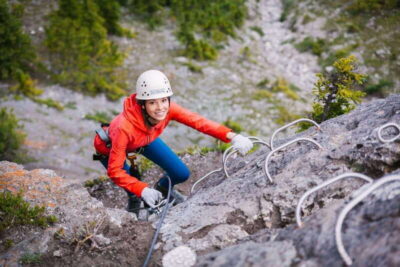
Banff: Mount Norquay 2.5 or 4-Hour Guided Via Ferrata Climb
Read our review →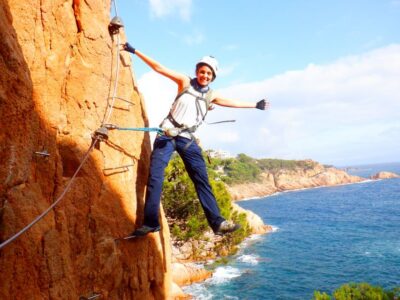
Sant Feliu de Guixols: Climb Via Ferrata Cala del Molí
Read our review →
Small-Group Guided Via Ferrata Climbing with Banff’s Best Views
Read our review →