
Review · THE USA
Cañon City: Royal Gorge 11-Line Extreme Zipline Experience
The headline here is the fastest zipline in North America, followed by a final side-by-side race and a choice of how to leave a seven-story tower. This is not a gentle scenic ride. It is a serious, physical adventure with speed, height, and a proper sense of exposure.
I like the small groups of up to eight, which gives guides room to teach and help without turning the course into a crowd. I also like the thoughtful final choice: you can take the 30-foot Flightline Free Fall, or use the True Blue belay if a leap from a tower is a step too far. The main consideration is fitness. Climbing the tower feels like walking up 10 flights of stairs, and you must control your speed and pull yourself along the cable if you lose momentum.
Key points at a glance
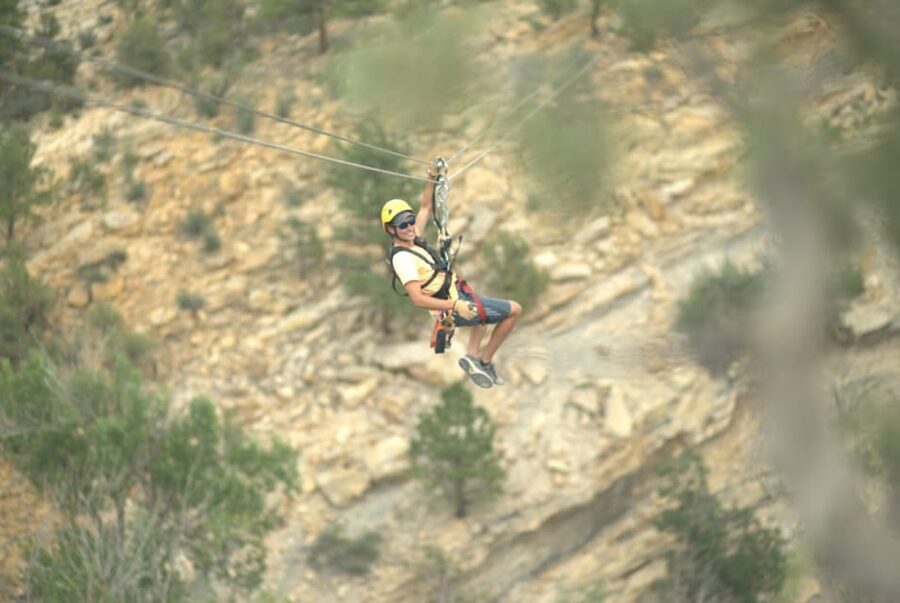
- 11 lines with a serious speed focus: The course includes the 1,700-foot highest-speed line and a 1,200-foot dual racing line.
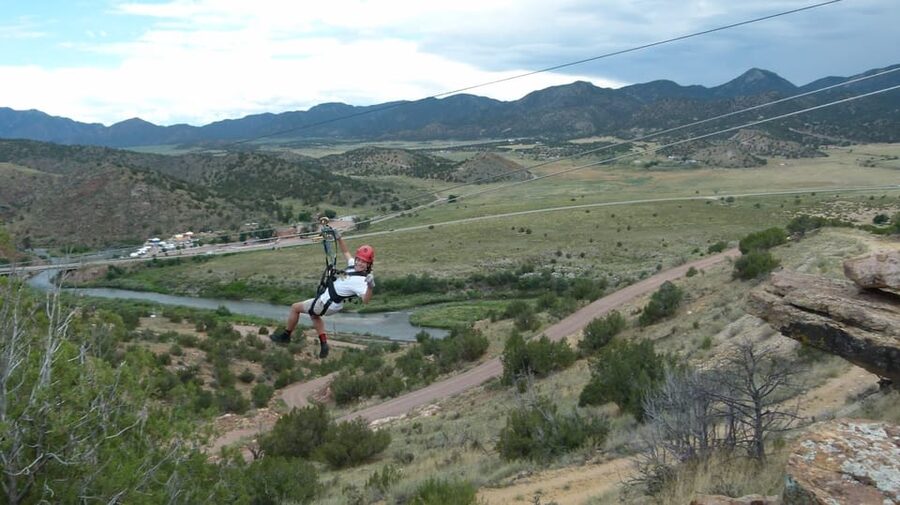
- Views over the Arkansas River: You zip above Colorado mountain scenery with broad river vistas below.
- A real skills session first: Ground school covers braking and movement before you take off.
- Two dramatic finishes: Pick a 30-foot free fall or the True Blue belay system.
- Small-group attention: Groups are limited to eight people, with instruction in English.
- Strict physical limits: You must weigh 70 to 250 pounds and be able to brake and pull yourself along the cable.
What the three-hour Royal Gorge outing is really like
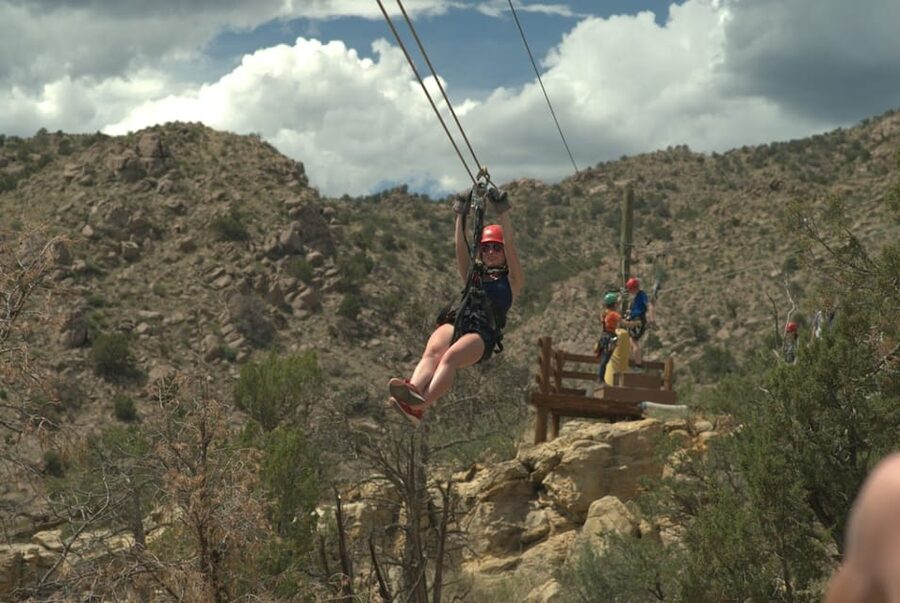
The Royal Gorge 11-Line Extreme Zipline is built for people who want more than a quick glide across a short cable. The course gives you repeated runs, changing views, a fast central attraction, and a finale that feels like its own event.
You begin with ground school. This is not filler before the fun starts. You learn how to use the seat harness, chest harness, trolley, lanyards, gloves, and helmet. You also practice the key skill that controls the day: tensioning the cable with your gloved hand to manage your speed.
That matters because ziplining here is not a passive ride. You need to pay attention to your body position, follow instructions, and prepare for the landing platform. The guides clear you for each departure, then help you apply what you learned. The safety equipment resembles rock-climbing gear, but it is set up for this course.
The tone can be light without making the safety briefing casual. Justine and Rick were singled out for being fun and well informed, while Rick and Brandon were praised for making the outing memorable. Tarzan and Eric also received strong praise, with Tarzan bringing energetic encouragement and Eric offering a calming presence. Guide quality matters here, since a good instructor can make a high platform feel manageable.
More Zip Lines in the USA
- Ketchikan Shore Excursion: Rainforest Canopy Ropes and Zipline Adventure Park
★ 5.0 · 390 reviews - Adventure Parks & Zipline Tour
★ 5.0 · 198 reviews - AdrenaLine Zipline Tour with WaterZip by Outfitters Kauai
★ 5.0 · 188 reviews
Eleven lines, not one quick thrill
The value of the course comes partly from its length. You are not paying for one short run, a photo, and a walk back. The 11-line setup gives you time to learn, settle into the harness, and become more comfortable with the rhythm of launching, braking, landing, and waiting for the next run.
The first lines serve as your practical education. You get used to the equipment and the simple but important task of arriving at the platform with enough control. A little tension from your gloved hand helps manage your travel. If you lose momentum before a platform, you must be able to pull yourself along the cable for a few feet.
That requirement makes the course more demanding than a ride where the operator handles every movement. It also gives you a real part in the activity. I like that distinction, but you should take it seriously if you have limited upper-body strength, trouble gripping with one hand, or difficulty managing your position in a harness.
As the course continues, the scale of the setting becomes more apparent. You are looking across mountain views and down toward the Arkansas River. The combination of height and open scenery is a major reason to choose this course instead of a compact zipline built mainly for a quick burst of speed.
The 1,700-foot line and the Arkansas River views
The course’s main bragging point is its fastest line, described as a 1,700-foot run. The exact appeal is easy to understand: you get a long stretch of cable, serious speed, and enough time in the air to feel the scale of the gorge setting.
This is the point where the outing shifts from learning the mechanics to enjoying the full rush. You have already practiced braking and platform arrivals, so you can focus more on the view and the sensation of moving through open air.
The Arkansas River adds shape to the scenery below. From the course, you get mountain vistas with the river running through the gorge environment. The view is not a side attraction you see only before or after the activity. It is part of the ride itself.
That said, speed can compete with sightseeing. On the fastest run, you may be concentrating on your body position and landing rather than calmly studying the view. If scenery is your only goal, a slower aerial activity could suit you better. If you want scenery tied to a physical rush, this combination is the point.
The seven-story tower finale
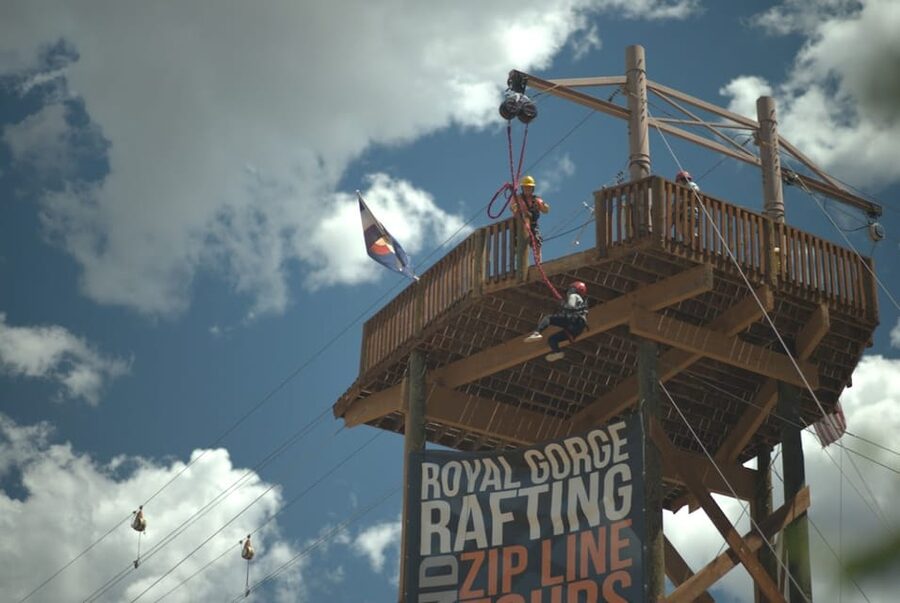
The final section brings you to a massive seven-story tower. The tower adds a vertical finish to a course that has already demanded climbing, gripping, braking, and repeated launches.
The last line is a 1,200-foot dual racing line. You go side by side with another participant, turning the ending into a friendly contest rather than a quiet arrival. If you enjoy a little competition, this is likely the most playful part of the day. If you dislike racing or comparing your speed with someone else, the format may feel more intense.
The tower also creates the choice that helps this course appeal to different kinds of thrill seekers. You can select the Flightline Free Fall, which sends you off the tower for a 30-foot free fall before the system lowers you slowly to the ground.
The alternative is the True Blue belay. It is used by firefighters and military tactical teams, and here it offers a controlled way down without the leap-of-faith feeling. Choosing the belay does not mean you have failed to finish the course. It is a sensible option for anyone who wants the tower but does not want to step into open air.
I appreciate that both choices are treated as legitimate finishes. A strong adventure operator should offer a challenge without forcing one particular form of bravery.
Same nerve, a different drop:
- Orlando Tree Trek Adventure Park
★ 5.0 · 845 reviews - Niagara Falls USA, Open-Top (Wet) Jet Boat Tour
★ 5.0 · 600 reviews - Off Road UTV Adrenaline Experience in Las Vegas
★ 5.0 · 529 reviews - Rappel Maui Waterfalls and Rainforest Cliffs
★ 5.0 · 459 reviews
Fitness, weight limits, and who should book
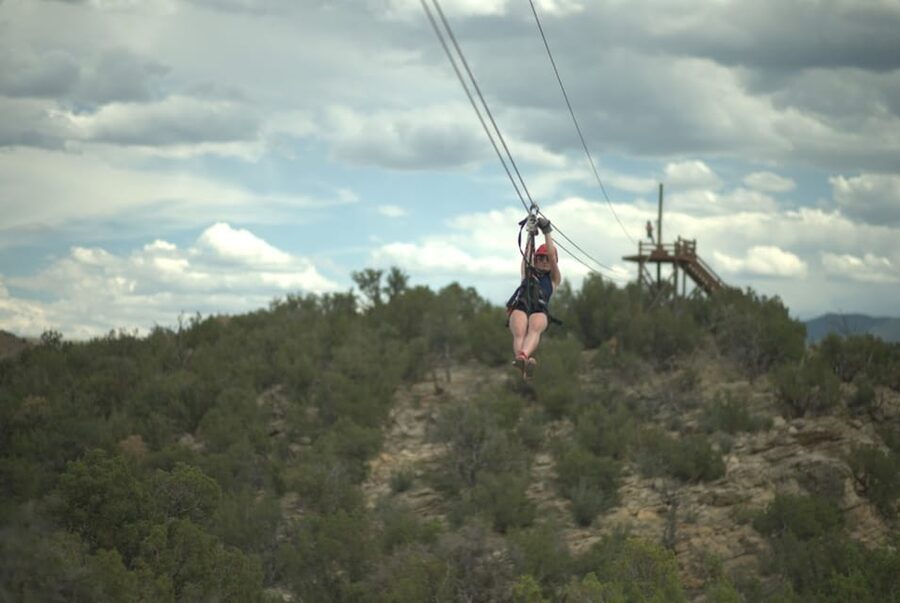
The physical rules are firm. Participants must weigh between 70 and 250 pounds, or about 32 to 113 kilograms. Anyone over 250 pounds cannot take part, and the lower limit is also part of the operating requirement.
You must be able to control your speed by pressing your gloved hand against the cable. The ground school teaches the basic technique, but instruction cannot replace the physical ability to grip and manage your movement.
You also need to pull yourself along the cable a few feet if you arrive short of a platform. This may be a small distance, but it can feel significant after several runs, especially if you are tired or nervous.
The tower climb is another practical test. The comparison to walking up 10 flights of stairs gives you a useful sense of effort. You do not need to be an athlete, based on the information provided, but you should be comfortable with sustained stair climbing and basic upper-body effort.
This activity is not suitable for pregnant women or people with back, heart, or mobility problems. Those limits are not minor booking notes. They reflect the climbing, harness pressure, height, braking, and repeated movement involved.
Safety without taking the fun out of it
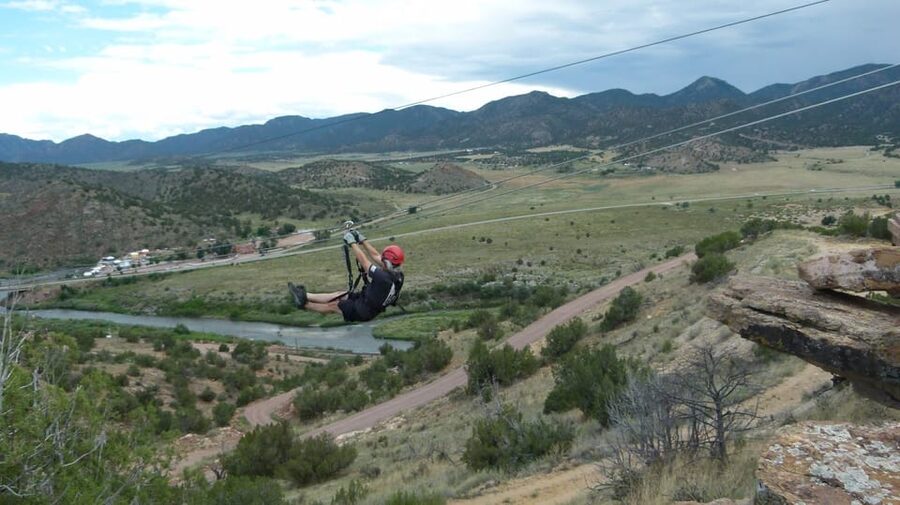
Safety begins with the course design, equipment, guide training, and operating procedures. Your gear includes a seat harness, chest harness, trolley system, two lanyards with secure clips, gloves, and a helmet.
The two-harness setup and clipped connection system may look more involved than the gear at a casual recreation park. That is a good thing here. You are working at height and moving quickly, so a proper equipment check and clear instruction are essential.
The guides teach you how to use the system during ground school. They also help build confidence before you are cleared to leave a platform. I would pay close attention during this part, even if you have ziplined before. Different courses use different braking methods, cable layouts, and landing procedures.
Weather can change the plan. The course operates in rain, but it closes if lightning is nearby or winds become extreme. Advance notice is not always possible. If the operator knows about a closure ahead of time, it will try to contact you, but you should keep some flexibility in your schedule.
If bad weather cancels the outing, you can rebook or receive a refund. That policy is useful in Colorado, where conditions can shift quickly, but it does not prevent the inconvenience of a changed day. Avoid placing this activity immediately before an important departure or fixed appointment.
Price and what you get for $168
The listed price is $168 for one participant or group of up to one. Since the booking information uses the phrase group up to one, check the final booking screen carefully to confirm how the charge applies to your party.
At that price, the value depends on how much use you make of the three-hour format. You receive 11 lines, safety equipment, instruction, guide support, taxes, and fees. The course also includes the fast 1,700-foot line and the 1,200-foot final race, so this is not priced like a short introductory ride.
I see the strongest value for someone who wants a full half-day adventure rather than a single novelty activity. You get time to learn, repeat the skill, enjoy the views, and choose a dramatic finish. A first-time participant may also value the small group, since a maximum of eight gives the guides a better chance to keep instruction clear.
One possible extra cost is a camera. A participant specifically wished for GoPro rentals or a camera option, since friends and family wanted to see the action afterward. No camera rental or included recording service is listed, so do not count on a built-in way to film your runs. Keep your attention on the course instead of trying to hold a phone.
Guide style and the human side of the course
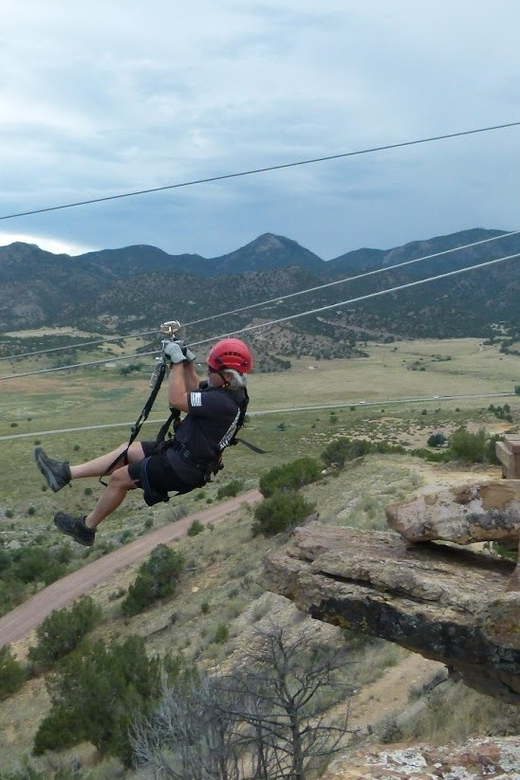
The guides can make a real difference on an activity like this. You need someone who can explain a technical movement simply, spot hesitation without embarrassing you, and keep the mood lively during a long sequence of platforms.
Names connected with strong outings include Justine, Rick, Brandon, Tarzan, and Eric. Tarzan was praised for infectious energy, while Eric was valued for a reassuring manner. That combination is useful: one guide can keep the group moving and excited, while another can help a nervous participant feel steady.
A ticket mix-up once led to a time change, but the staff handled it and provided dinner vouchers as a goodwill gesture. That does not erase the inconvenience, and you should still confirm your time before arriving. It does show the kind of practical recovery you hope for when a booking problem occurs.
The group size also shapes the mood. With no more than eight participants, you are likely to have a shared adventure rather than a private one. You will wait for others at platforms, cheer on the next launch, and see different reactions to the tower finish.
Who will enjoy this most
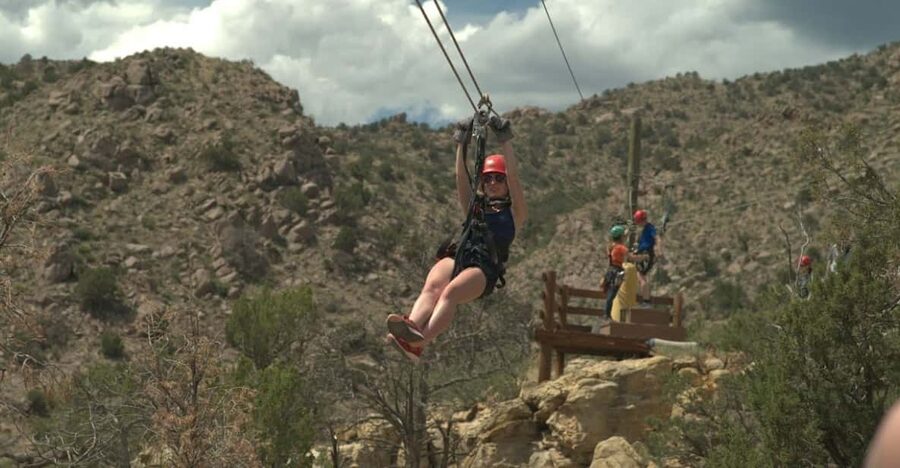
I would recommend this to an active adult or older child who meets the weight rules, can climb well, and wants speed as much as scenery. It suits someone who likes a clear challenge and does not mind using their hands to control the ride.
It is also a good choice for a small group with mixed confidence levels. One person can choose the free fall, while another can use the True Blue belay. Both can still complete the course and take part in the same day.
I would be cautious about booking it for someone who is unsure about heights but physically capable. The controlled belay gives you an alternative at the end, but the entire course still involves towers, cables, speed, and open views. Do not assume you can simply opt out after arriving.
This is not the right pick for a relaxed family outing, a purely scenic ride, or anyone with the listed medical restrictions. The 10-flight tower climb and cable-control requirements should guide your decision more than the headline speed claim.
Should you book the Royal Gorge 11-Line Extreme Zipline?
Book it if you want a substantial, high-energy course with 11 lines, Arkansas River views, a fast 1,700-foot run, and a final choice between a 30-foot free fall and a controlled belay. The small groups and careful instruction add real value, especially for first-time zipliners.
Skip it if you want minimal exertion, dislike heights, cannot meet the weight or physical requirements, or need a weather-proof schedule. For everyone else, this is a strong pick for a memorable Colorado adventure, provided you arrive ready to climb, grip, brake, and commit to the next platform.
FAQ
How long does the Royal Gorge zipline experience last?
The activity lasts three hours, including the ground school, instruction, zipline runs, and final tower experience.
How many zip lines are included?
The course includes 11 zip lines.
How fast is the fastest zipline?
The fastest line is described as the fastest zipline in North America. The highest-speed line is 1,700 feet long.
What is the final zipline like?
The final line is a 1,200-foot dual side-by-side racing line that lands on a seven-story tower.
What can I choose at the end?
You can choose the Flightline Free Fall, which includes a 30-foot free fall, or the True Blue belay, which lowers you in a controlled way.
How many people are in each group?
Groups are limited to eight participants.
What weight range is allowed?
Participants must weigh between 70 and 250 pounds, or approximately 32 to 113 kilograms.
What physical abilities are required?
You must be able to control your speed by tensioning the cable with your gloved hand and pull yourself along the cable a few feet if you lose momentum before a platform.
What happens if weather closes the course?
The course runs in rain but closes for nearby lightning or extreme winds. If the activity is canceled for weather, you can rebook or receive a refund.
Fresh thrills added around the USA
- Southern California Extreme UTV Tour (19-Mile Tour)★ 5.0 · 19 reviews
- Rappelling Adventure in Joshua Tree National Park (6 Hours)★ 5.0 · 2 reviews
- Rappelling Adventure in Joshua Tree National Park (4 Hours)★ 5.0 · 12 reviews
- Chasing Waterfalls:Wild Hawaii Rappelling★ 5.0 · 19 reviews
- Niagara Falls Sightseeing tour of USA Side plus Jetboat★ 3.5 · 5 reviews
- 3 Hour Session at Williamsburg’s Adventure Park Area 53★ 3.5 · 6 reviews
- NYC Extremes Photography Excursion★ 5.0 · 2 reviews
- NYC Extremes Downtown Photo Tour with Pro Photographer★ 5.0 · 3 reviews
Zip Lines, side by side
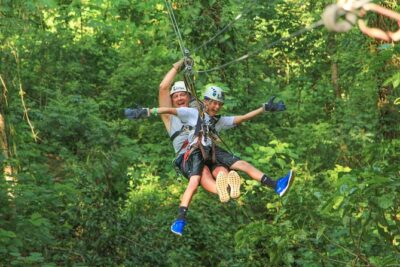
Extreme Adventure, Wildest Bridge, ATV & Ziplines
Read our review →
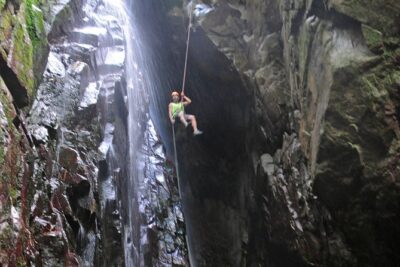
Full-Day Zipline and Waterfall Rappelling Adventure Near San Juan
Read our review →
Extreme Horses Adventure with ATV, Ziplines & Cenote
Read our review →
Selvatica Adventure Park: Ziplines and Cenote Tour from Cancun and Riviera Maya
Read our review →
Plettenberg Bay: Bungee Jumping with Zipline and Sky Walk
Read our review →
Ketchikan Shore Excursion: Rainforest Canopy Ropes and Zipline Adventure Park
Read our review →
Rio Secreto Plus: Classic Tour, Bycicle, Rappel & Ziplines
Read our review →Lists this trip sits in